
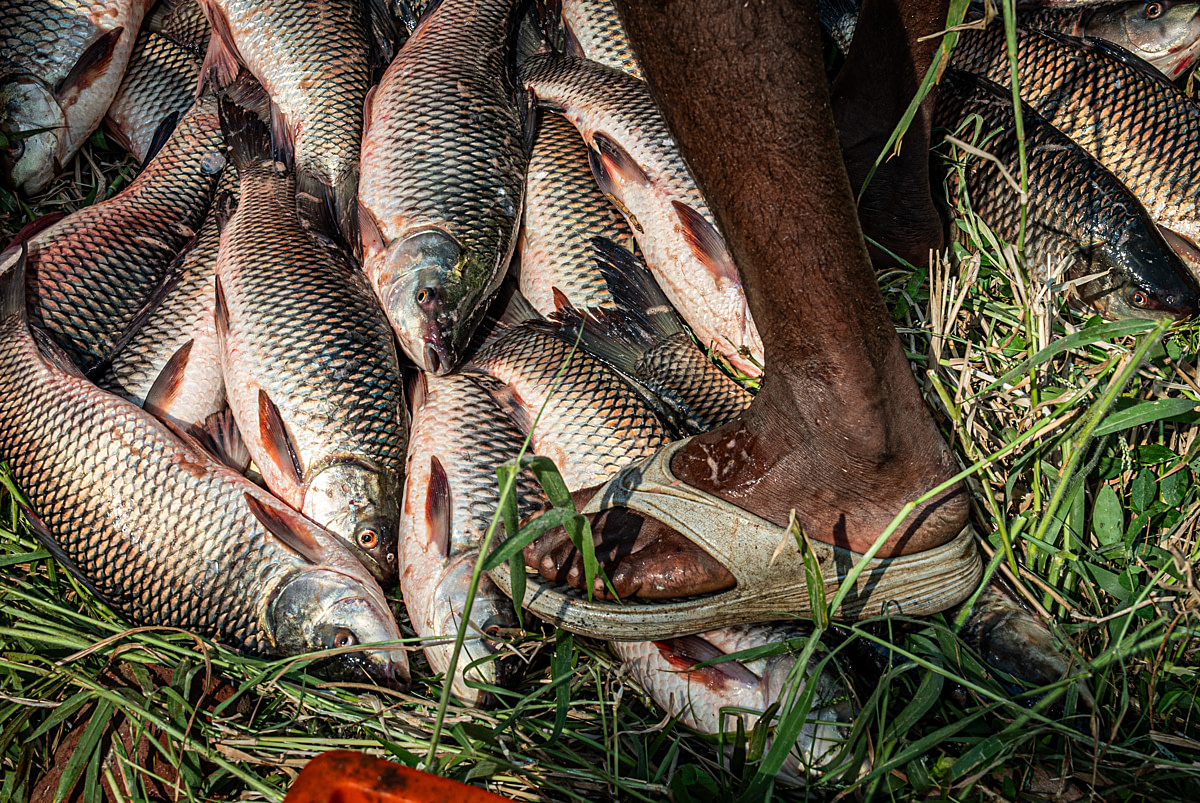

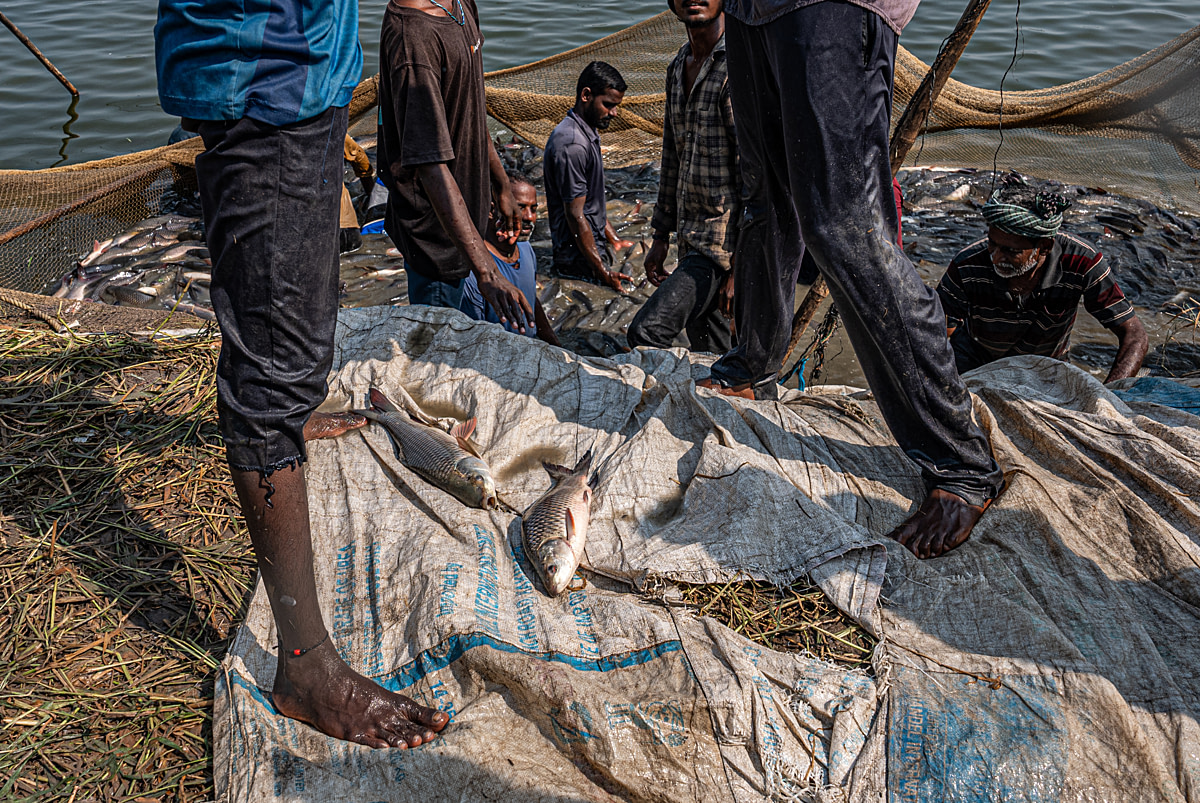
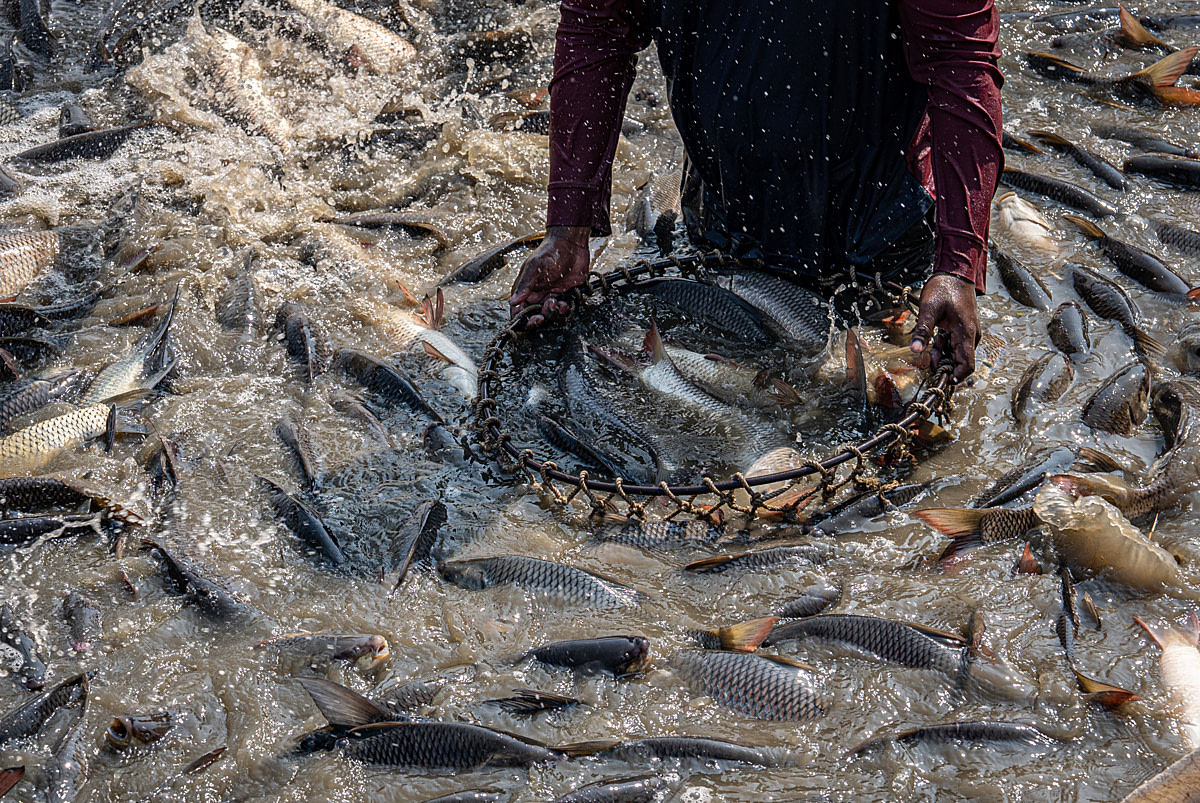
A worker stands on top of a live rohu, one of many suffocating on the ground, during a morning harvest at a fish farm. Undisclosed location, Seesali Village, Andhra Pradesh, India, 2025.
Shatabdi Chakrabarti / Samayu / We Animals
[Content warning: Contains confronting images and/or video footage]
No cries or panicked screams echo when a fish is gutted alive or suffocates slowly. Their suffering can be easy to overlook because it doesn’t sound like the suffering we’re wired to recognize.
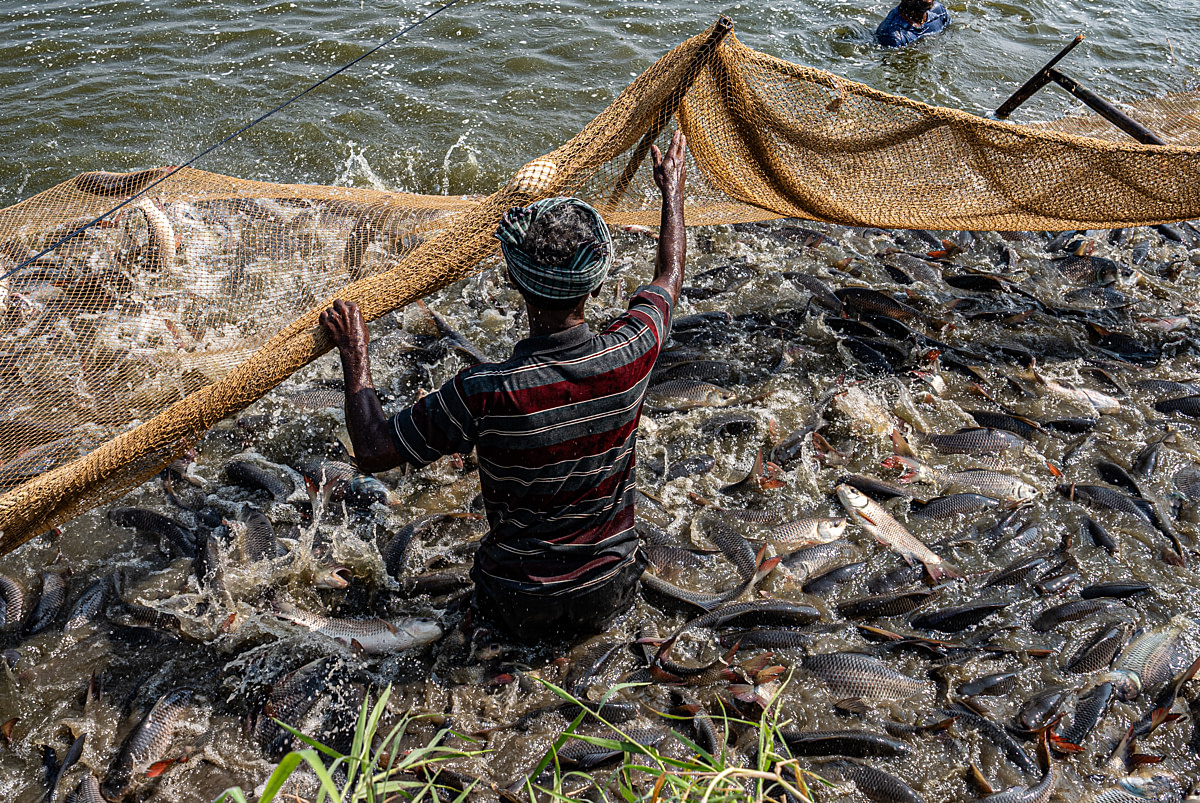
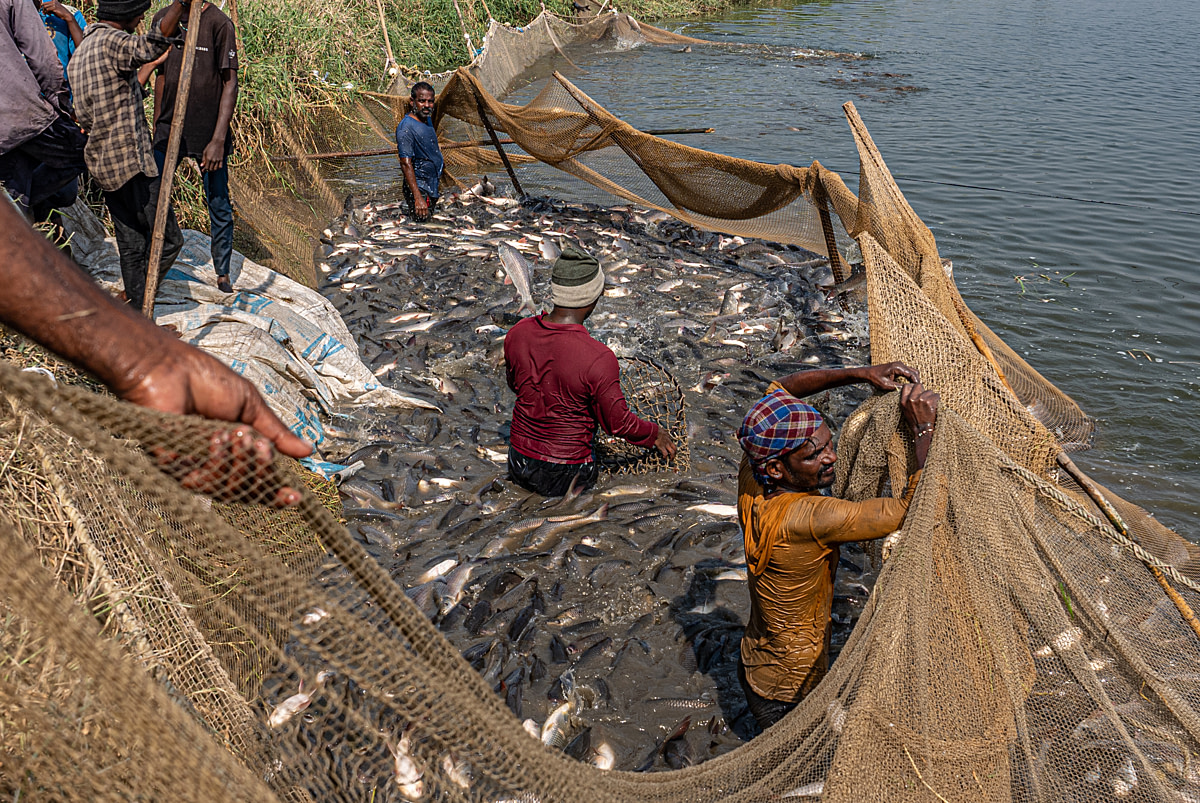
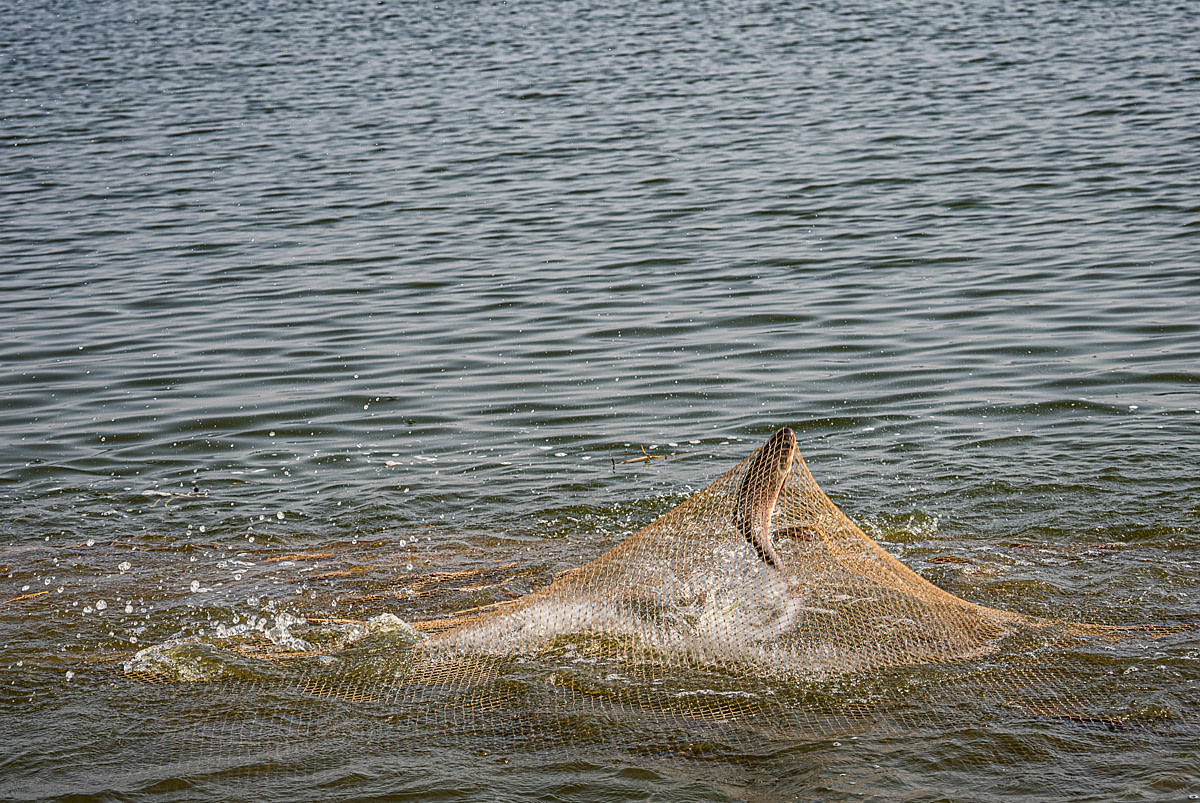
On assignment with the non-profit Samayu, We Animals photojournalist Shatabdi Chakrabarti recently documented fish harvests and markets across Andhra Pradesh, India. The harvest begins with workers standing waist-deep in aquaculture ponds at sunrise and pulling nets toward shore. The nets tighten, full of bodies. Rohu and catla leap desperately from the surface, slamming into one another as space disappears. Some strike the net stretched above them and fall back into the churn of bodies below.
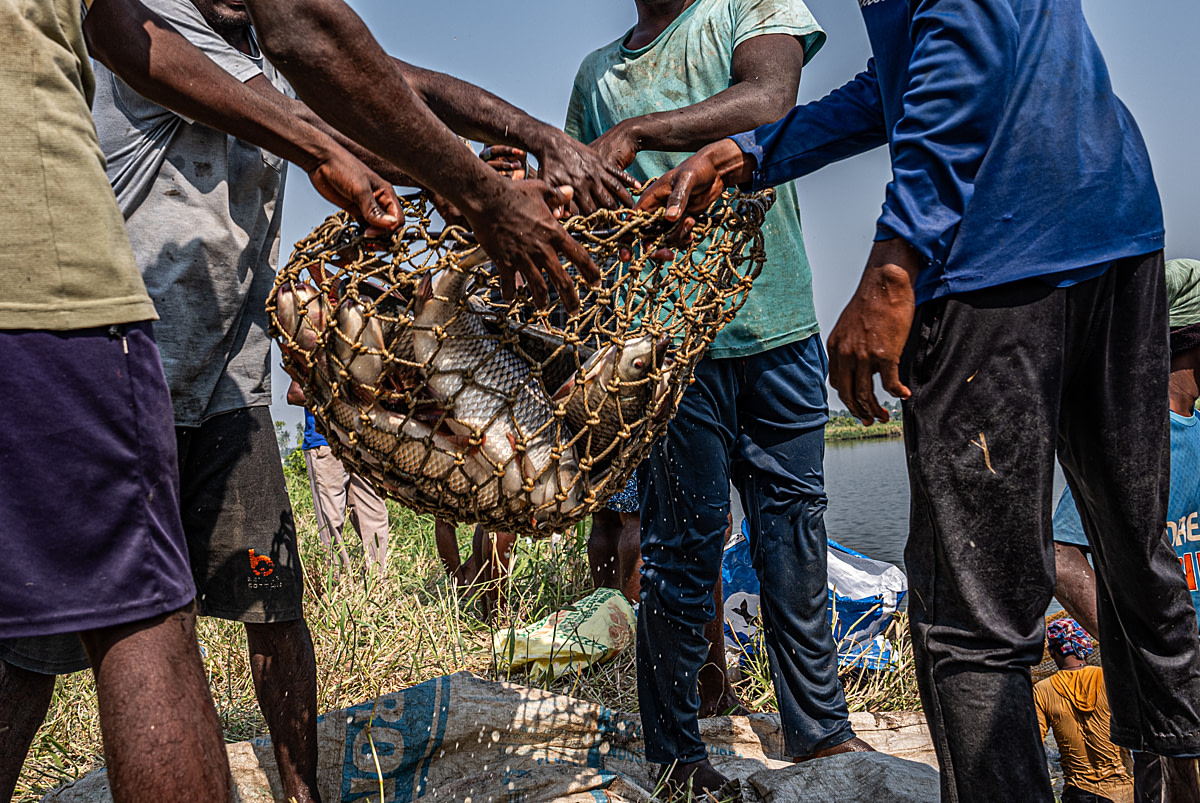
Larger catla are grasped by hand and thrown ashore in plastic nets. Rohu are hoisted in batches and dumped roughly onto tarps bordered by crates. The fish pile on top of one another in the open air while workers sort them by size and weight for transport. They continue gasping as ice is shoveled nearby.
If you close your eyes, you hear the sound of wet bodies striking one another en masse, like rain hammering against a tin roof.
Watch this short reflective video featuring photojournalist Shatabdi Chakrabarti’s assignment footage.
The rapid spread of fish farms
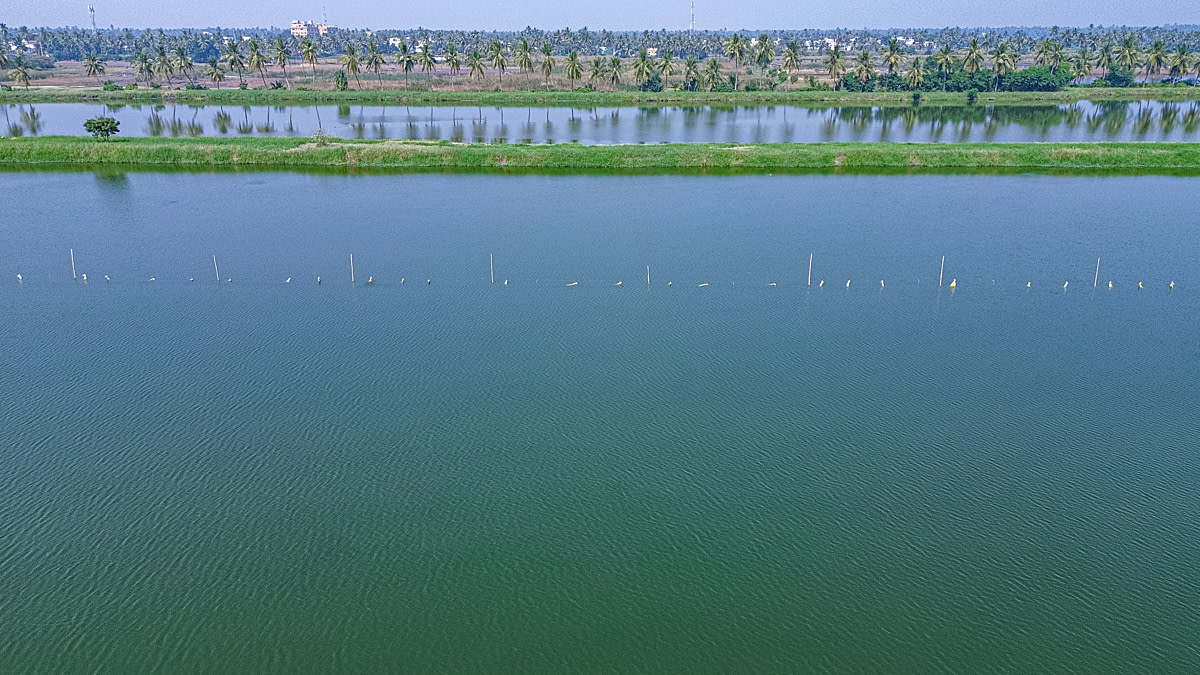
India’s aquaculture industry has expanded rapidly since the 1980s, nowhere more visibly than in Andhra Pradesh, now the country’s largest aquaculture-producing state. Across the region, former rice fields have become fish ponds, while mangrove ecosystems have been cleared and reshaped into aquafarms.
The transformation has been driven by appetite as much as infrastructure. Fish consumption in India has climbed sharply over the past two decades alongside population growth, rising incomes, and changing diets.
Seen from above, parts of the landscape no longer look agricultural at all. They look flooded, geometric, and engineered for production. Beneath the surface are rohu, catla, shrimp, prawns, tilapia, and catfish, all destined to be sent to markets far beyond the villages where they were born.
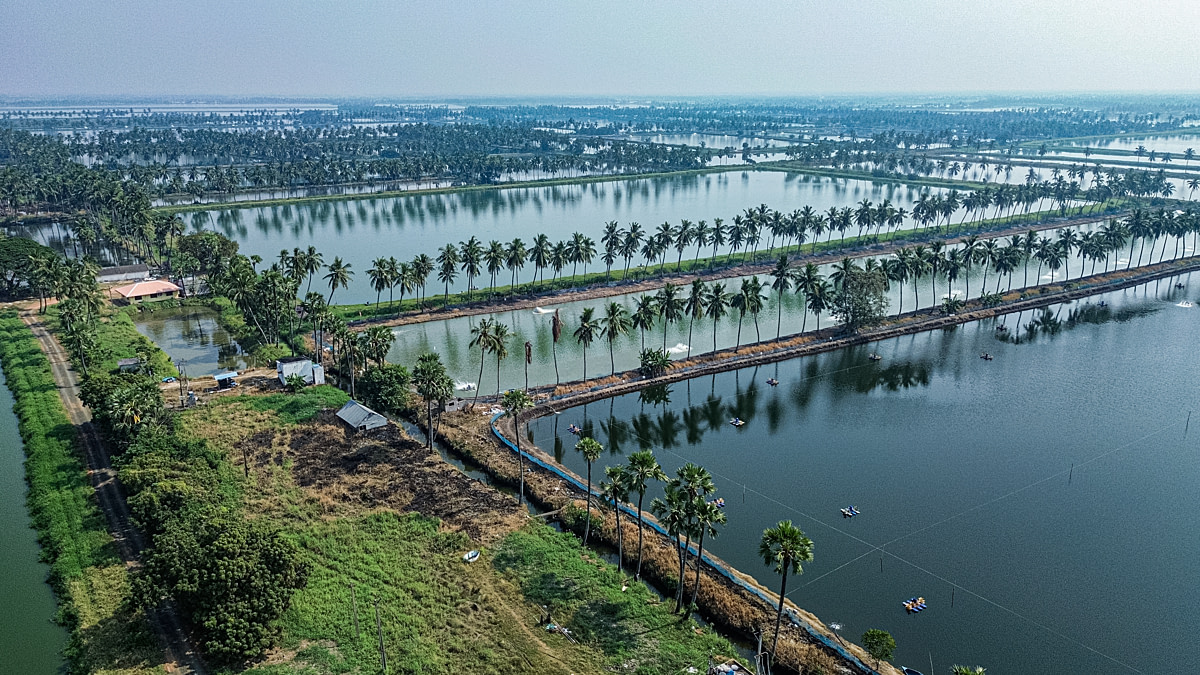
An aerial view of aquaculture ponds that spread to the horizon in the country’s largest fish and shrimp-producing state. In recent decades, thousands of hectares of agricultural lands, mangroves and forest spaces in the state have been converted into aquafarms. Undisclosed location, Juvvalapalem Village, Andhra Pradesh, India, 2025.
Shatabdi Chakrabarti / Samayu / We Animals
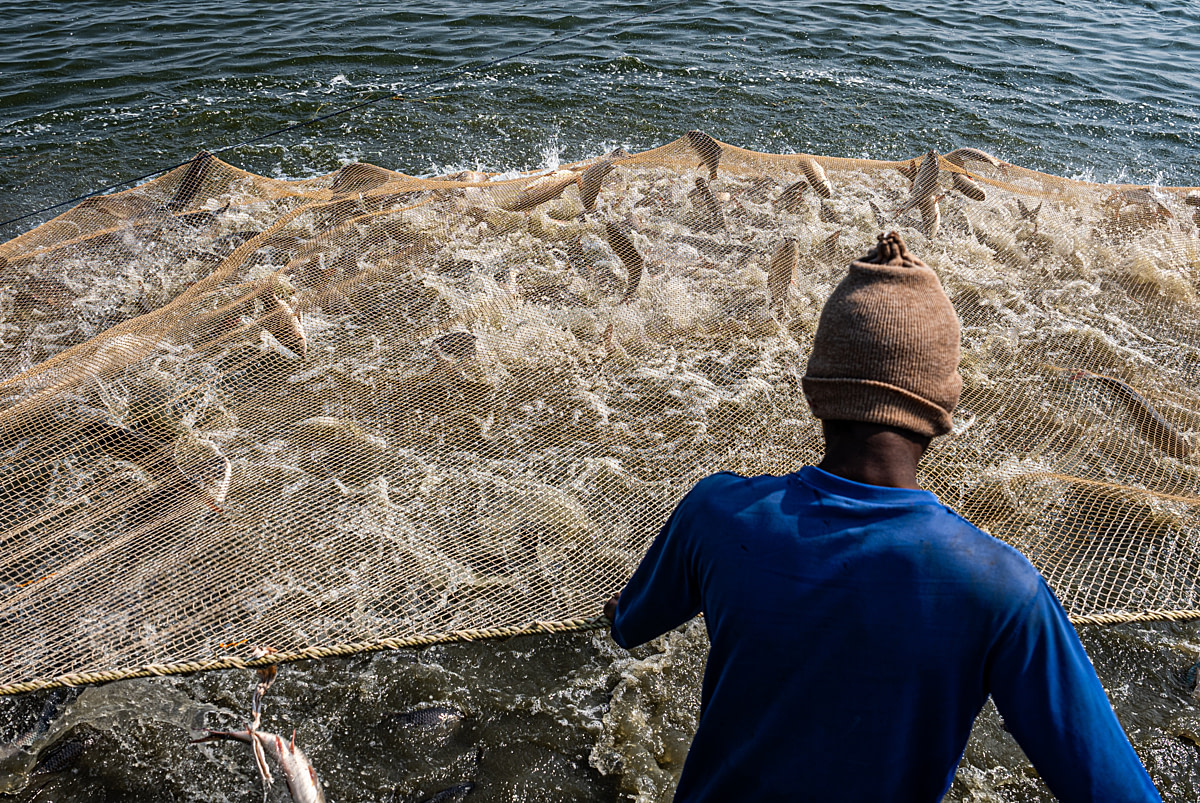
Captured rohu and catla leap from the water, struggling for space and hitting the top of a net as workers tighten and pull the net to shore during a morning harvest at a fish farm. Undisclosed location, Seesali Village, Andhra Pradesh, India, 2025.
Shatabdi Chakrabarti / Samayu / We Animals
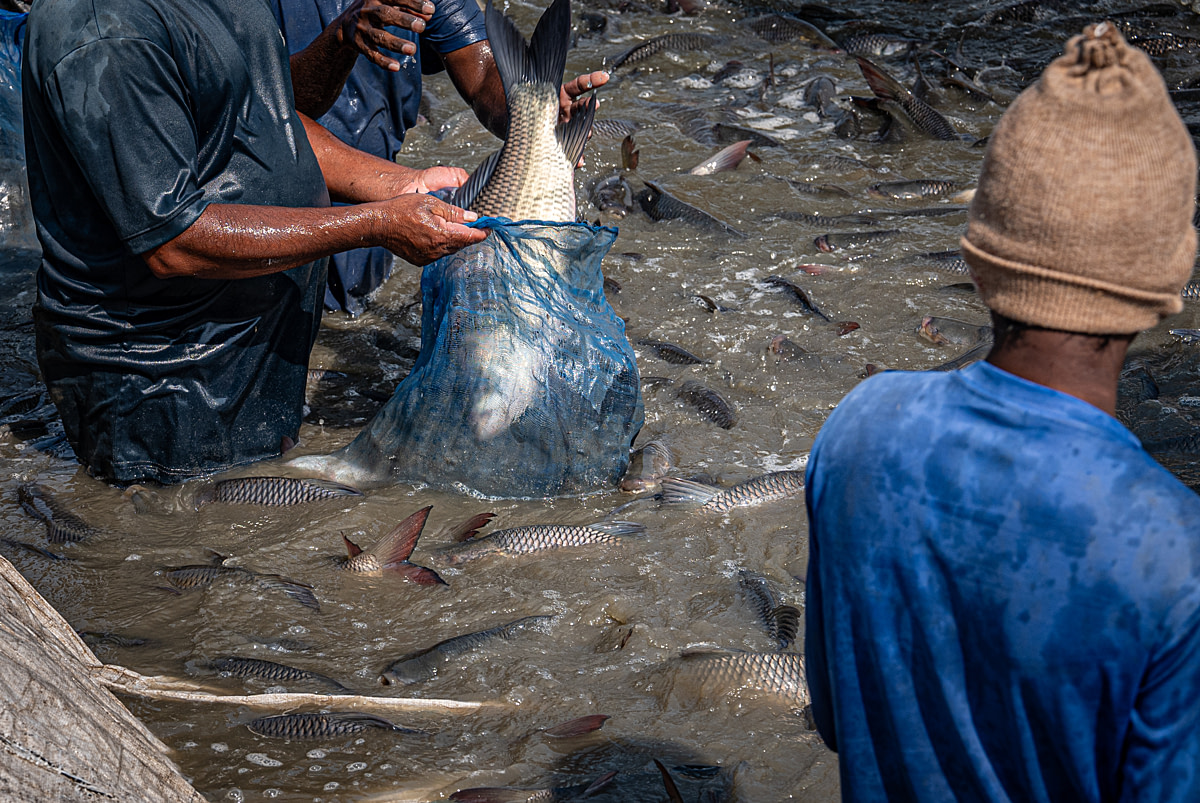
A live catla is dropped into a nylon sack during a morning harvest of catla and rohu at a fish farm. Workers first collect the larger and heavier catla separately, then the rohu. Undisclosed location, Seesali Village, Andhra Pradesh, India, 2025.
Shatabdi Chakrabarti / Samayu / We Animals
“Until the Last Moment, They Don’t Give Up”
What stayed with We Animals photojournalist Shatabdi Chakrabarti was not only the enormous scale of the fish harvests in Andhra Pradesh, but also each individual’s prolonged struggle to breathe.
“Their mouth will open and close quickly, then there will be a long pause. Suddenly again the fish will start to try to ‘breathe’. Till the last moment, they don’t give up.” — Shatabdi Chakrabarti, photojournalist
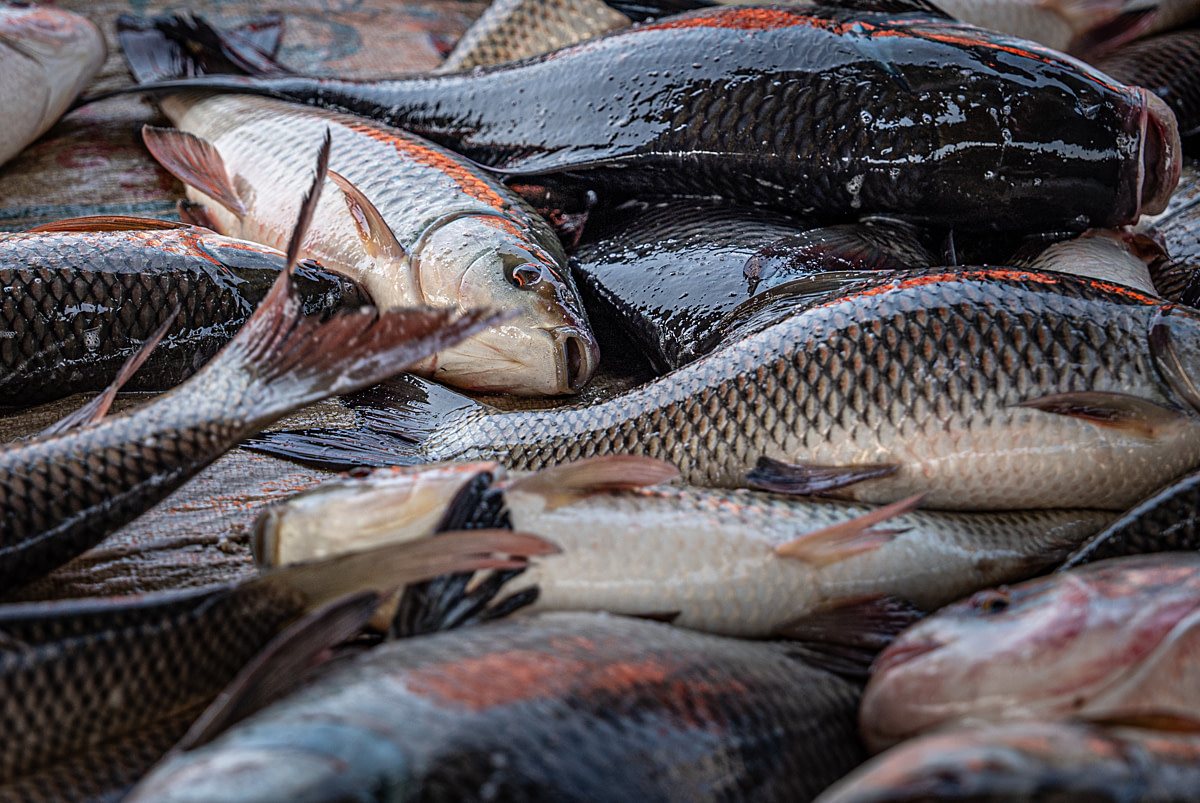
She describes watching fish continue gasping for hours after being removed from the water. Their gill plates dried beneath the hot sun as their bodies twitched suddenly from beneath piles of other fish, making frantic attempts to reach water again. It is difficult to imagine the prolonged panic of suffocating for hours.
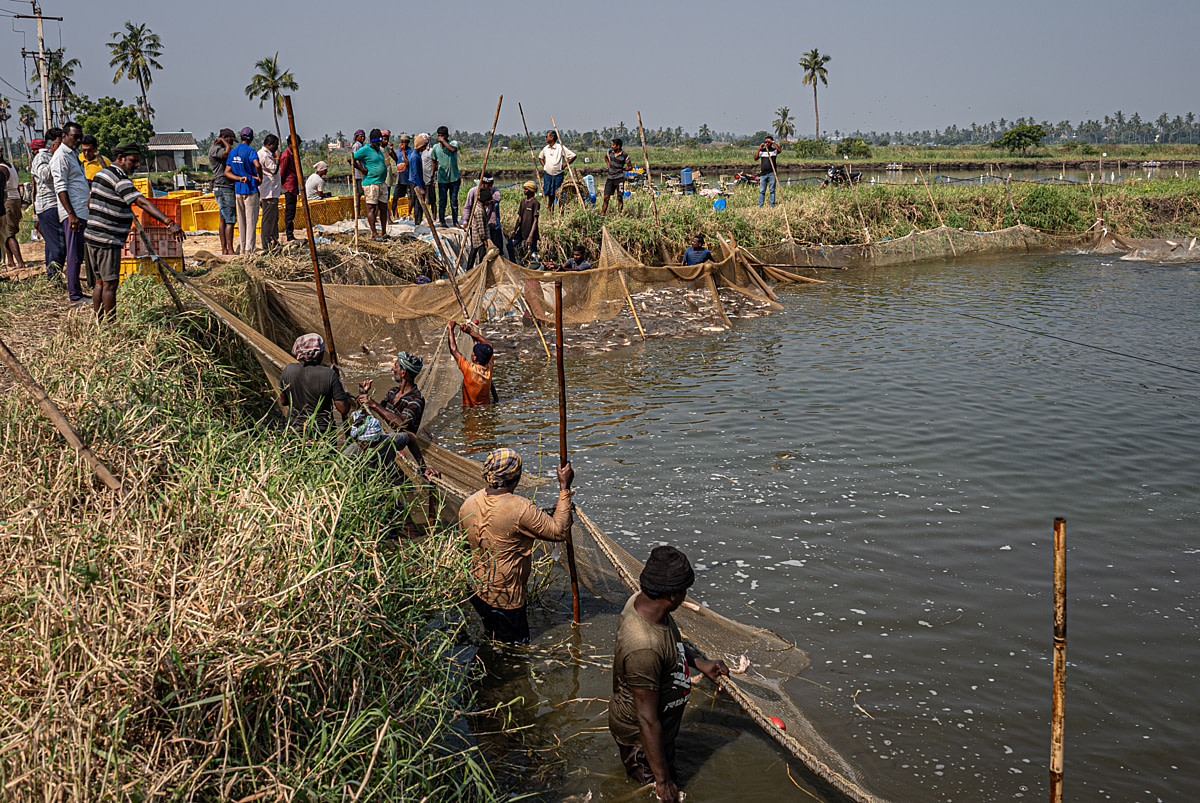
Workers pull a net filled with fish to shore during a morning harvest of rohu and catla at a fish farm. Undisclosed location, Seesali Village, Andhra Pradesh, India, 2025.
Shatabdi Chakrabarti / Samayu / We Animals
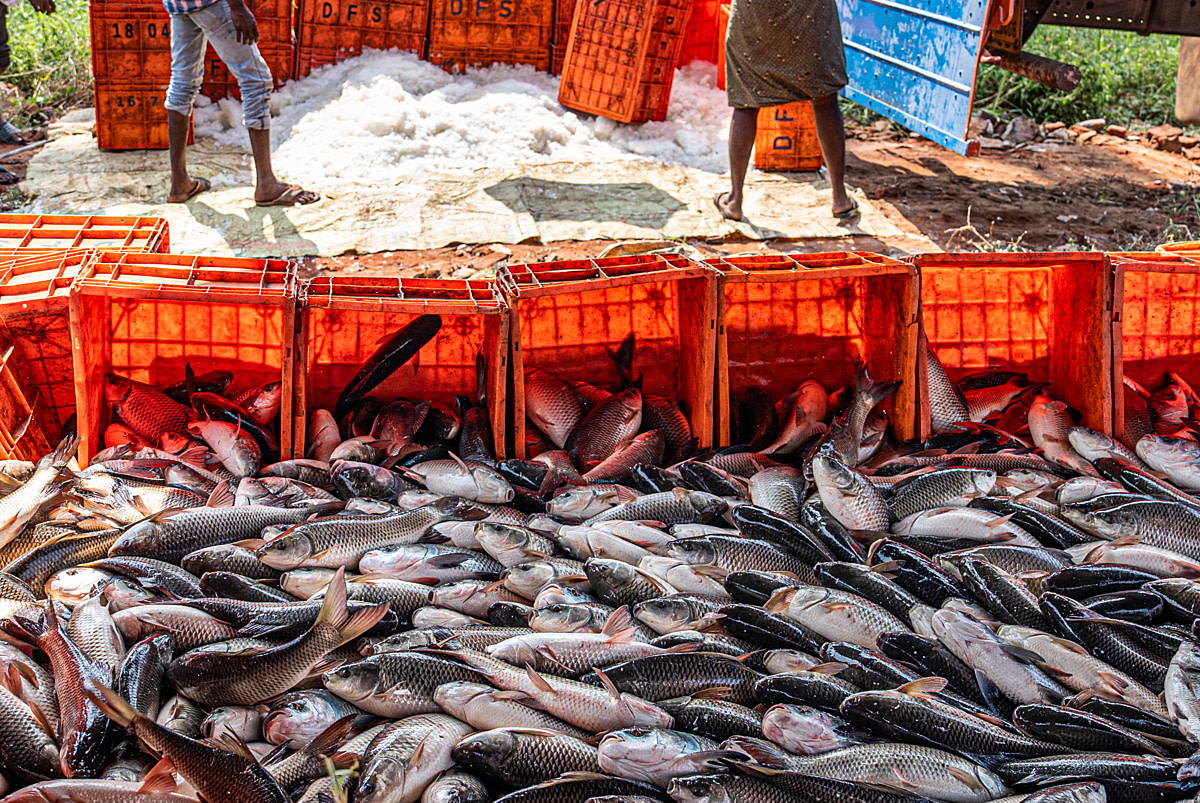
Workers break ice in the background as live rohu and catla writhe and suffocate in a temporary holding pit made from plastic crates during a morning harvest at a fish farm. Undisclosed location, Seesali Village, Andhra Pradesh, India, 2025.
Shatabdi Chakrabarti / Samayu / We Animals
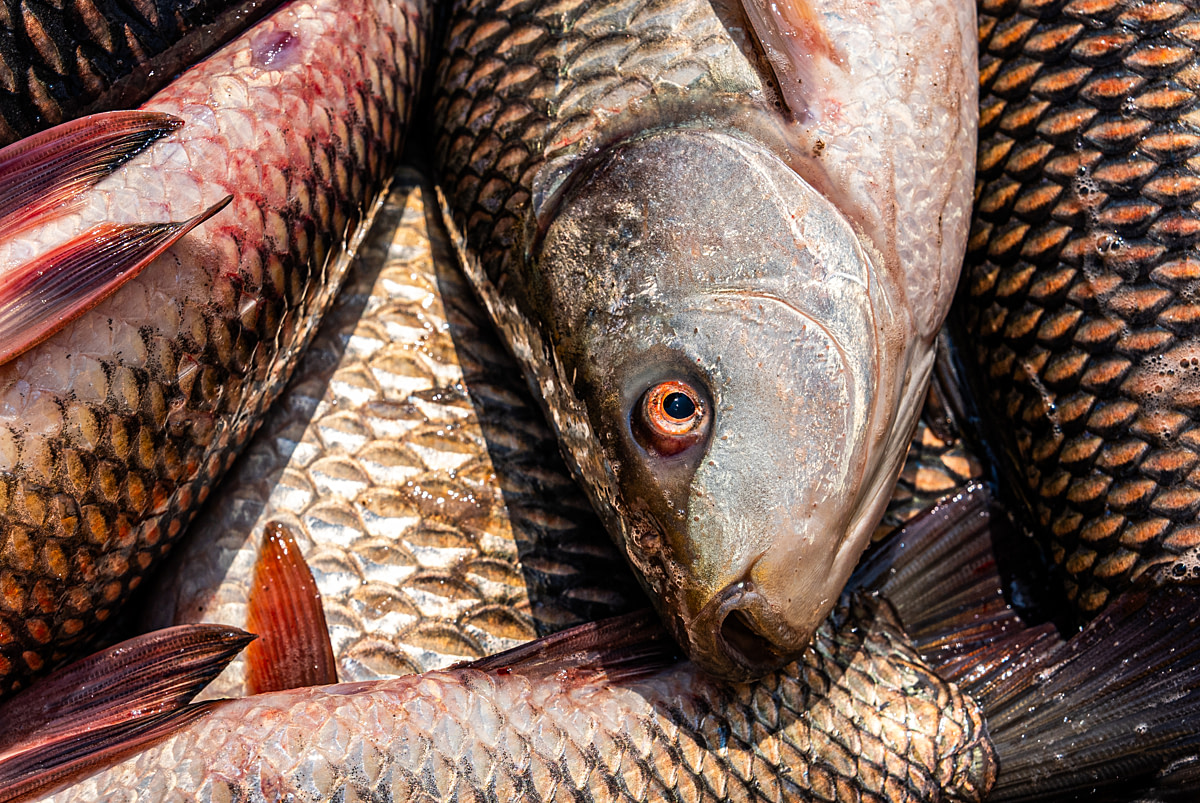
A suffocating rohu gasps for oxygen while piled inside a crate with other fish during a morning harvest at a fish farm. Undisclosed location, Seesali Village, Andhra Pradesh, India, 2025.
Shatabdi Chakrabarti / Samayu / We Animals
At a wholesale market in Akividu, Chakrabarti watched a live catla lying on a metal weighing scale long after transport. A customer tried to pick the fish up but couldn’t get a grip. The seller gestured toward the animal’s eye socket and instructed the man to place his thumb inside it for leverage. The fish was still gasping as it was lifted from the scale.
The emotional distance many people maintain around fish is notable. The industry depends, in part, on the fact that fish are difficult for humans to read. Their faces are unfamiliar to us. Their suffering does not sound enough like our own. And yet their panic is unmistakable once you allow yourself to see it.
How Scale Erases Empathy
Maybe the real story hidden inside industrial fishing and aquaculture is not the vast number of animals involved, but how effectively the scale erases individual visibility.
Photographs and videos like these interrupt that erasure. They force a pause in a system designed around speed, volume, and distance. In that pause, individual animals become visible again.
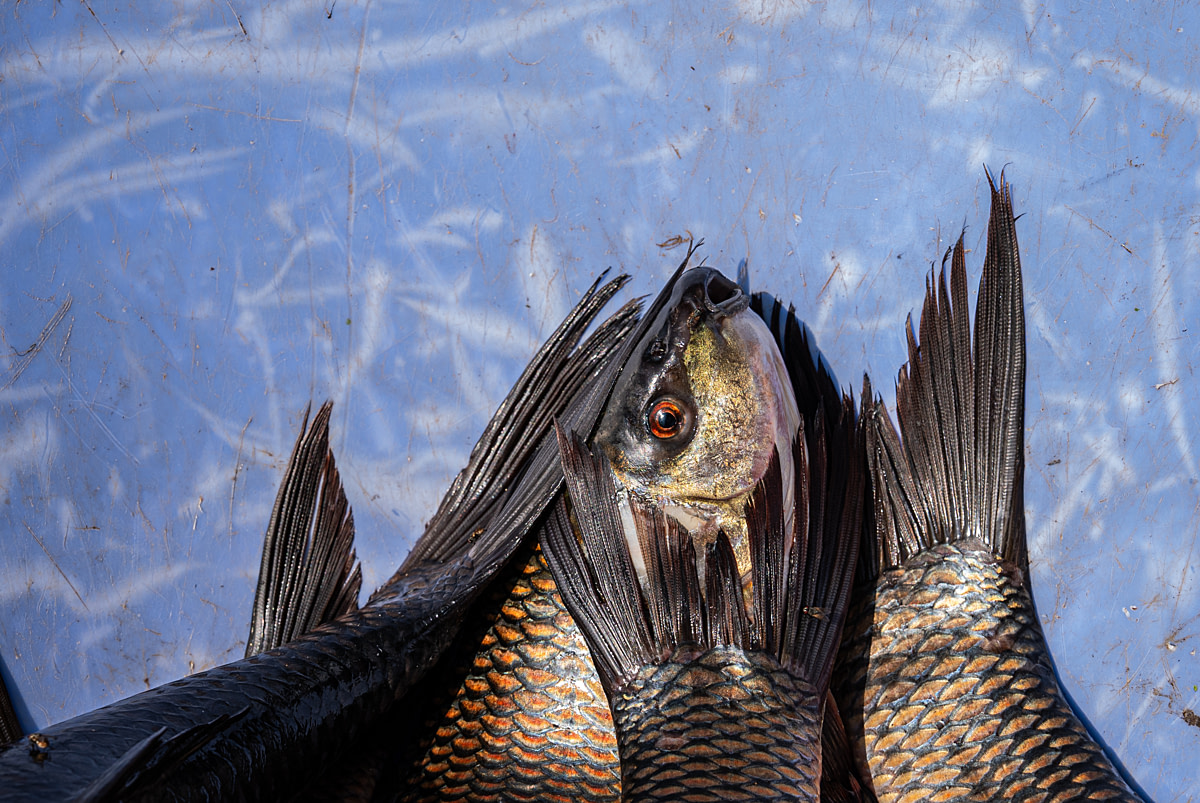
See more stories like this. Subscribe to our newsletter.
Explore and download these visuals and more via the We Animals Stock Site.