

Marcos Zegers / We Animals
Salmon aren’t native to Chilean waters, yet Chile has become the world’s second-largest salmon producer and the biggest salmon exporter to the U.S. The industry’s rise has been accompanied by criticism for its animal welfare standards, environmental practices, deadly labour conditions, and threats to local and Indigenous communities.
Our photojournalist, Marcos Zegers, visited several parts of the Chilean salmon industry in December 2025, including farms, processing plants and a market. What he found should deeply concern anyone who cares about fish, the vulnerable ecosystem in the area, and public health.
Living and dying without dignity
It can be easy to ignore fish’s signs of pain and distress or to overlook a few dead fish floating above tens of thousands of tightly contained living fish. They don’t scream or make much noise as they flop around, struggling to breathe, or as they suffer in overcrowded tanks with very little room to move. But their agony is still real, and it should be documented.
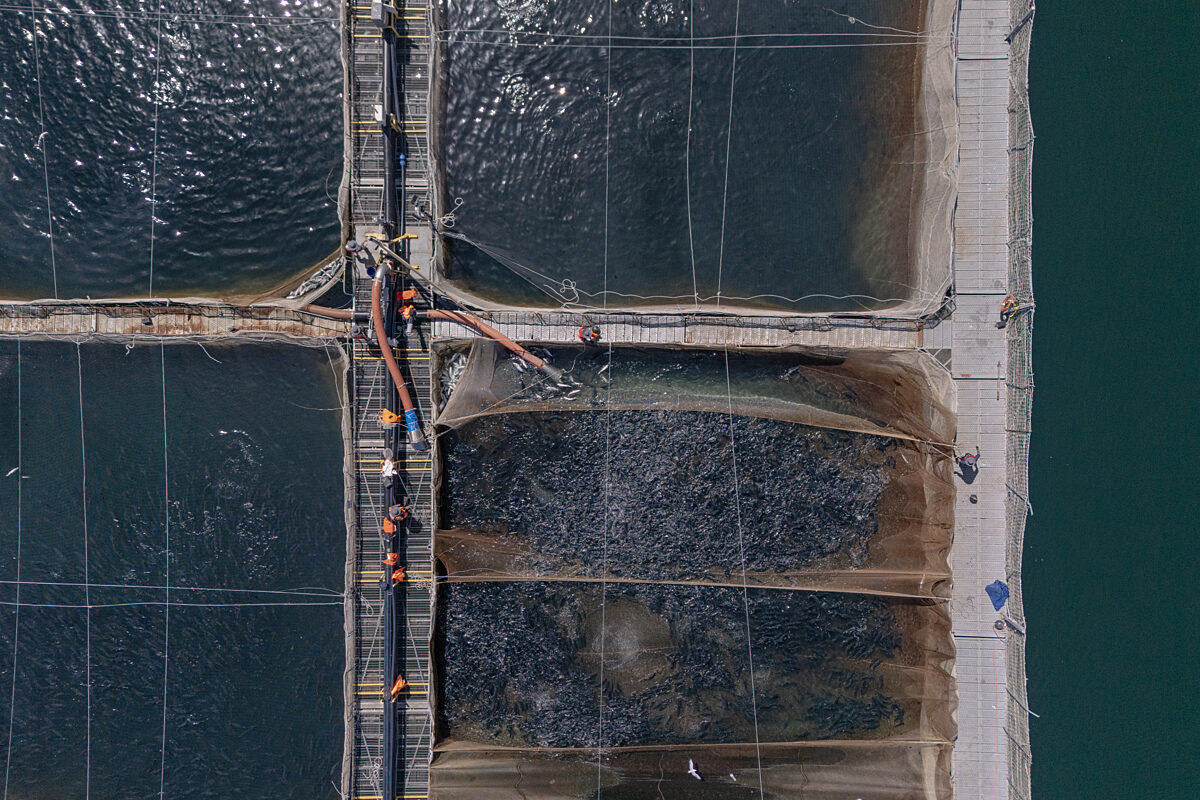
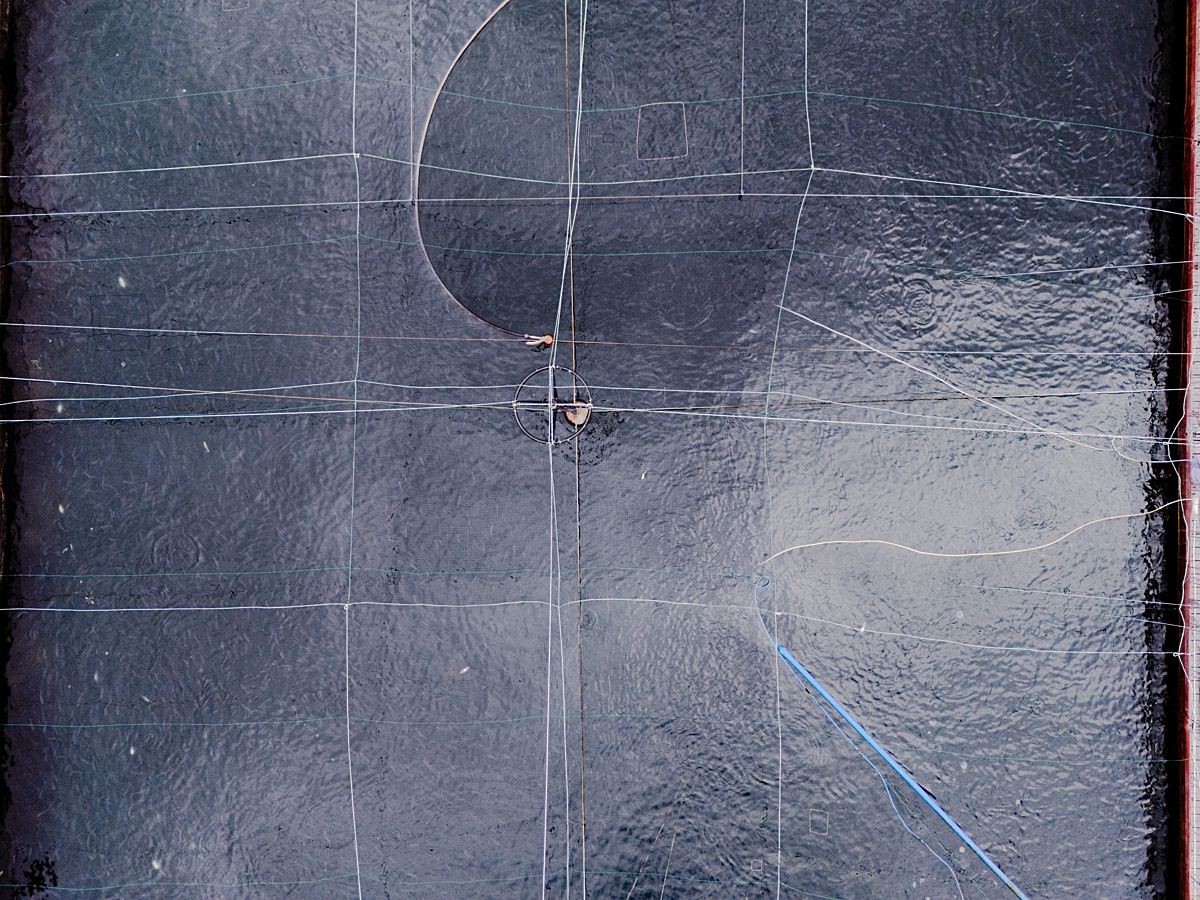
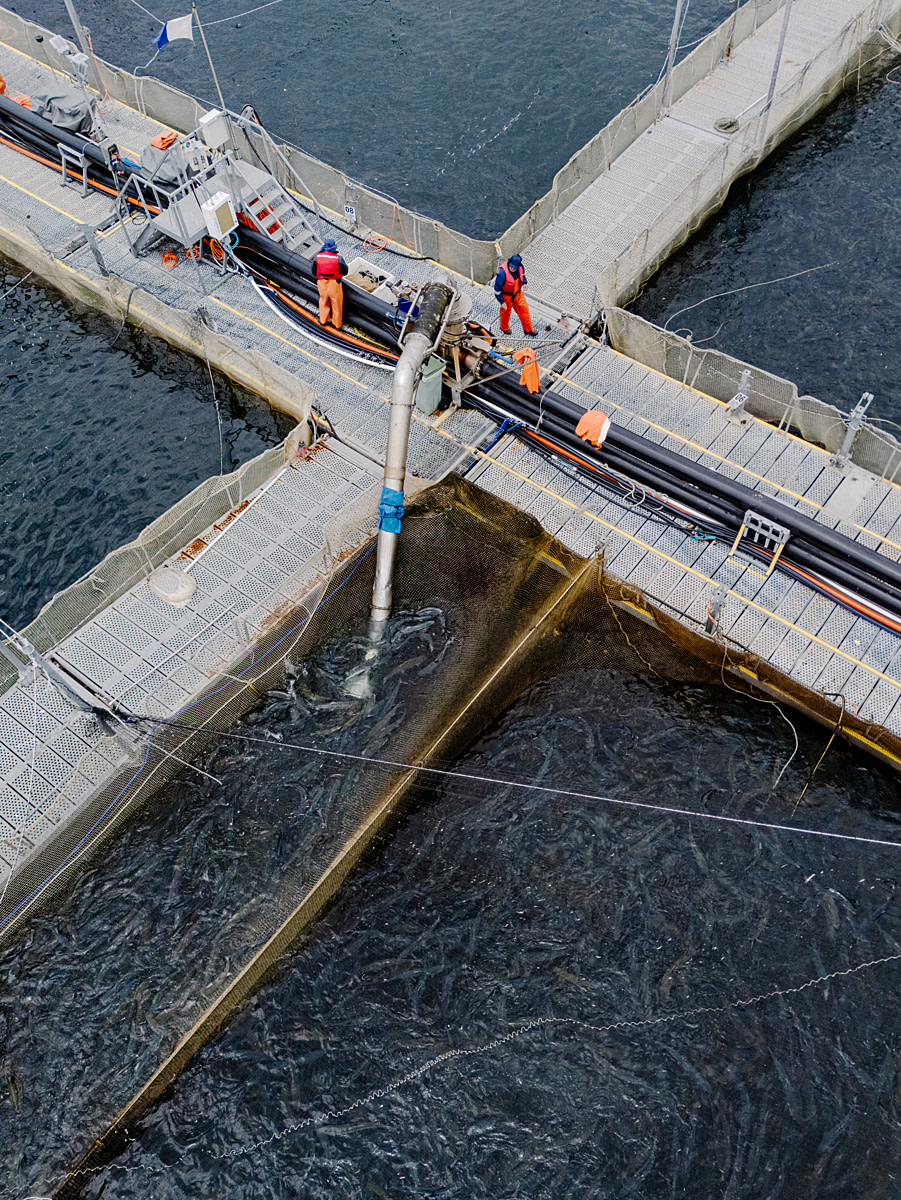
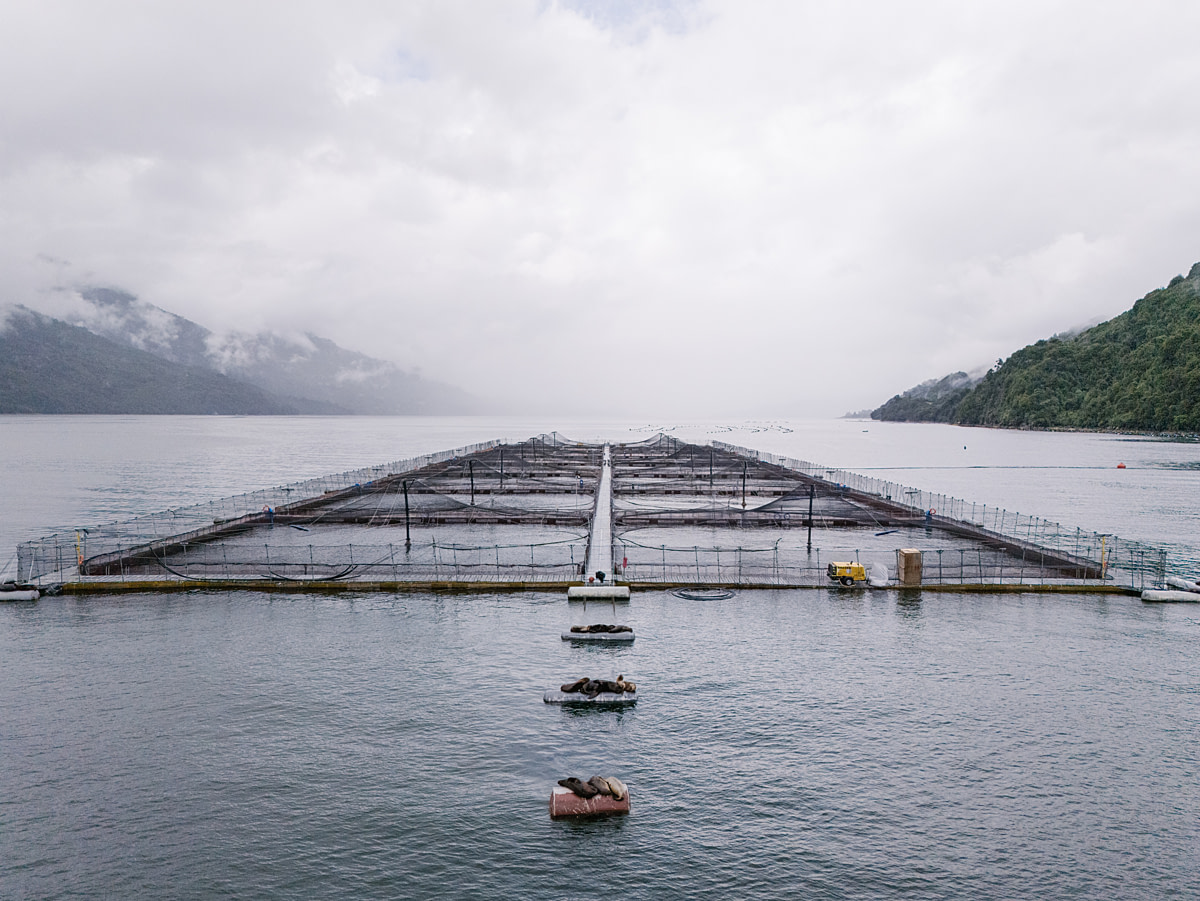
Using a drone, our photojournalist managed to captured the sheer scale of some of Chile’s salmon farms in Llanquihue province, in the Los Lagos region. The farms are highly automated and industrial, typically containing between seven and 30 cages per site. The cages are densely stocked with salmon at different life stages.
An aerial flyover along the length of two rows of net cages at a freshwater salmon farm. Llanquihue City, Llanquihue Province, Los Lagos Region, Chile, 2025.
Marcos Zegers / We Animals
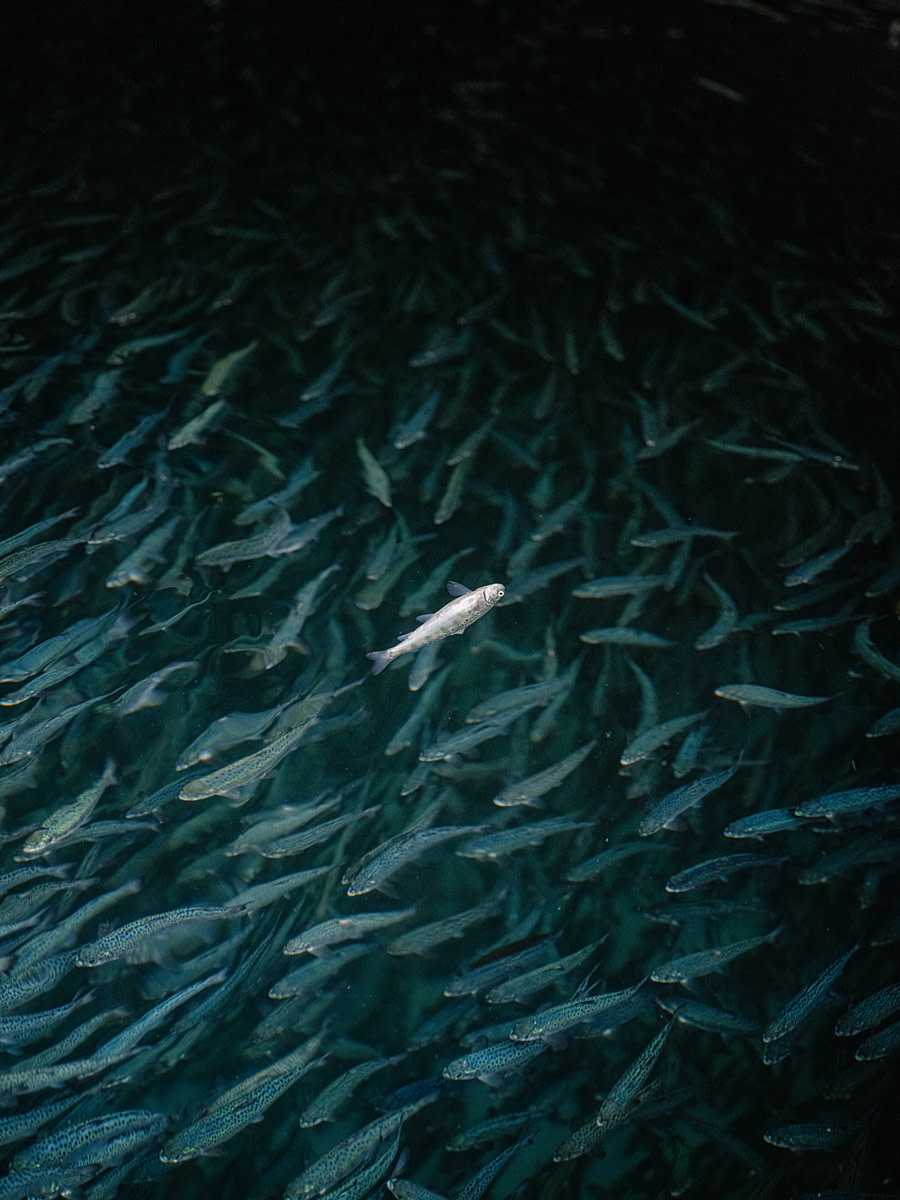
A dead salmon floats at the surface of a crowded tank containing approximately four-month-old salmon fry at a freshwater hatchery. Freshwater hatcheries like this one raise salmon from alevins through to smolt, after which the fish are transferred to marine pens to grow to market size. Undisclosed location, Puerto Octay, Osorno Province, Los Lagos Region, Chile, 2025.
Marcos Zegers / We Animals
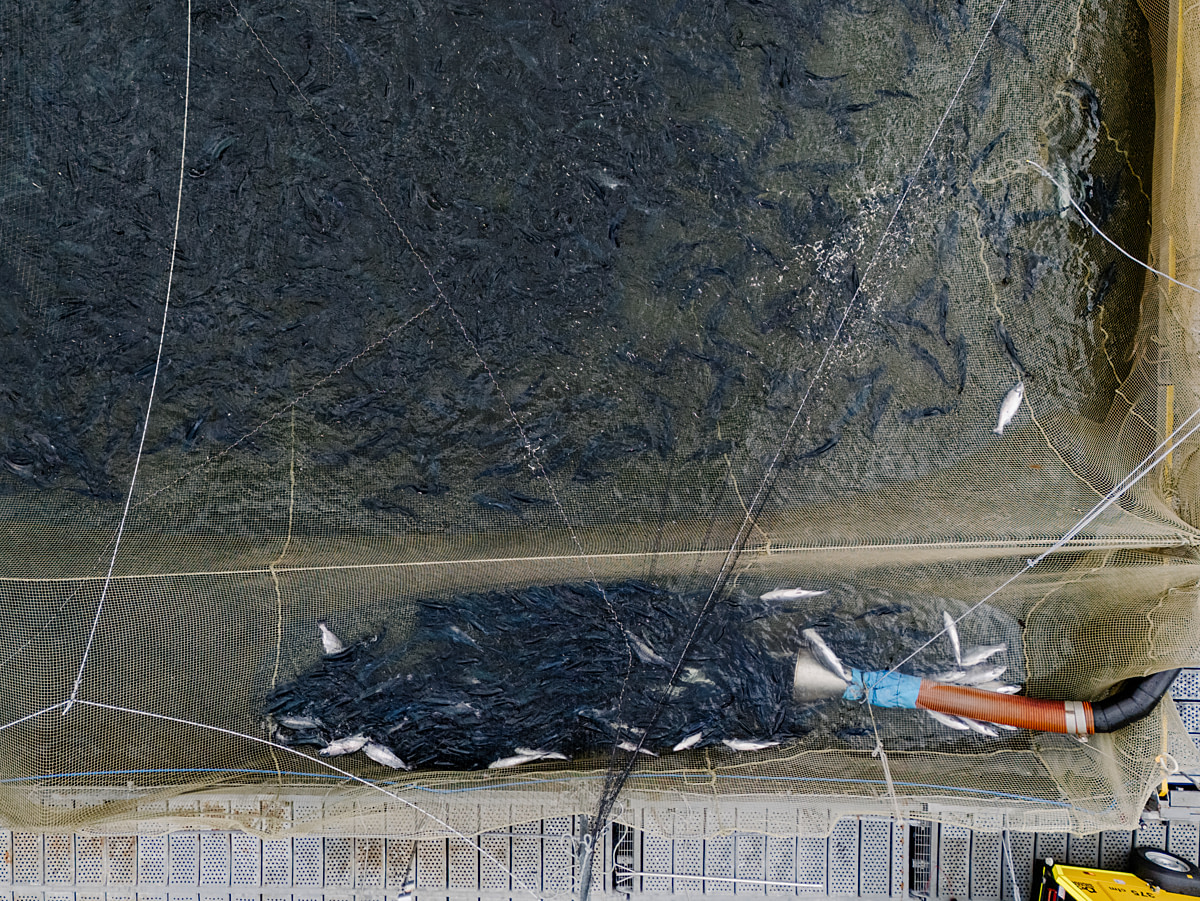
At one processing plant, fish from several farms are kept in holding cages before the nets under them are raised to the surface. Marcos filmed panicked fish thrashing as the water they needed for breathing slowly disappeared. The fish were then suctioned, most still alive, into large pipes that transport them to the plant, where they are slaughtered.
“I documented cages where men are raising the bottom net to bring the fish closer to the suction chute. The final process, where the fish die, takes place inside the plant after they are sucked in. Slaughter methods generally included electrical stunning.” — Marcos Zegers, photojournalist
Thousands of salmon are confined in a holding cage while others beside them are suctioned into pipes for transfer to a nearby onshore processing plant. A number of dead salmon float inside the cage. Puerto Montt, Llanquihue Province, Chile, 2025.
Marcos Zegers / We Animals
As wild animals that have only recently started being farmed, their highly evolved instincts are smothered and suppressed every day of their lives.
Animal waste, scavengers and plastic pollution
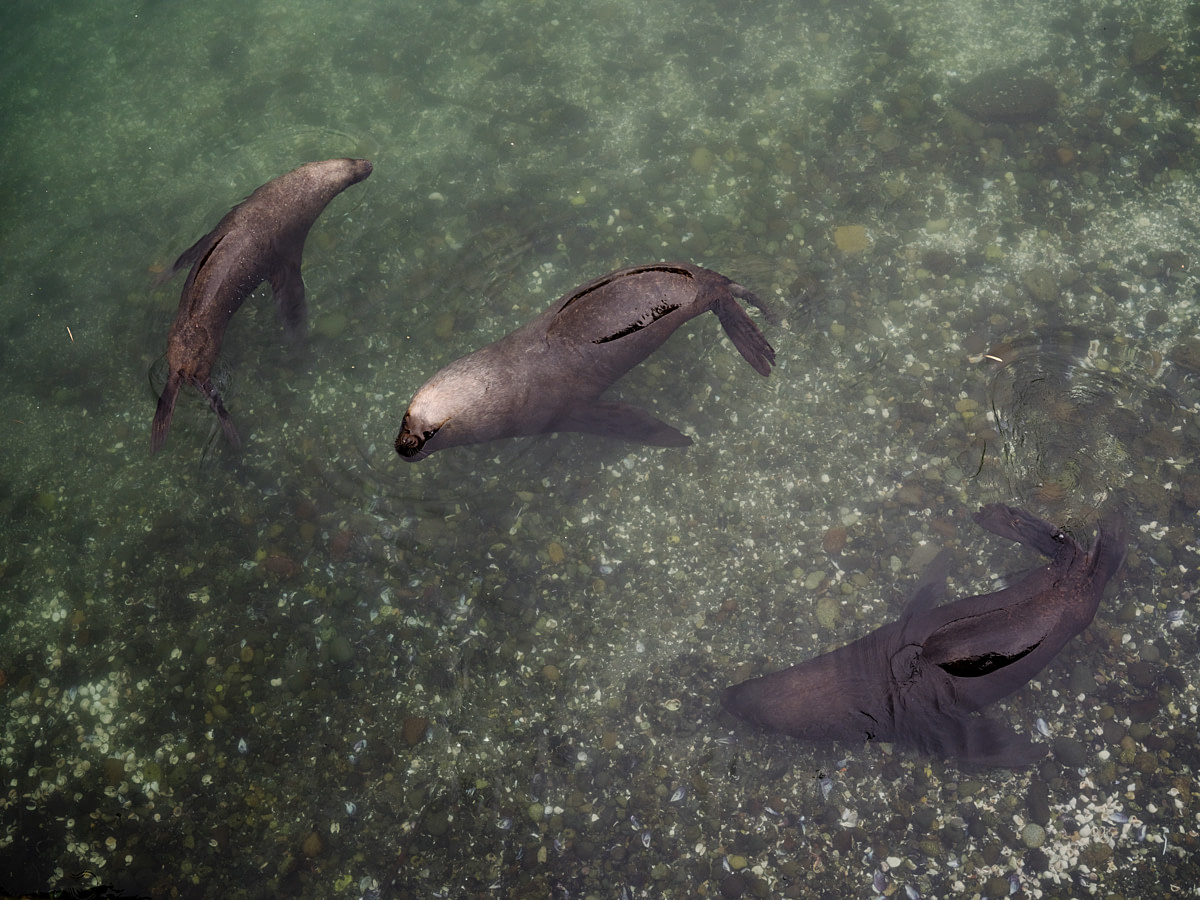
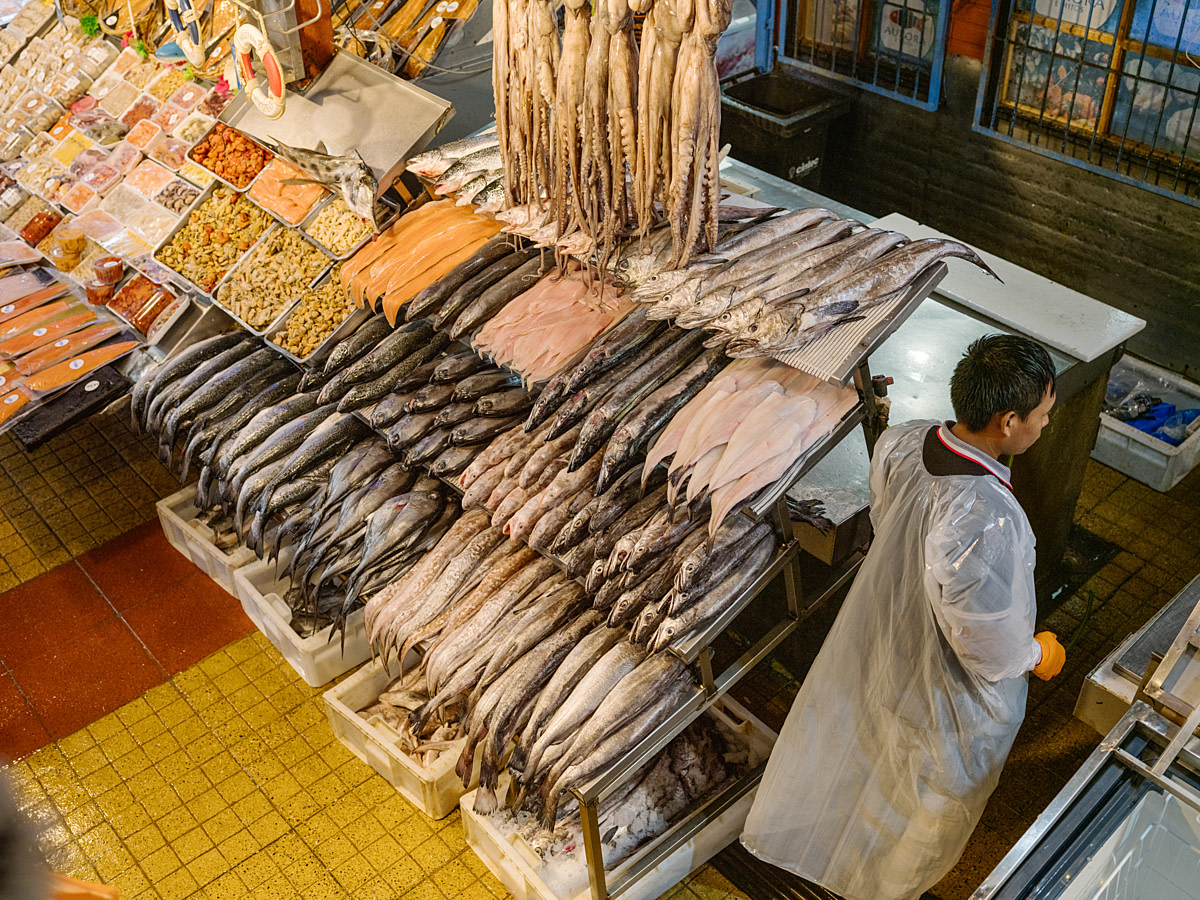
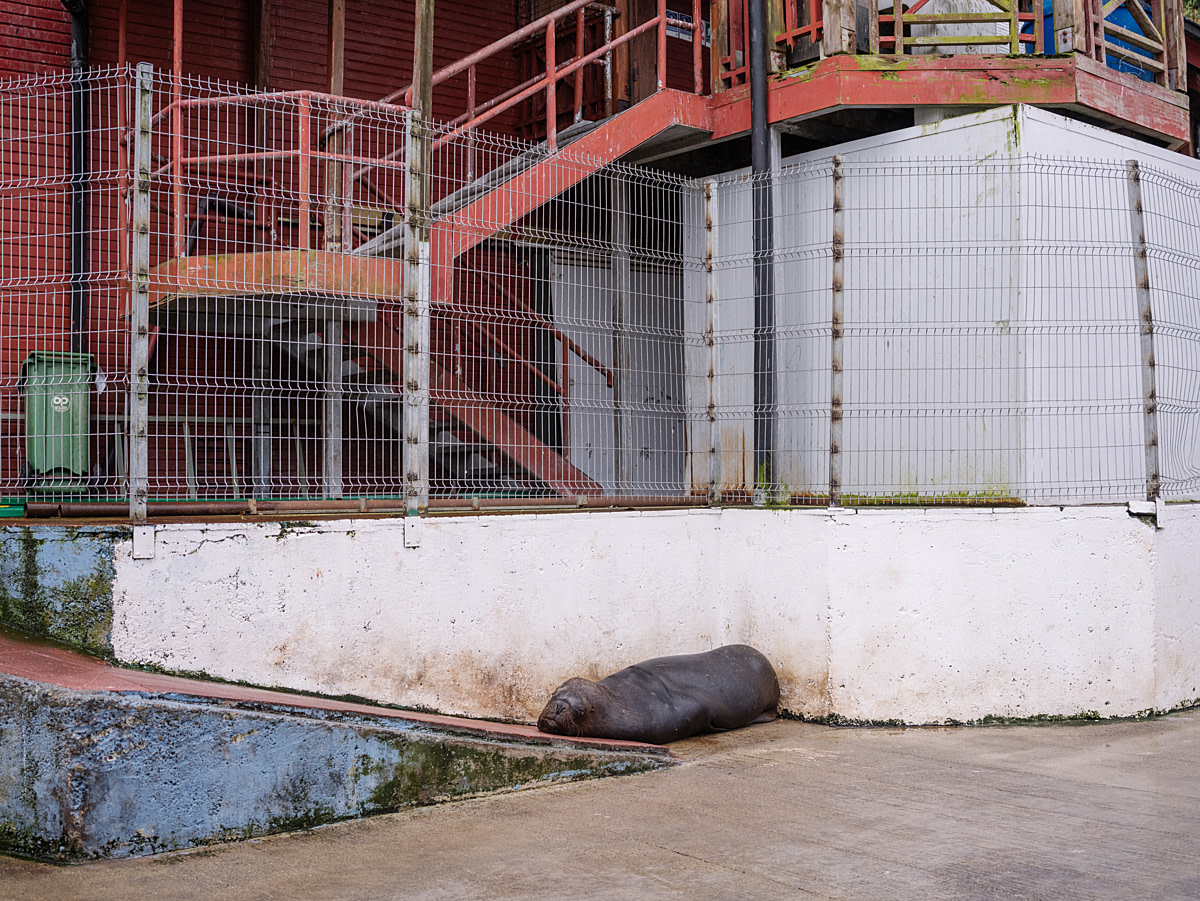
Marcos Zegers visited the famous Mercado Angelmó fish market in the port city of Puerto Montt. As one of the city’s main tourist attractions, it draws anyone who loves seafood—including sea lions and street dogs. Remains of fish and shellfish are tossed in open dumpsters at the market. Marcos noted that the area was very dirty, with a bad smell and unsanitary conditions.
“Everything is mixed together at Mercado Angelmó: all kinds of fish and shellfish. People work there, gutting and displaying the fish. There are a lot of sea lions, too. They climb onto the garbage containers and wander around alongside carrion birds.” — Marcos Zegers, photojournalist
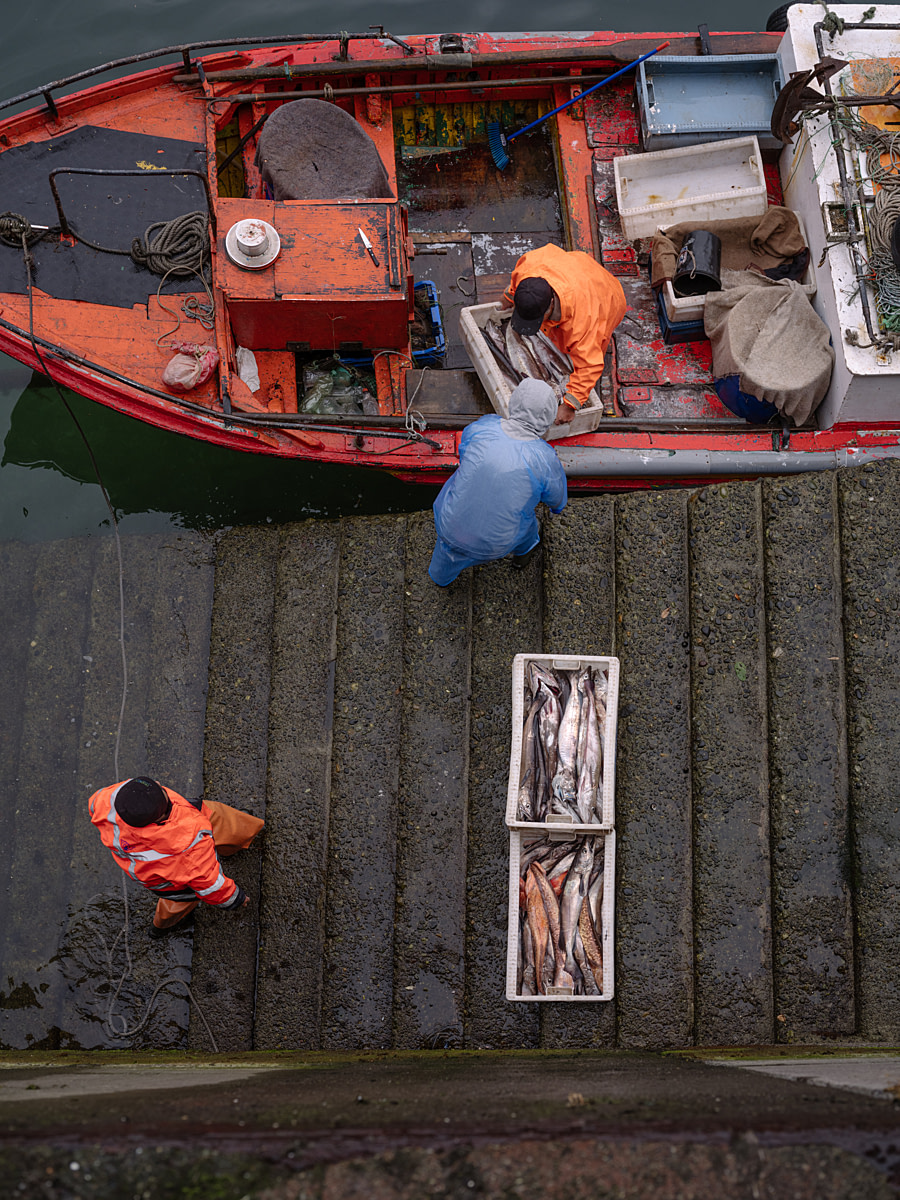
Fishermen unload crates of fresh fish caught through small-scale fishing and brought to a popular port city fish market. Mercado Angelmó, Puerto Montt, Llanquihue Province, Chile, 2025.
Marcos Zegers / We Animals
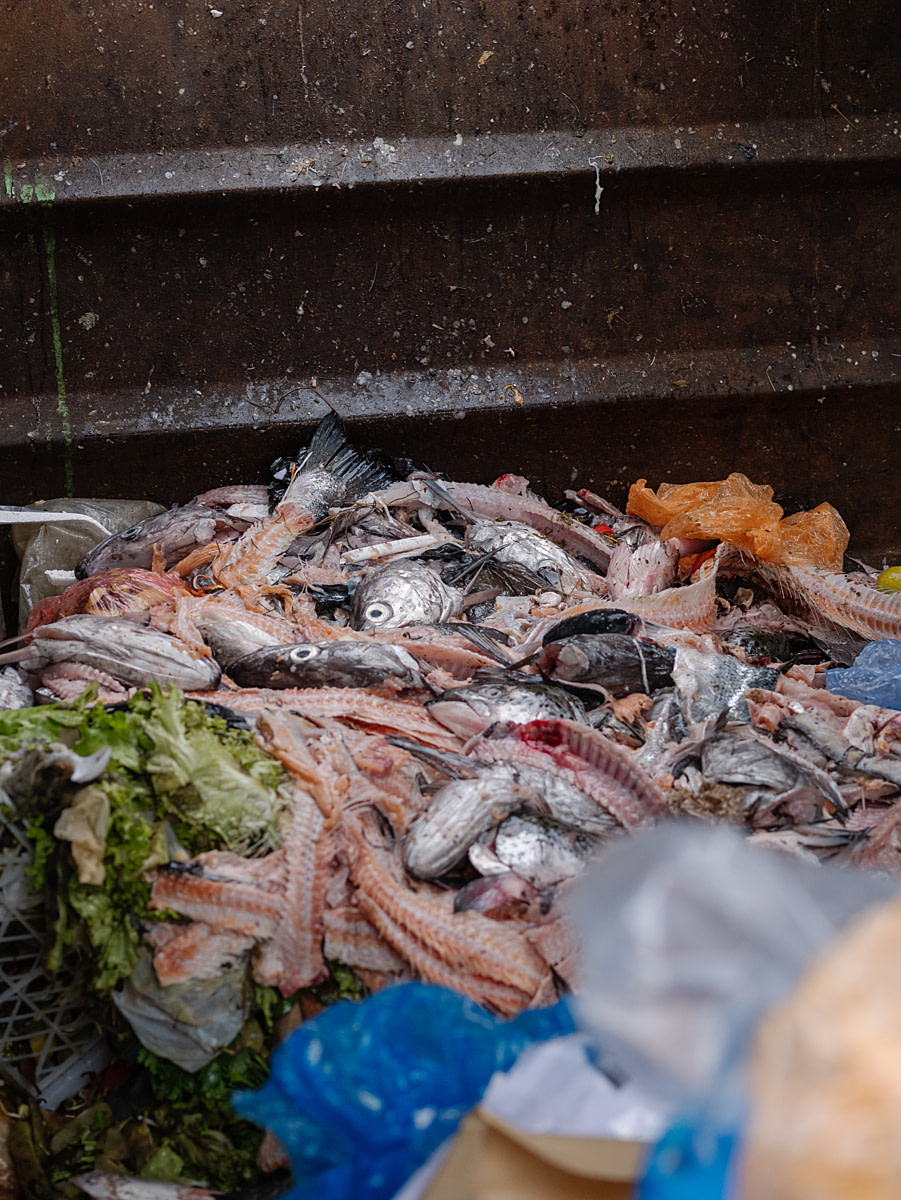
The remains of dead fish and shellfish lie mixed with plastic and food waste inside a dumpster outside a fish market. Mercado Angelmó, Puerto Montt, Llanquihue Province, Chile, 2025.
Marcos Zegers / We Animals
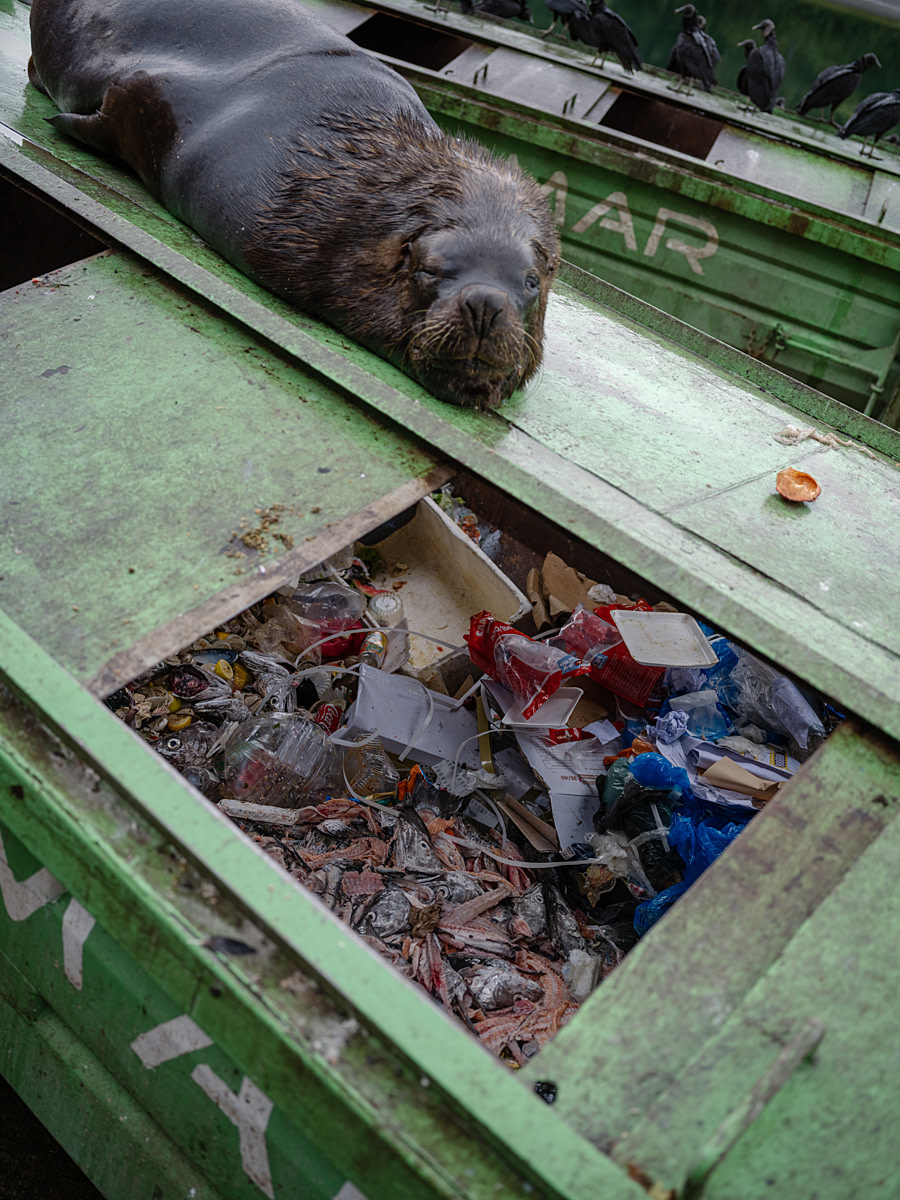
Attracted by fish and shellfish remains piled inside, a sea lion makes eye contact while resting atop a dumpster outside a fish market. Mercado Angelmó, Puerto Montt, Llanquihue Province, Chile, 2025.
Marcos Zegers / We Animals
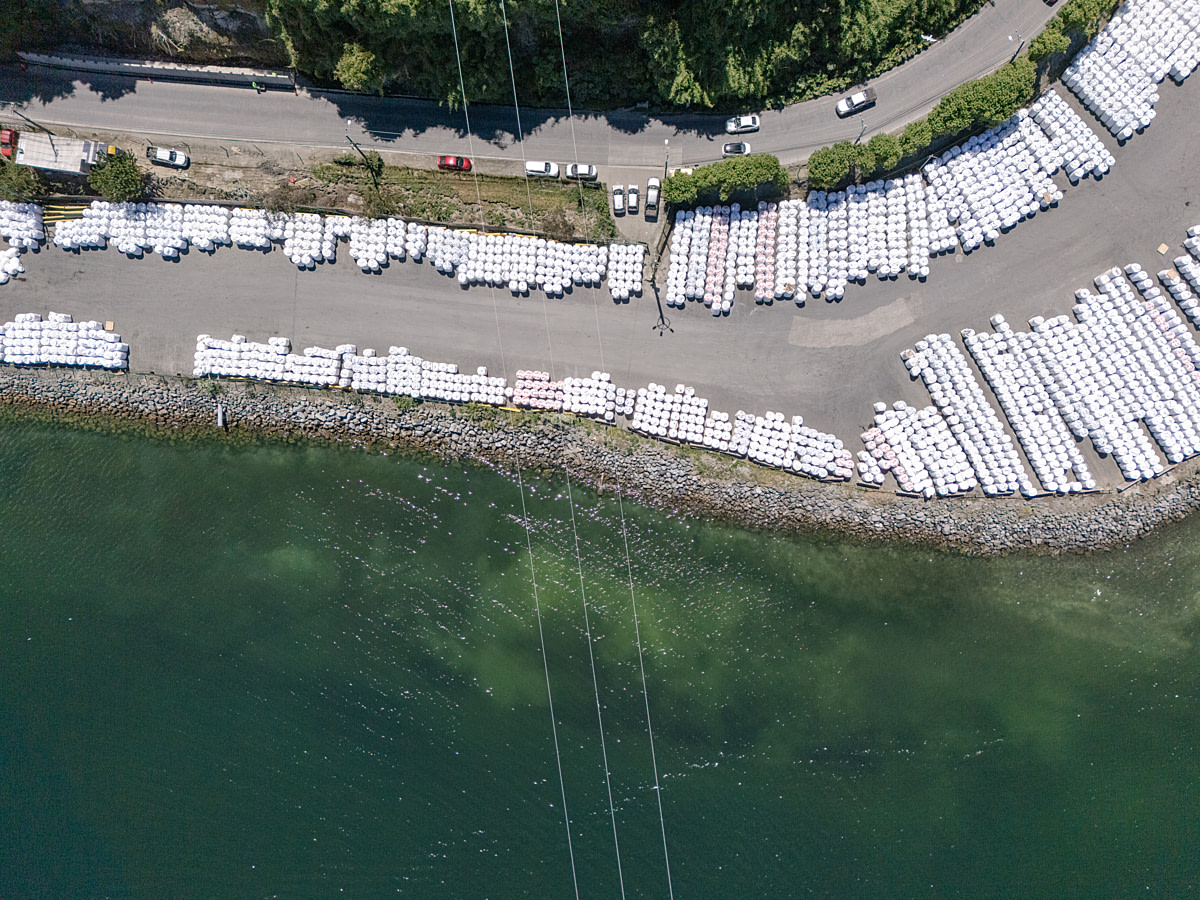
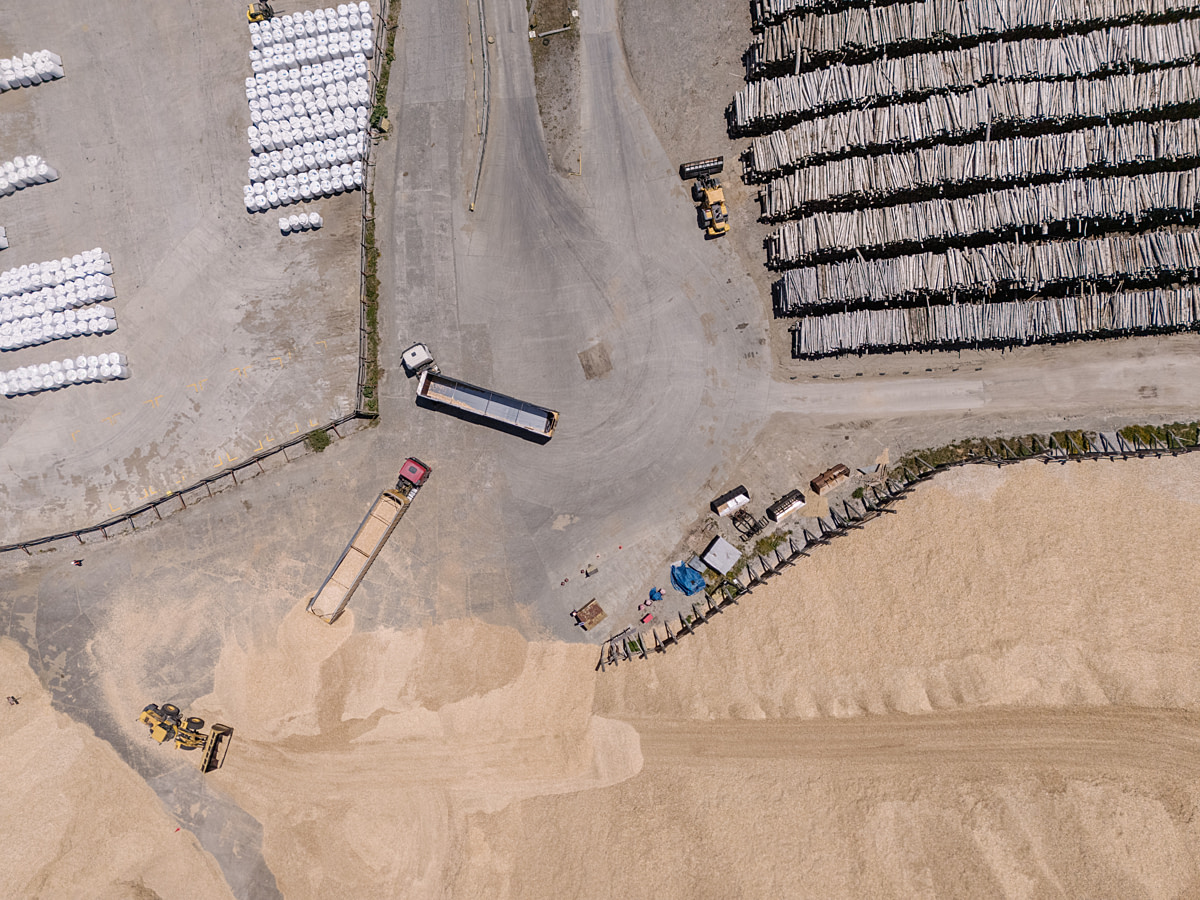
Deep-water ports form the epicentre of Chile’s salmon-farming industry, and host shipyards, maritime and aquaculture-related businesses. Among them is a shipyard that builds and services pontoon bulk feed carriers and other infrastructure for the salmon farming industry. Rows of large bulk bags, industry-standard containers used to transport salmon feed to farms, are stored and loaded at the site.
These white bags have become a symbol within the industry. Many of these sacks are used until they wear out, and then they often end up as litter on beaches and in the ocean.
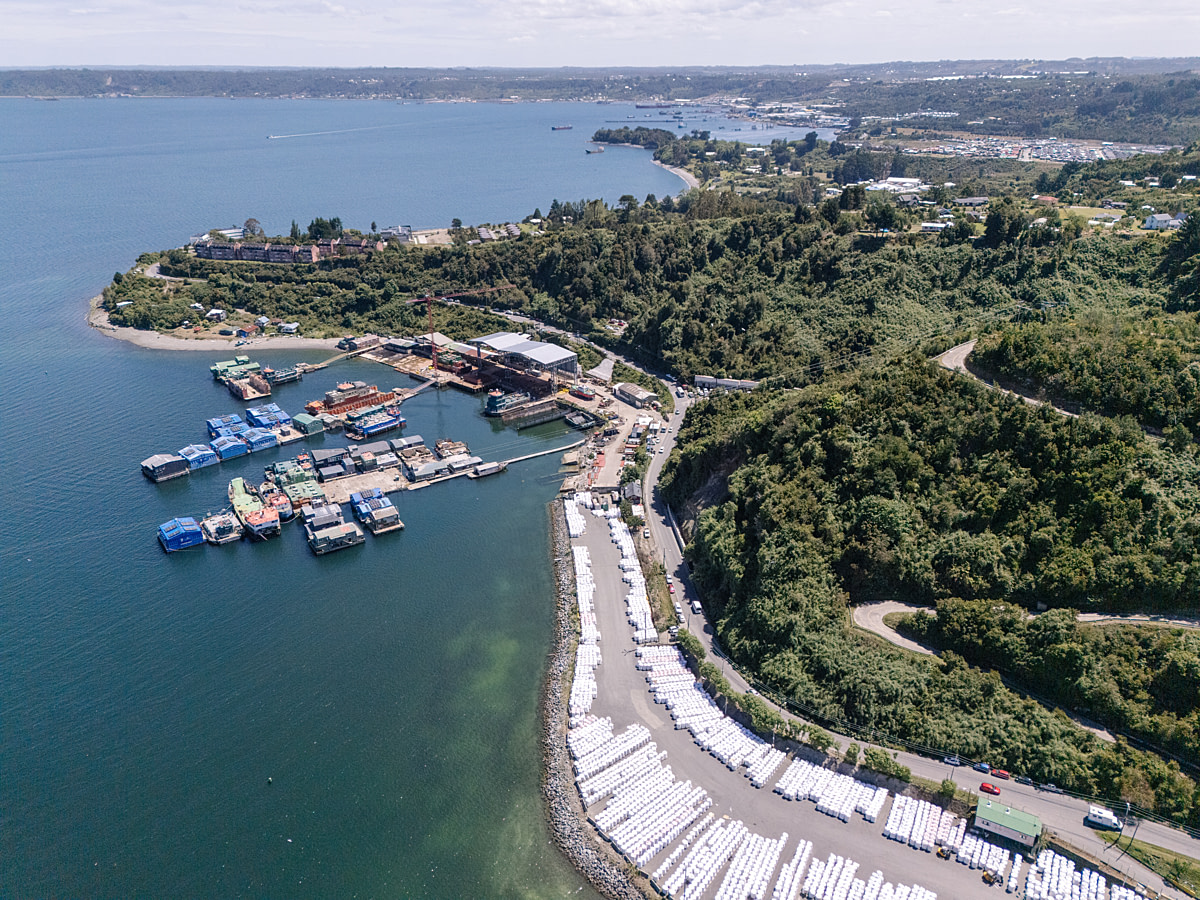
Rows of white bulk bags, commonly used to transport feed to salmon farms, are stored on an industrial pier. Pontoon buildings used by the aquaculture industry are visible at an adjacent shipyard. Undisclosed location, Puerto Montt, Llanquihue Province, Chile, 2025.
Marcos Zegers / We Animals
Threats to fragile ecosystems
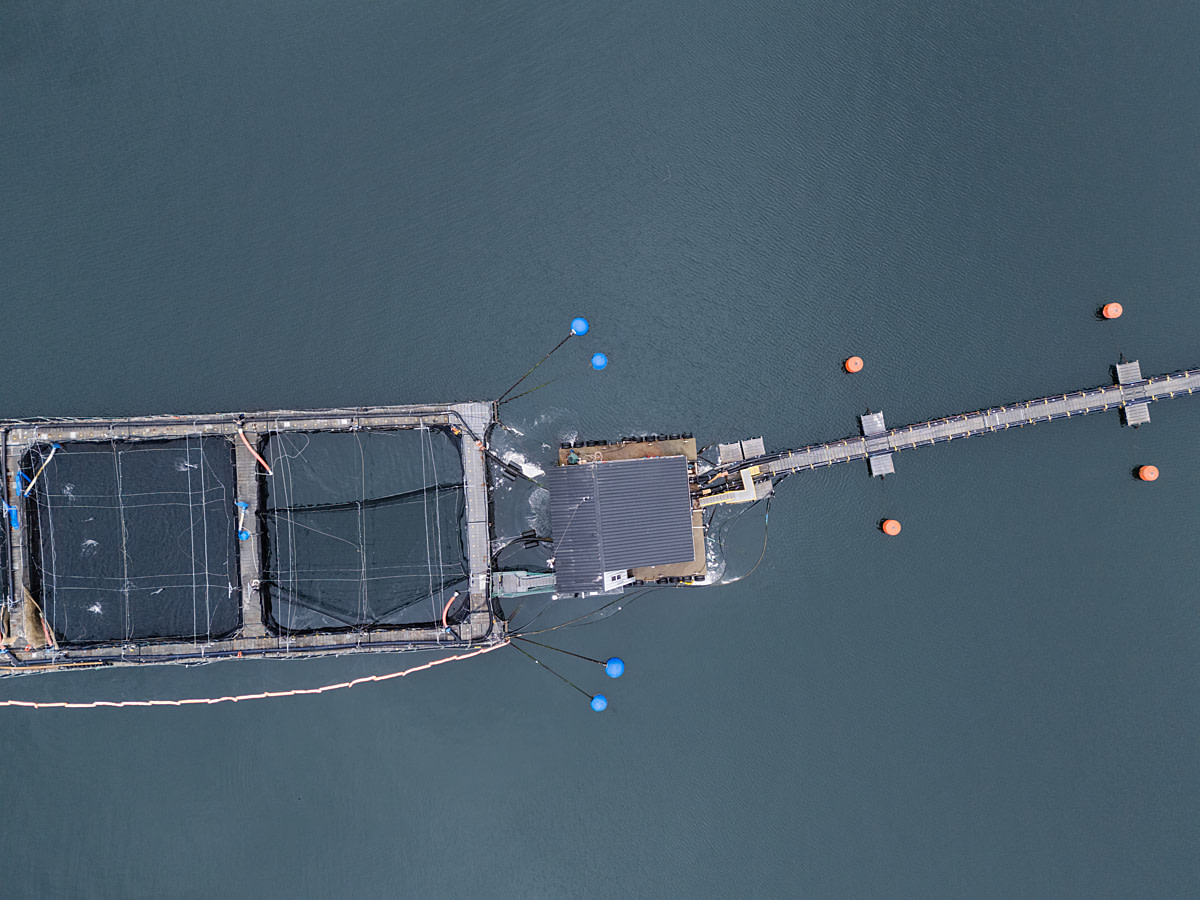
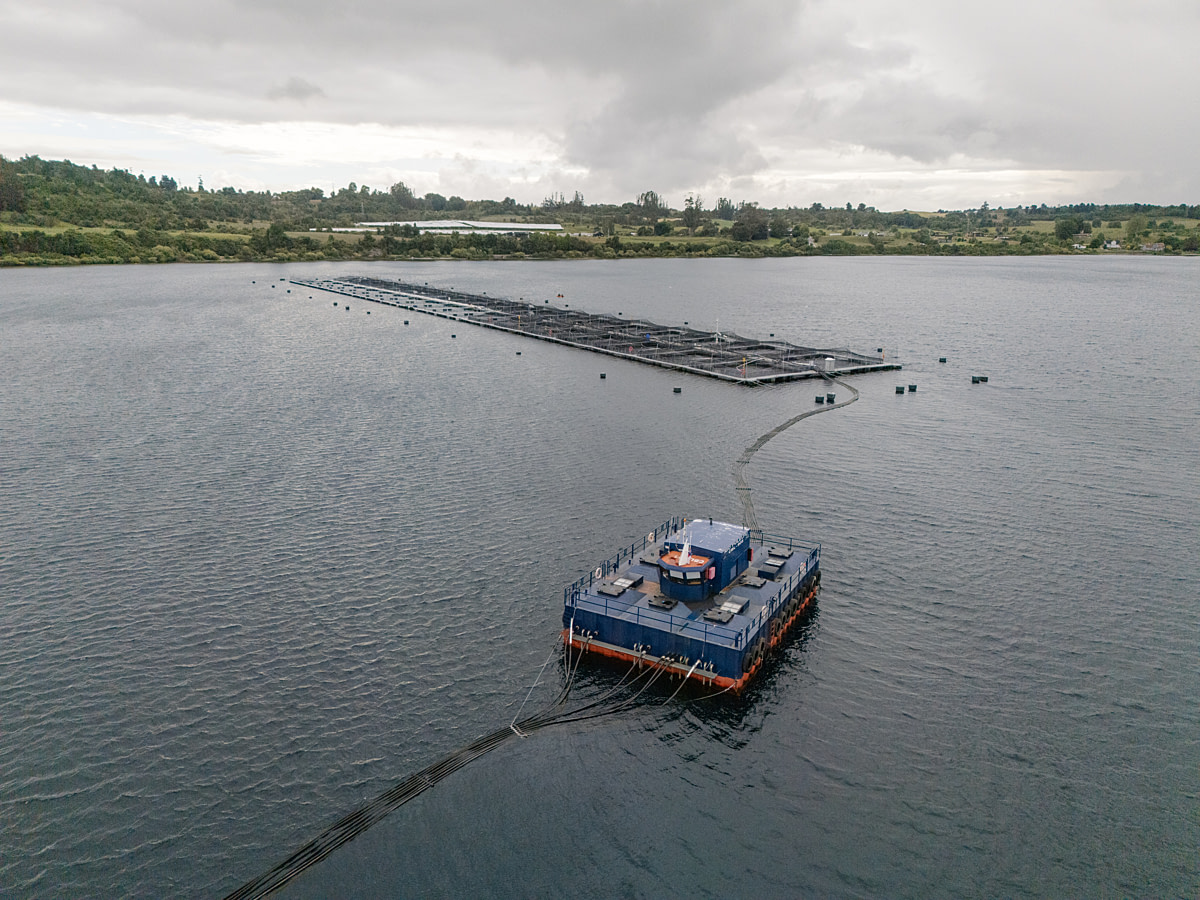
Chile’s Los Lagos region is famous for its national parks and temperate rainforest, making it a popular destination for ecotourism and outdoor enthusiasts. It’s also home to one of Chile’s most significant salmon-farming areas—a marine inlet fed by rivers, creating resulting in a mix of saltwater and freshwater that’s ideal for raising salmon.
“The estuary contained fish farms with salmon at various stages of growth. Several farms were abandoned. At each working farm, I got out of the car, knocked on doors, waited for local boats, and tried different ways to gain entry, but I didn’t get any positive responses. So I decided to focus on the animals, flying the drone whenever possible, since it was a rainy day.” — Marcos Zegers, photojournalist
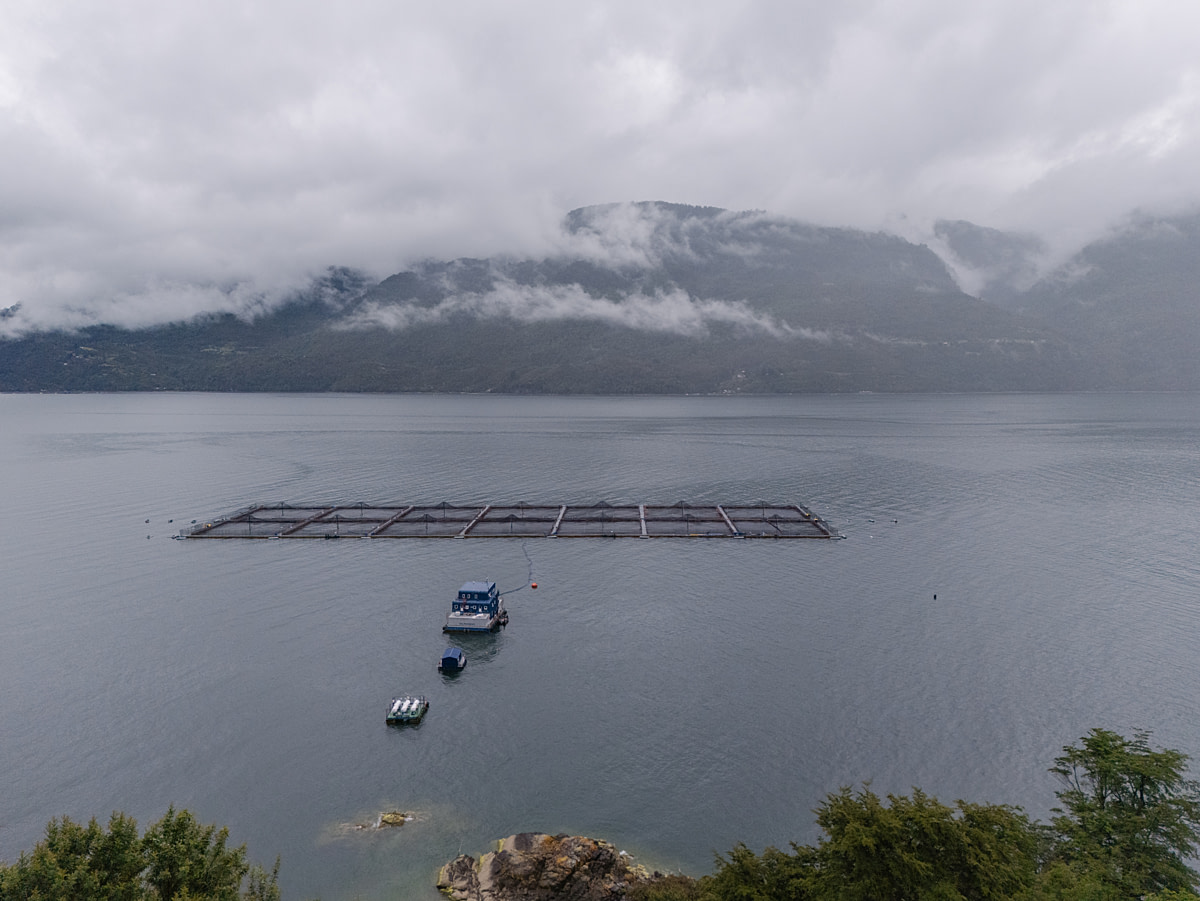
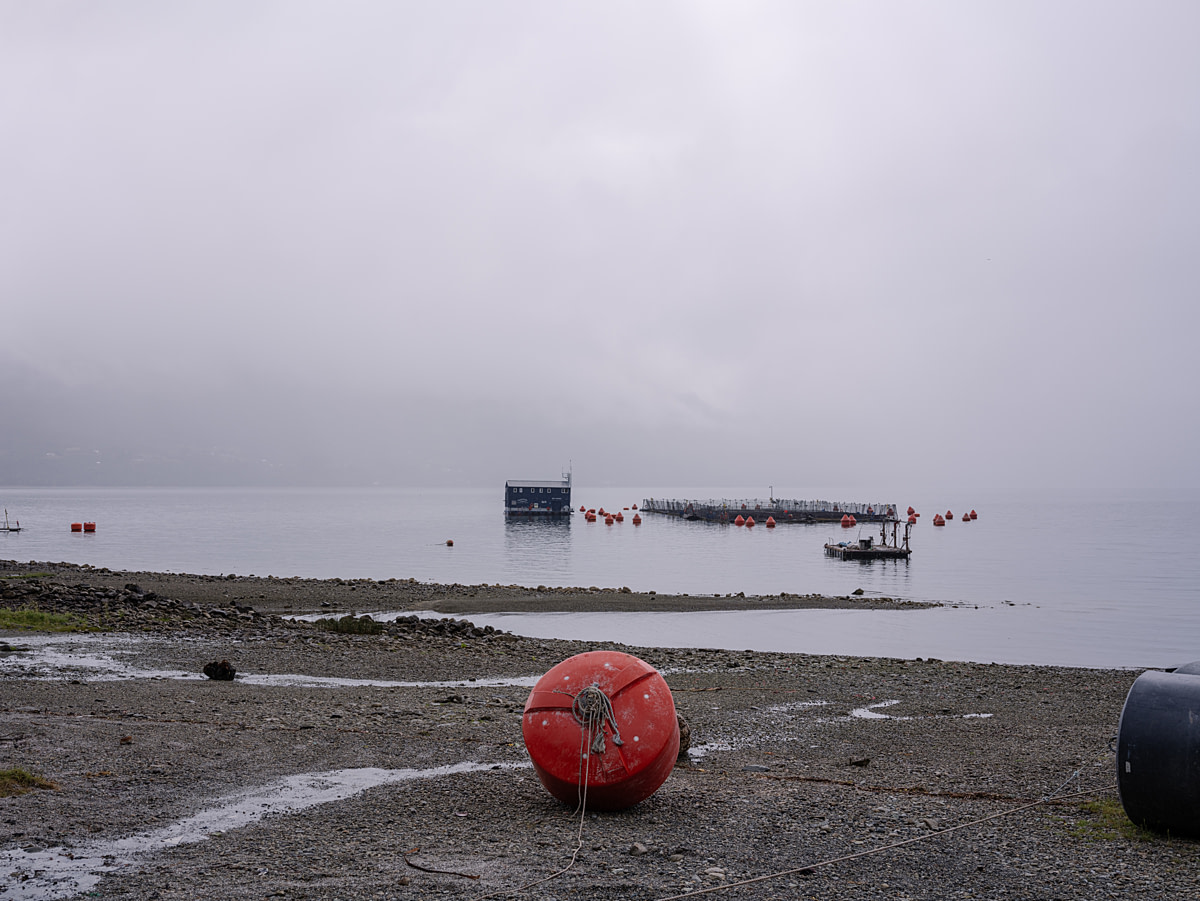
An aerial view of net cages, a floating work structure and other equipment at a salmon farm site in an estuary popular as an ecotourism destination. Undisclosed location, Cochamo, Llanquihue Province, Chile, 2025.
Marcos Zegers / We Animals
The fish here are densely stocked in cages throughout their lives, which naturally attracts sea lions and birds. Although the farms are protected by security systems attached to nets and buoys around the perimeters, predators and the breakdown of net cages lead to salmon escaping. Between 2004 and 2021, over 8.5 million salmonoids escaped Chilean farms. An estimated 70% of these were in the Los Lagos region.
Salmon fry approximately four-months-old swim in a crowded freshwater hatchery tank. Freshwater hatcheries like this one raise salmon from alevins through to smolt, after which the fish are transferred to marine pens to grow to market size. Undisclosed location, Puerto Octay, Osorno Province, Los Lagos Region, Chile, 2025.
Marcos Zegers / We Animals
Since salmon are not native to these waters, their escape poses one of the biggest threats to the ecosystem. Being voracious eaters, they can consume local aquatic animals at a scale that upsets the ecosystem’s balance. They also bring the risk of passing on diseases that native species can’t fight, endangering Chile’s abundant sea life because of North America’s demand for salmon.
See more stories like this. Subscribe to our newsletter.
Explore and download these visuals and more via the We Animals Stock Site.