
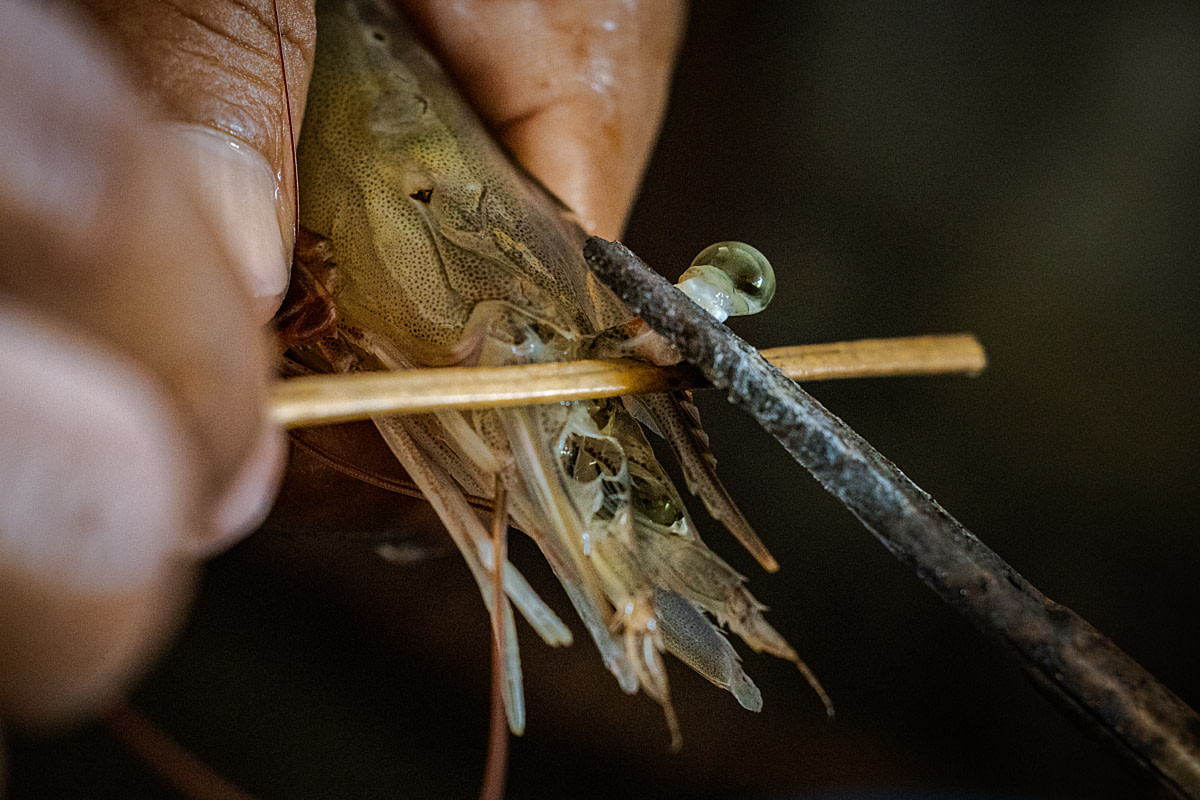

A female broodstock shrimp’s eyestalk is cut off with a pair of scissors during the ablation process at a shrimp hatchery. Undisclosed location, East Java, Indonesia, 2026.
Ulet Ifansasti / Animal Welfare Observatory / We Animals
Photographer: Marcos Zegers, Ulet Ifansasti
Videographer: Marcos Zegers, Ulet Ifansasti
Shrimp are among the most numerous animals raised by humans, with billions of individuals bred and killed every year, yet they remain among the least visible.
In 2025 and 2026, working with the NGO Animal Welfare Observatory on an international investigation into shrimp farming, our photojournalists travelled to Ecuador and Indonesia to document the industry first-hand. From hatcheries producing hundreds of millions of larvae each day to vast pond systems visible only from the air, these investigations offer a rare look inside a global industry built around the lives of billions of animals.
Although shrimp farming takes different forms in Latin America and Asia, shaped by local practices, geography, and global demand, the photographs reveal a common thread: an industry that operates on an immense scale, largely hidden from public view.
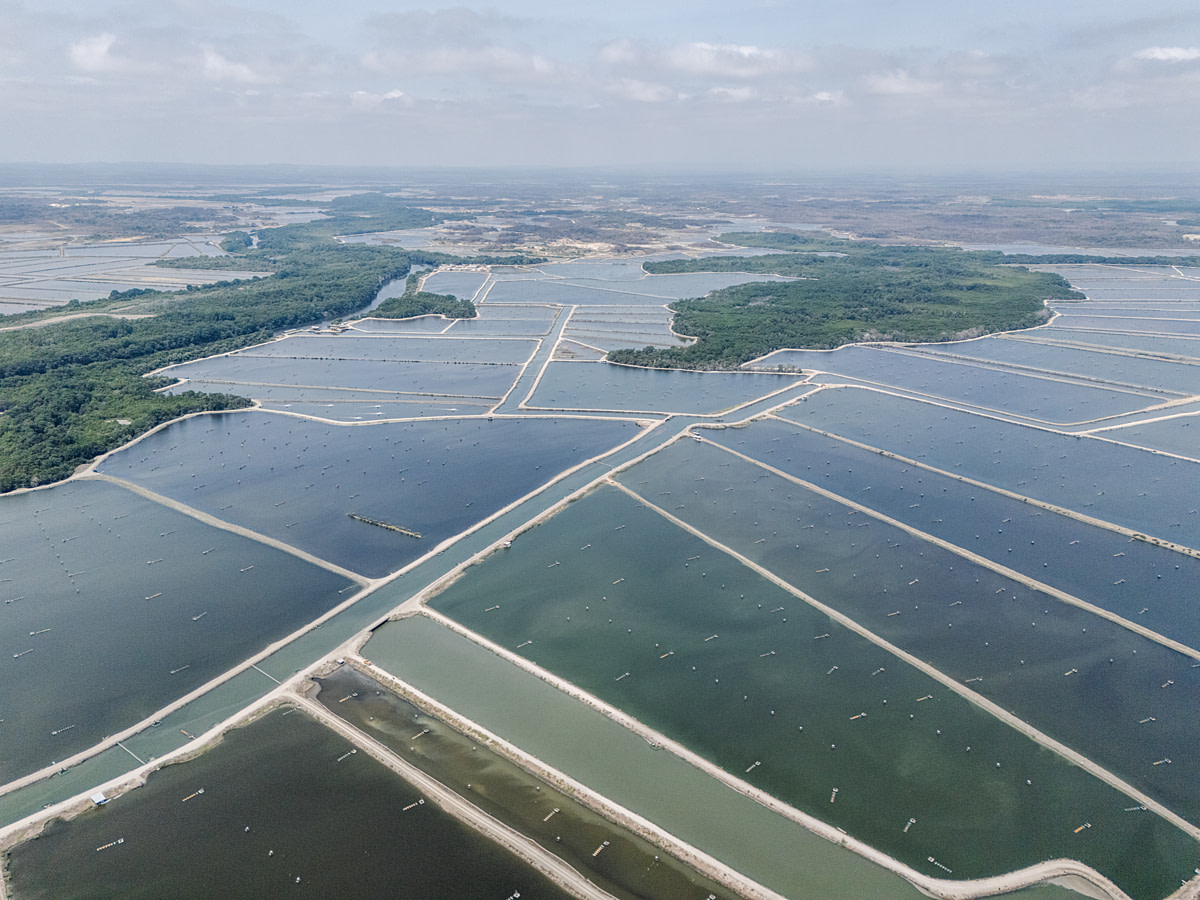
Large shrimp farm ponds and water channels separated by dirt berms stretch into the horizon within a mangrove ecosystem. Undisclosed location, Gulf of Guayaquil, Guayas Province, Ecuador, 2025.
Marcos Zegers / Animal Welfare Observatory / We Animals
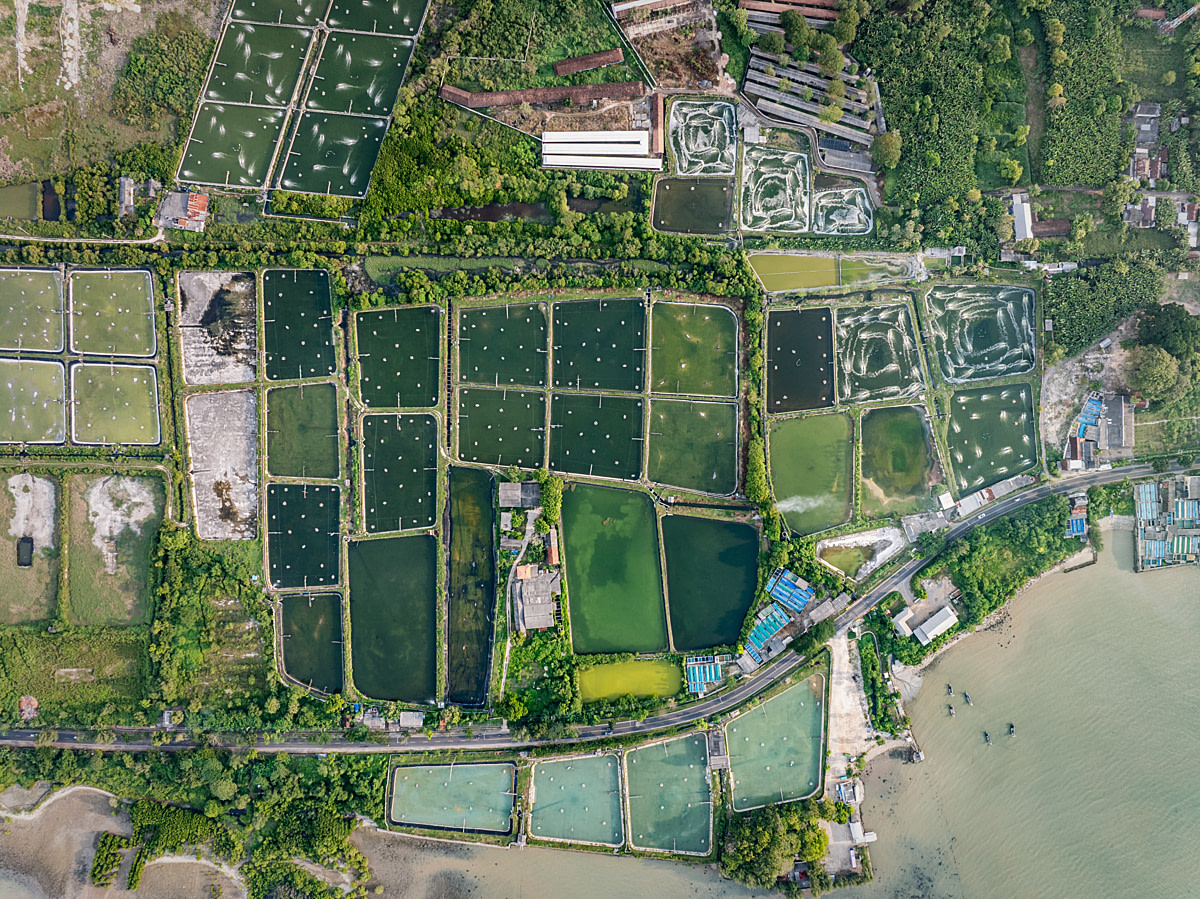
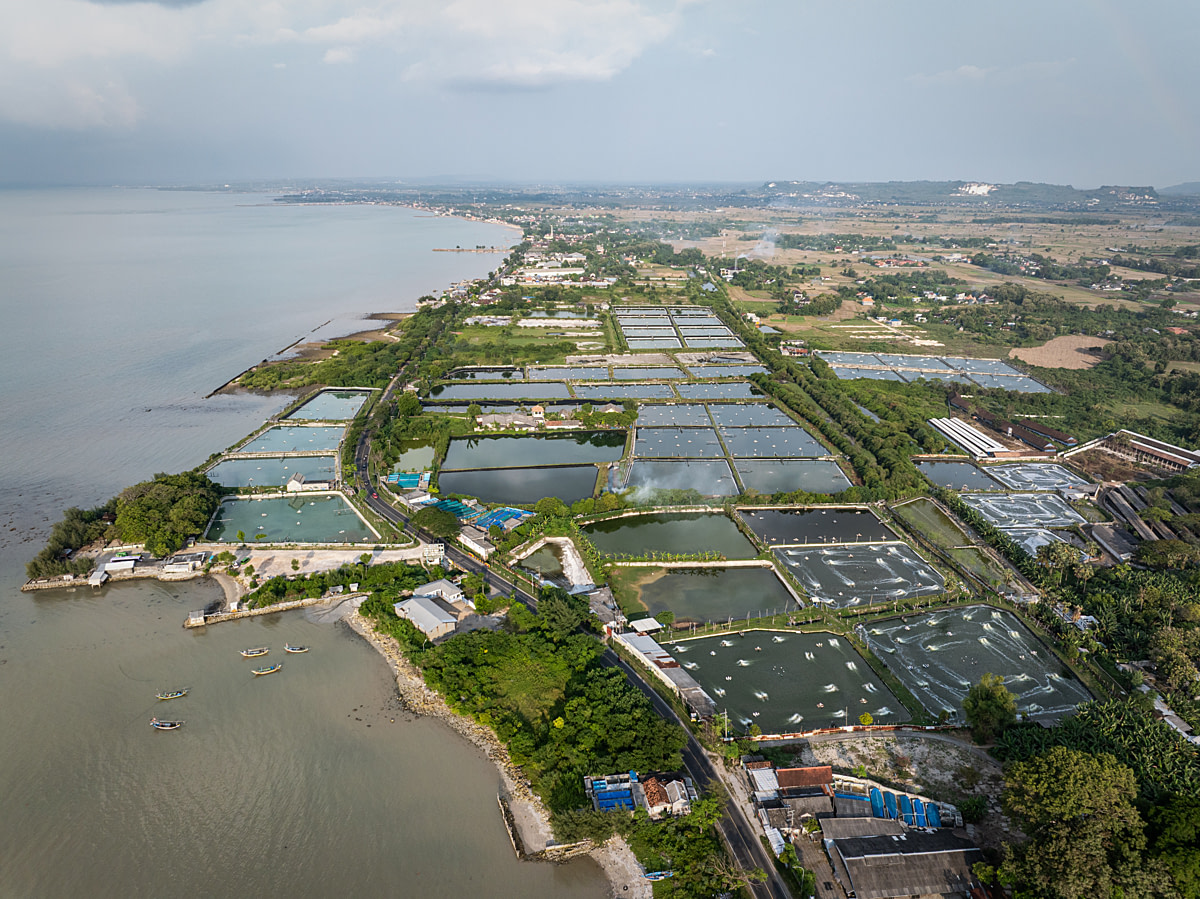
Numerous murky rearing ponds, some with water aerators, and other infrastructure at a large-scale coastal shrimp farm. Undisclosed location, East Java, Indonesia, 2026.
Ulet Ifansasti / Animal Welfare Observatory / We Animals
Indonesia: The World’s Fourth Largest Shrimp Exporter
Although shrimp have been farmed in Indonesia for centuries, today’s industry operates on an entirely different scale. Stretching across more than 81,000 kilometres of coastline, the world’s largest archipelago is now also the world’s fourth-largest exporter of farmed shrimp, producing close to one million tonnes annually. Much of that production supplies markets in the United States and Japan.
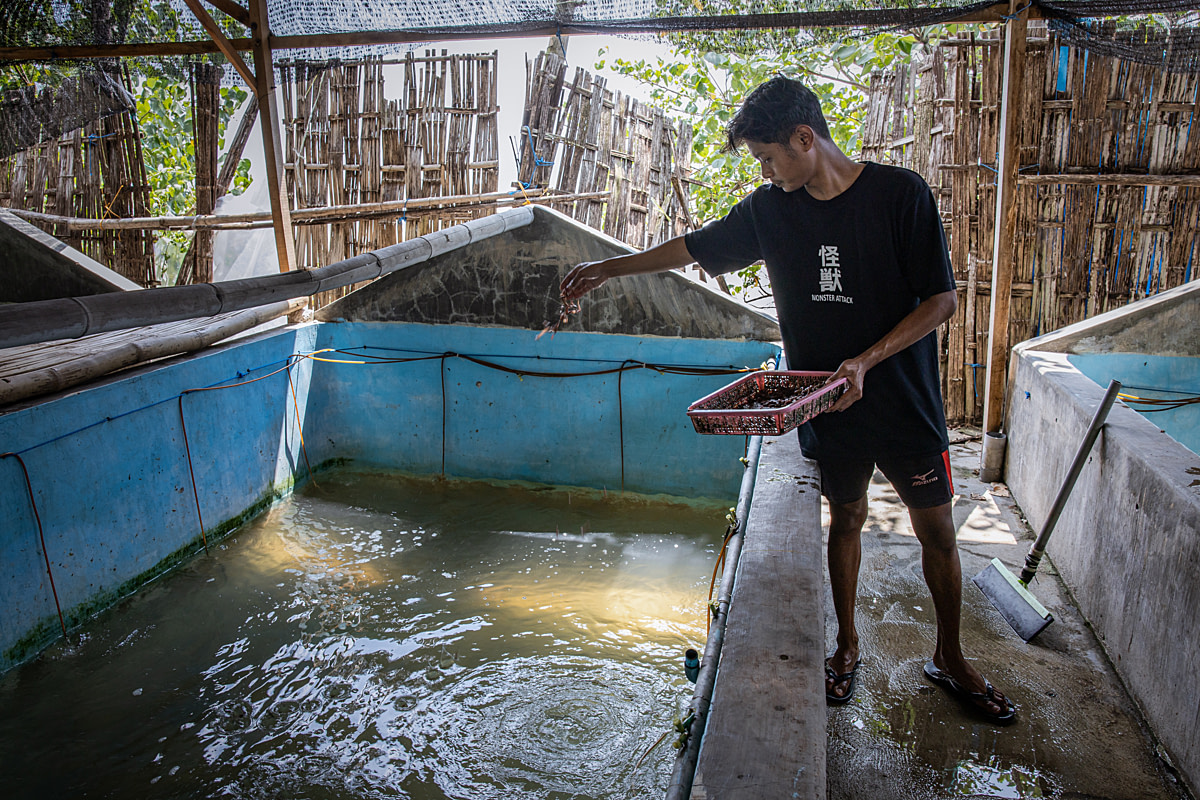
Through drone photography and video footage, photojournalist Ulet Ifansasti documented an expansive landscape of green ponds, where aerators churn the water around the clock as workers monitor water quality, feed shrimp and track their development during a grow-out cycle that typically lasts about 100 days. Only when viewed from above does the sheer scale of the operation become clear.
Water aerators in murky ponds and other infrastructure at a large-scale coastal shrimp farm. Undisclosed location, East Java, Indonesia, 2026.
Ulet Ifansasti / Animal Welfare Observatory / We Animals
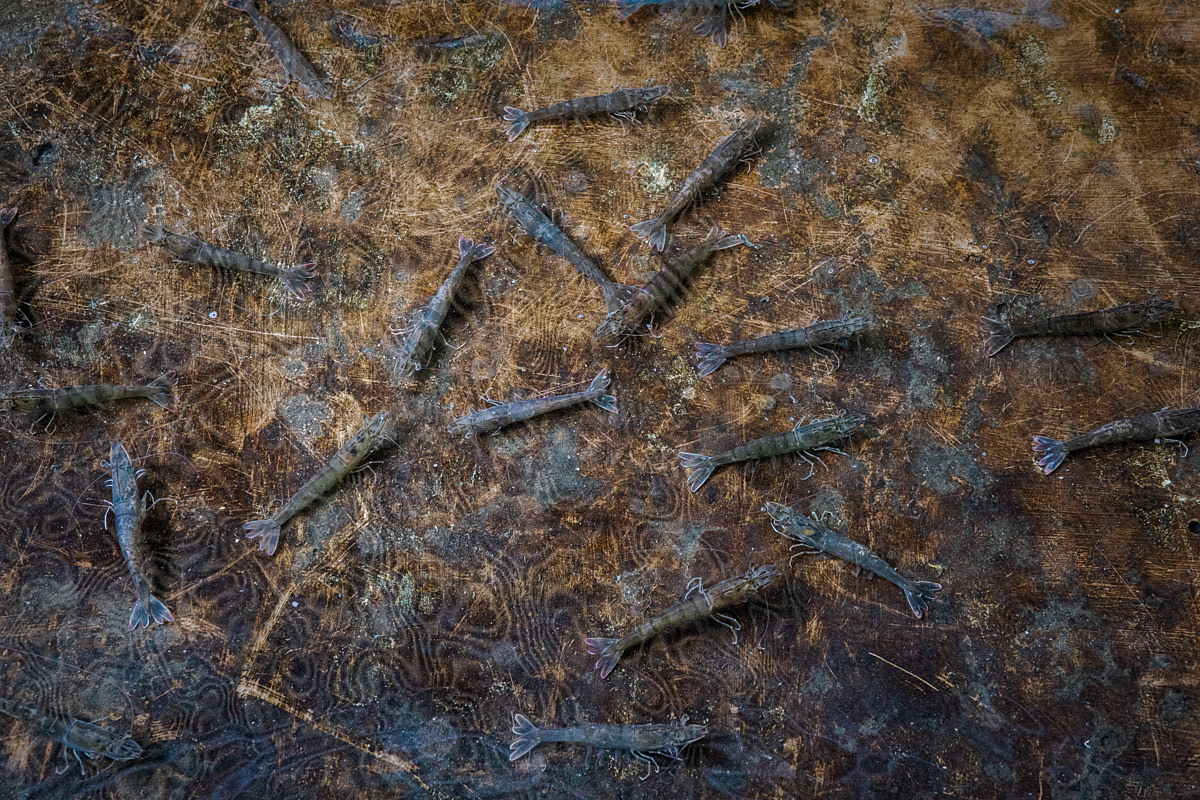
Female broodstock shrimp swim at the bottom of a quarantine tank after having an eyestalk cut off during the ablation process at a shrimp hatchery. Undisclosed location, East Java, Indonesia, 2026.
Ulet Ifansasti / Animal Welfare Observatory / We Animals
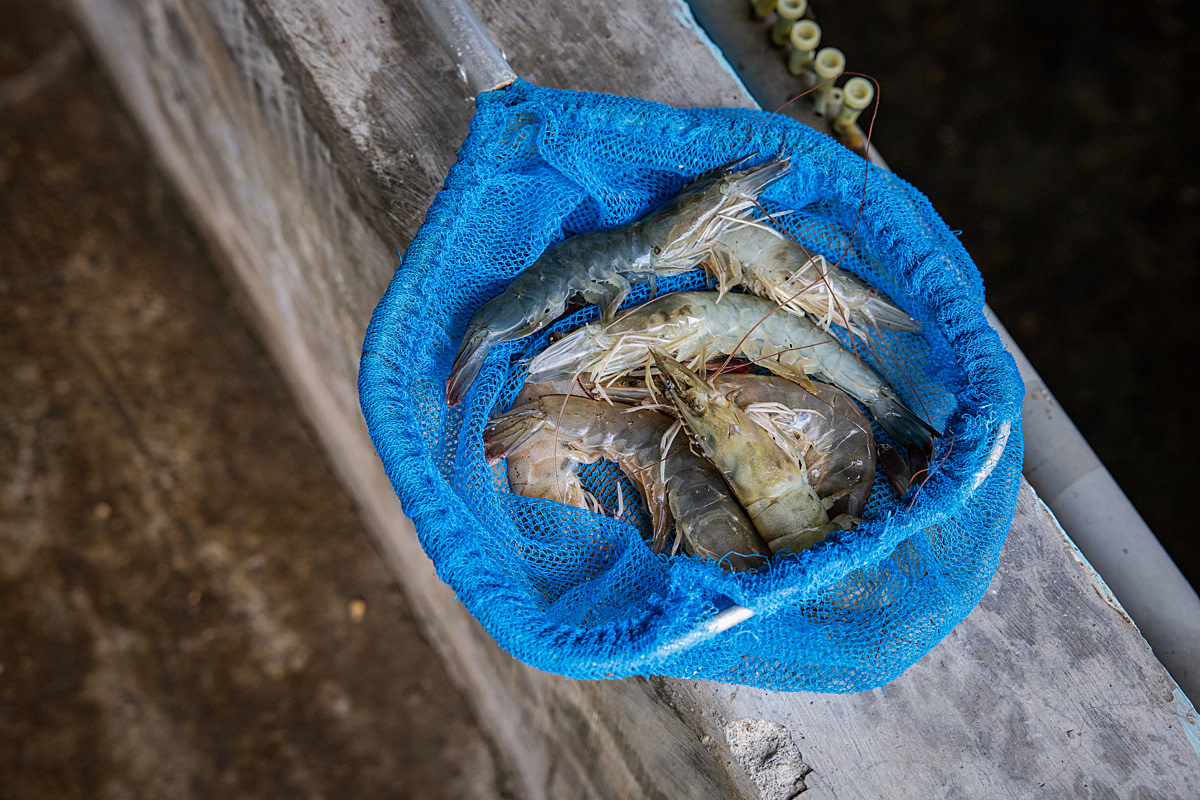
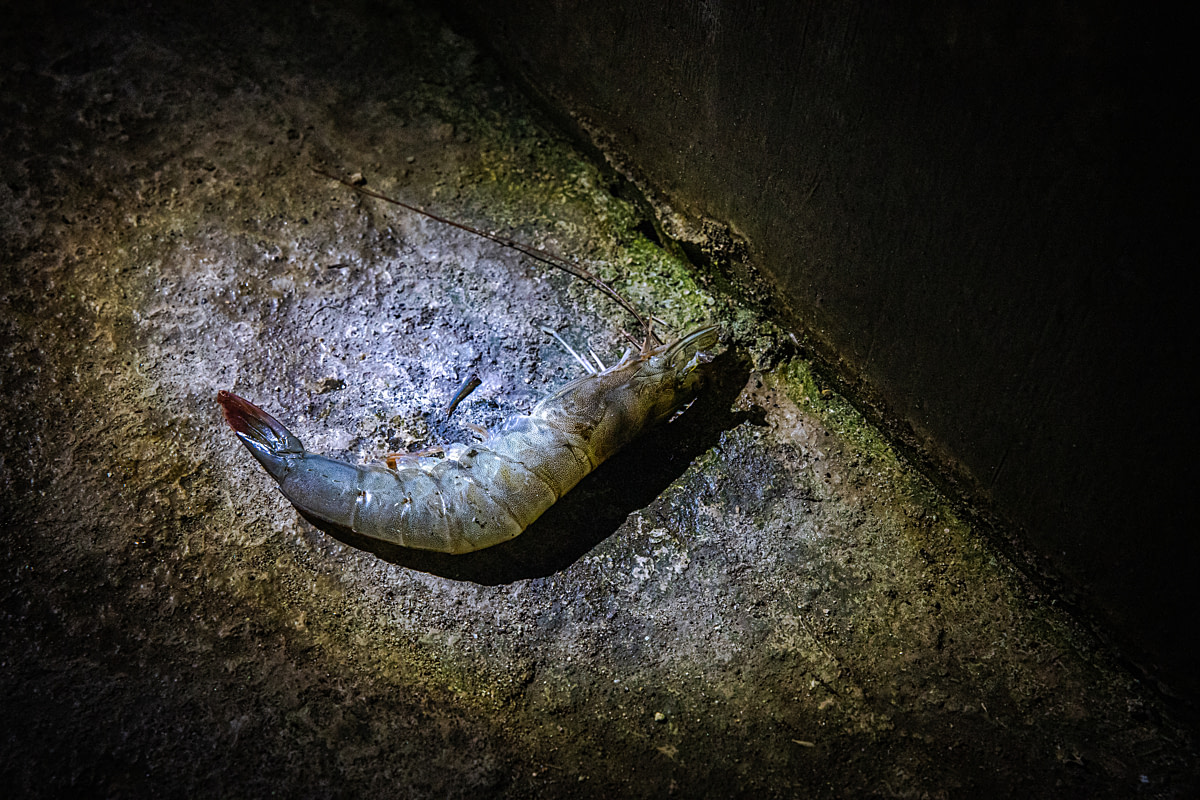
Dead female broodstock shrimp lie in a net at a shrimp hatchery. Undisclosed location, East Java, Indonesia, 2026.
Ulet Ifansasti / Animal Welfare Observatory / We Animals
The images trace the industry’s production cycle back to the hatchery. Female shrimp here may lay eggs up to 35 times, with the breeding cycle repeating roughly every four days. Within five to six days, the newly hatched nauplii, the earliest stage of a shrimp’s life, are transferred to grow-out farms, where they continue developing until harvest.
“Many of the broodstock shrimp I saw appeared weak, sick or dying when they arrived at the facility.” — Ulet Ifansasti, photojournalist
At the hatchery, we captured a rarely documented practice called eyestalk ablation. The procedure, which involves amputating one eyestalk from female breeding shrimp to stimulate egg production, is widely used in commercial shrimp hatcheries worldwide. As scientific evidence continues to show that decapod crustaceans, including shrimp, can experience pain and distress, eyestalk ablation has come under increasing scrutiny from researchers and animal welfare experts.
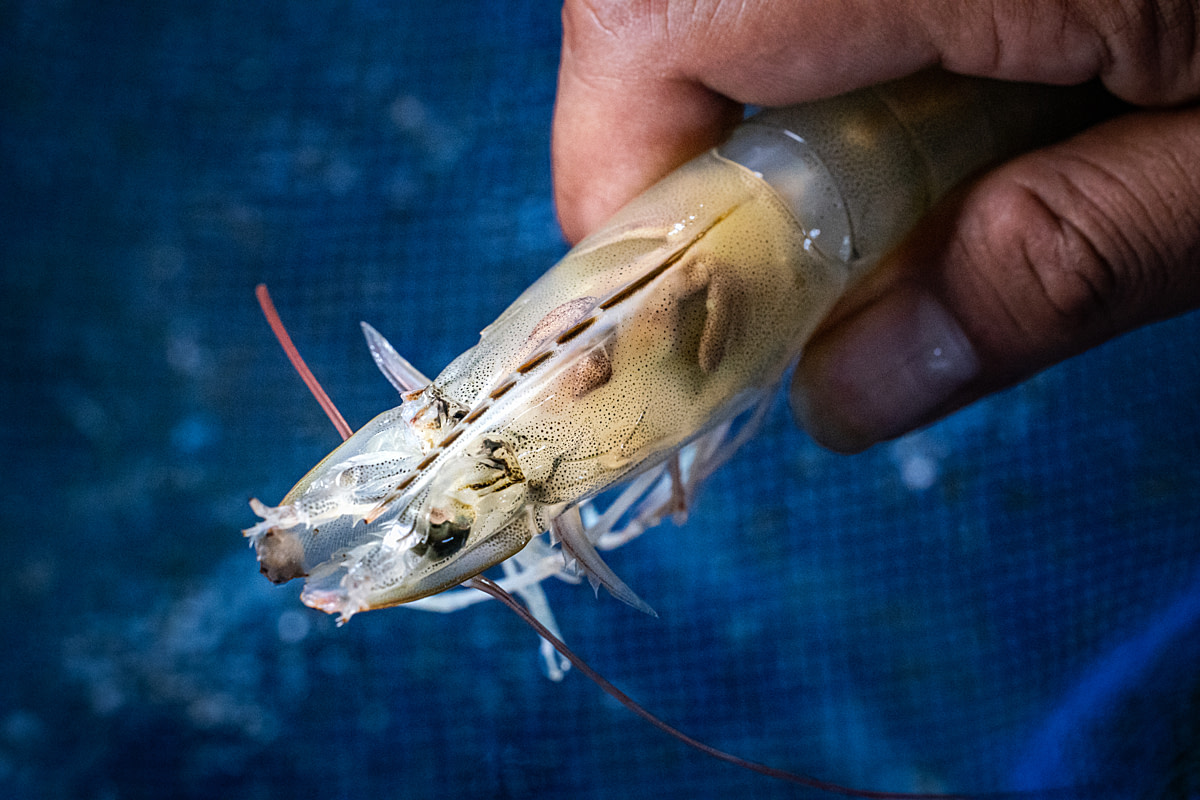
A female broodstock shrimp after her right eyestalk was cut off during the ablation process at a shrimp hatchery. Undisclosed location, East Java, Indonesia, 2026.
Ulet Ifansasti / Animal Welfare Observatory / We Animals
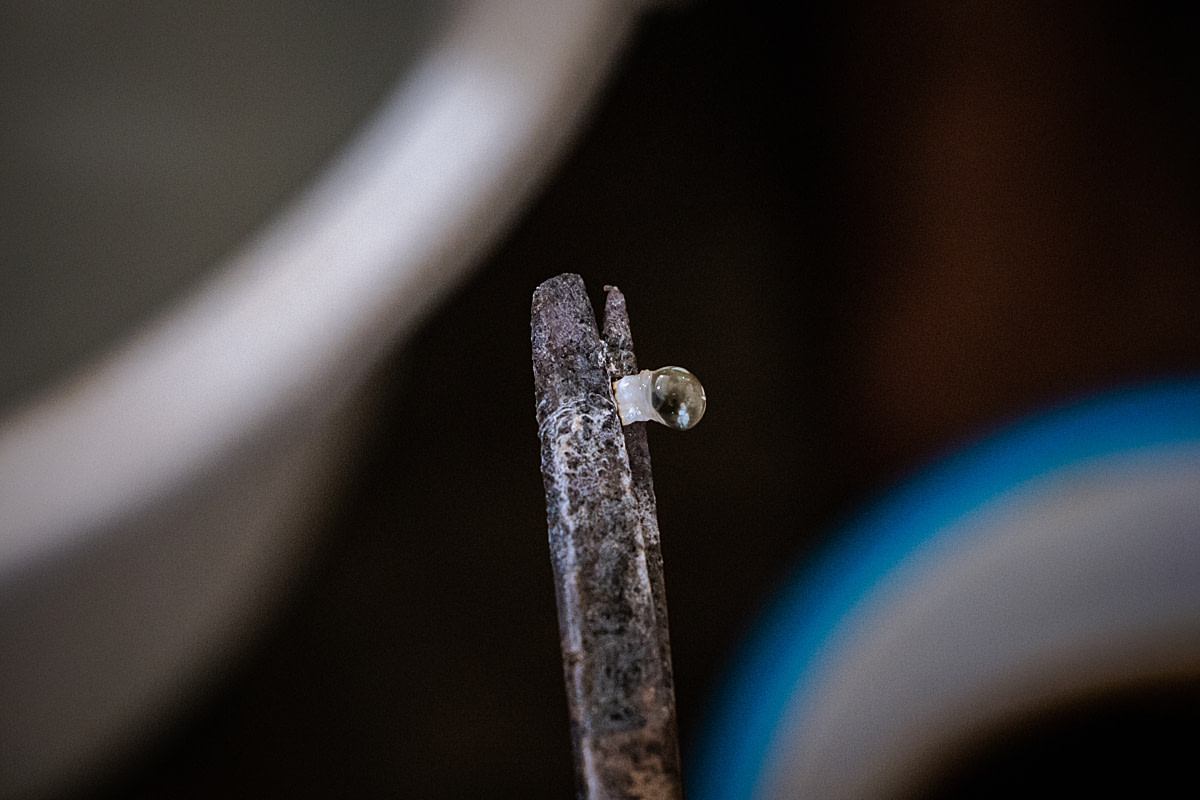
A female broodstock shrimp’s severed eyestalk sits in the pair of scissors used to cut it from her body during the ablation process at a shrimp hatchery. Undisclosed location, East Java, Indonesia, 2026.
Ulet Ifansasti / Animal Welfare Observatory / We Animals
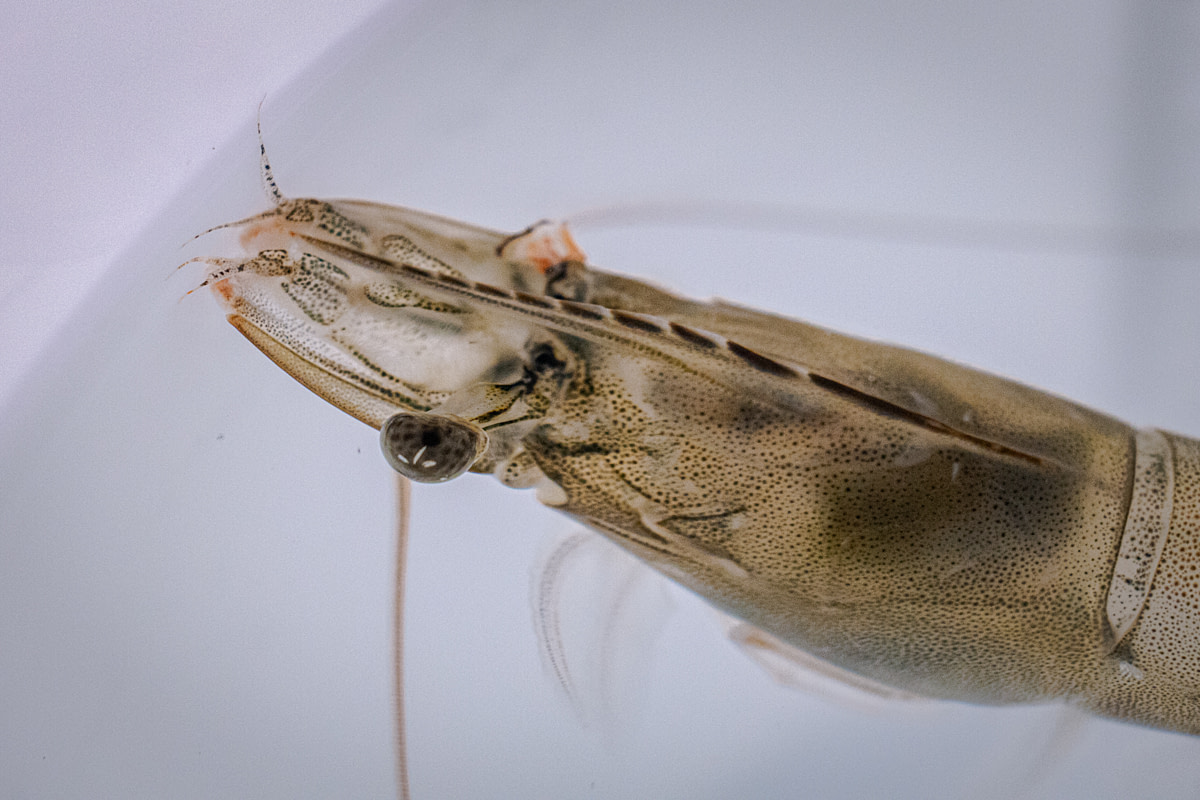
A female broodstock shrimp with a severed eyestalk swims in a container of water moments after it was cut from her body during the ablation process at a shrimp hatchery. Undisclosed location, East Java, Indonesia, 2026.
Ulet Ifansasti / Animal Welfare Observatory / We Animals
A female broodstock shrimp’s eyestalk is cut off with a pair of scissors during the ablation process at a shrimp hatchery. Undisclosed location, East Java, Indonesia, 2026.
Ulet Ifansasti / Animal Welfare Observatory / We Animals

Ecuador: Mangrove Ecosystems Obliterated
Shrimp has overtaken oil as Ecuador’s most valuable export, reflecting the steep growth of an industry that now supplies markets across Asia, Europe and North America. Over the past decade, Ecuador’s shrimp production has nearly quadrupled. In that time, it has transformed large stretches of the country’s Pacific coastline.
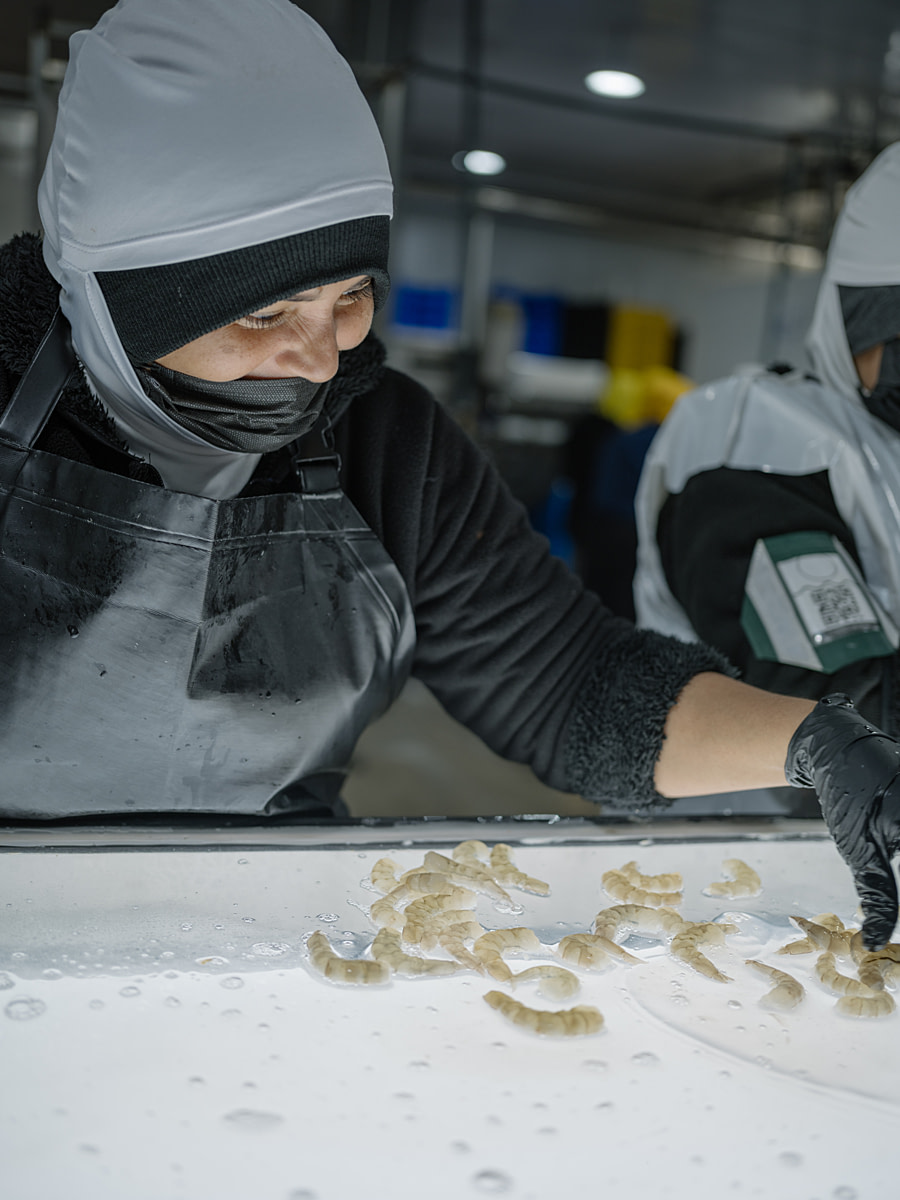
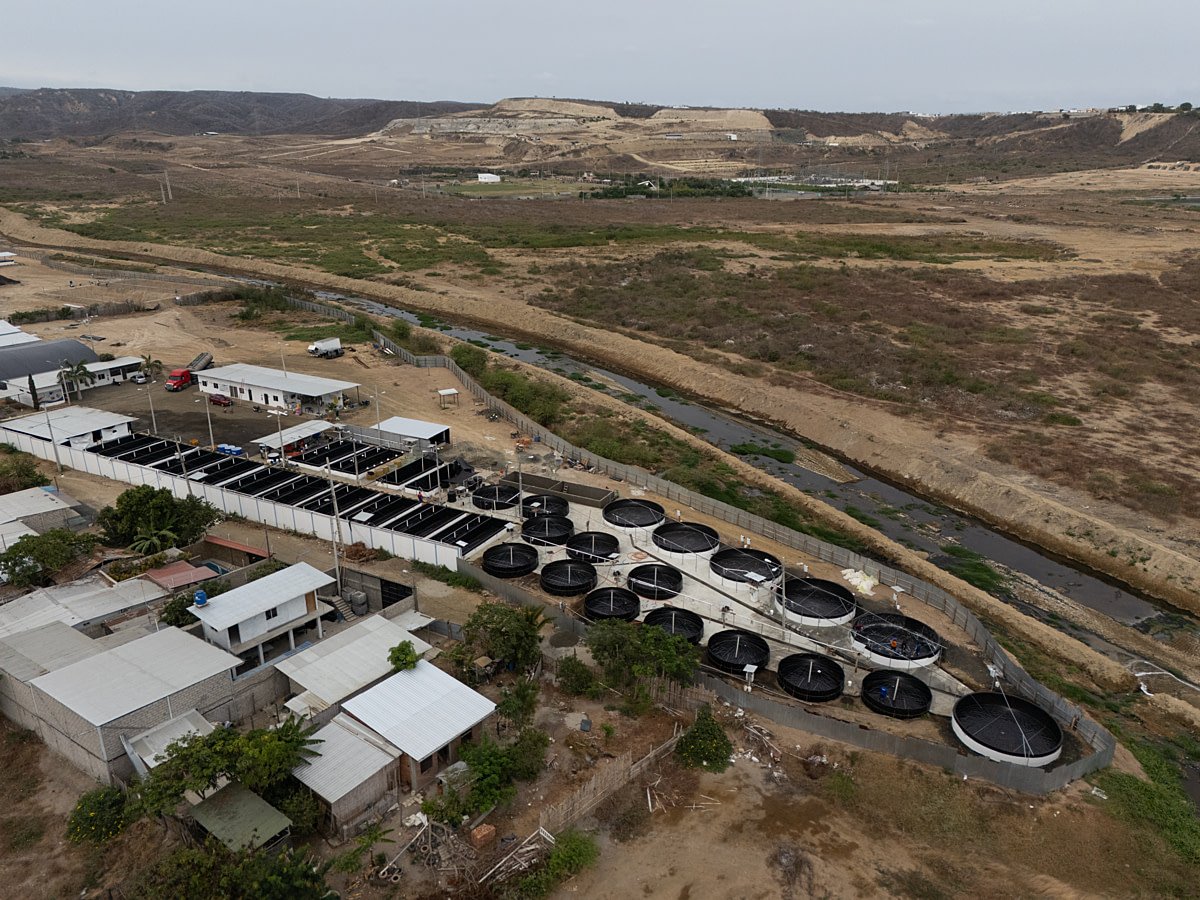
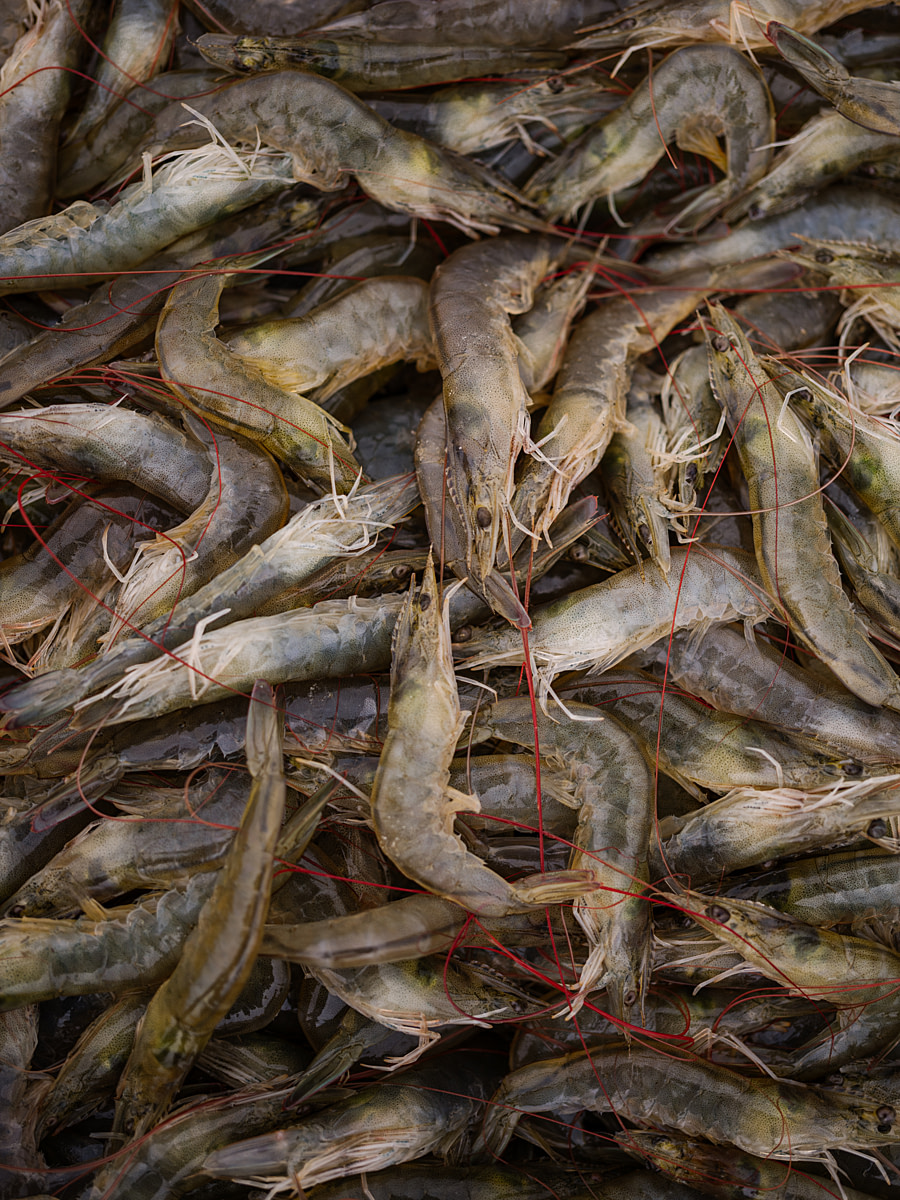
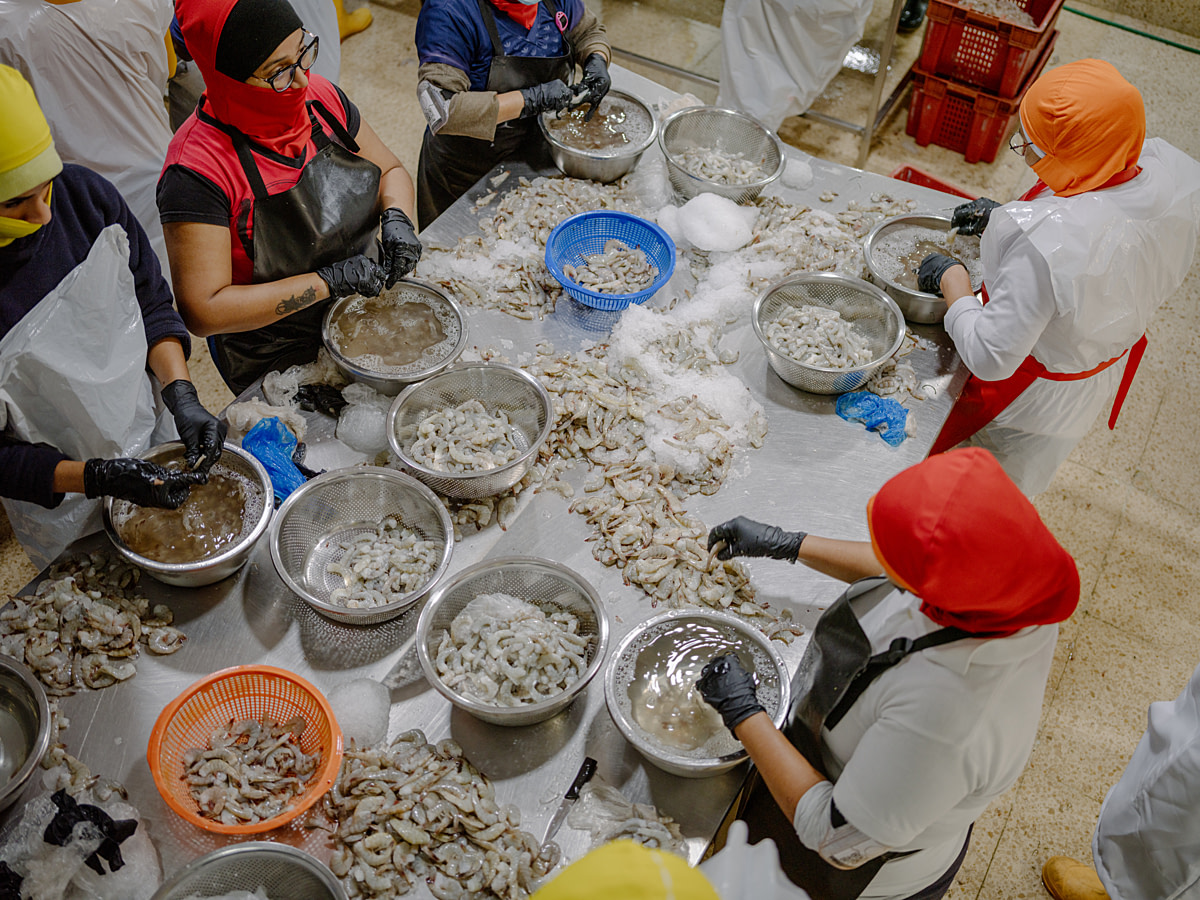
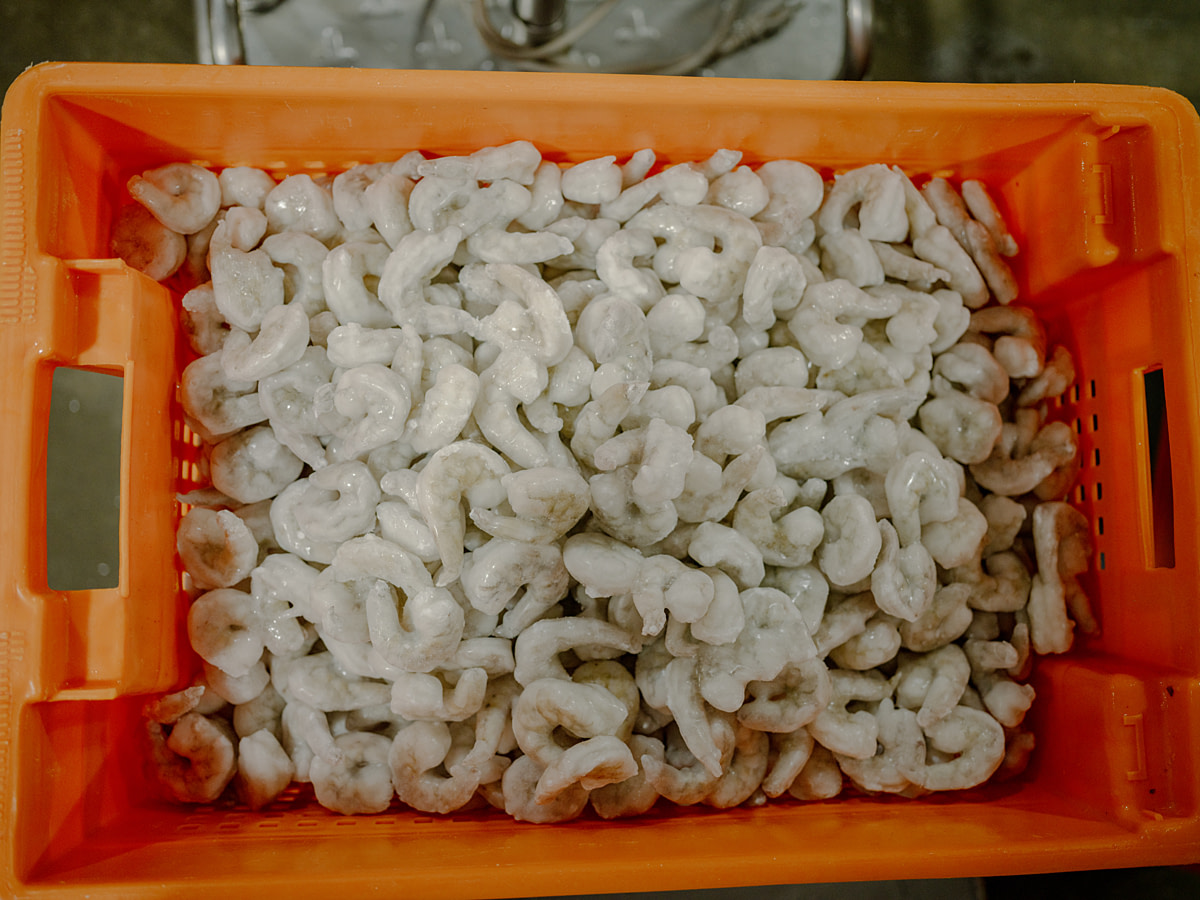
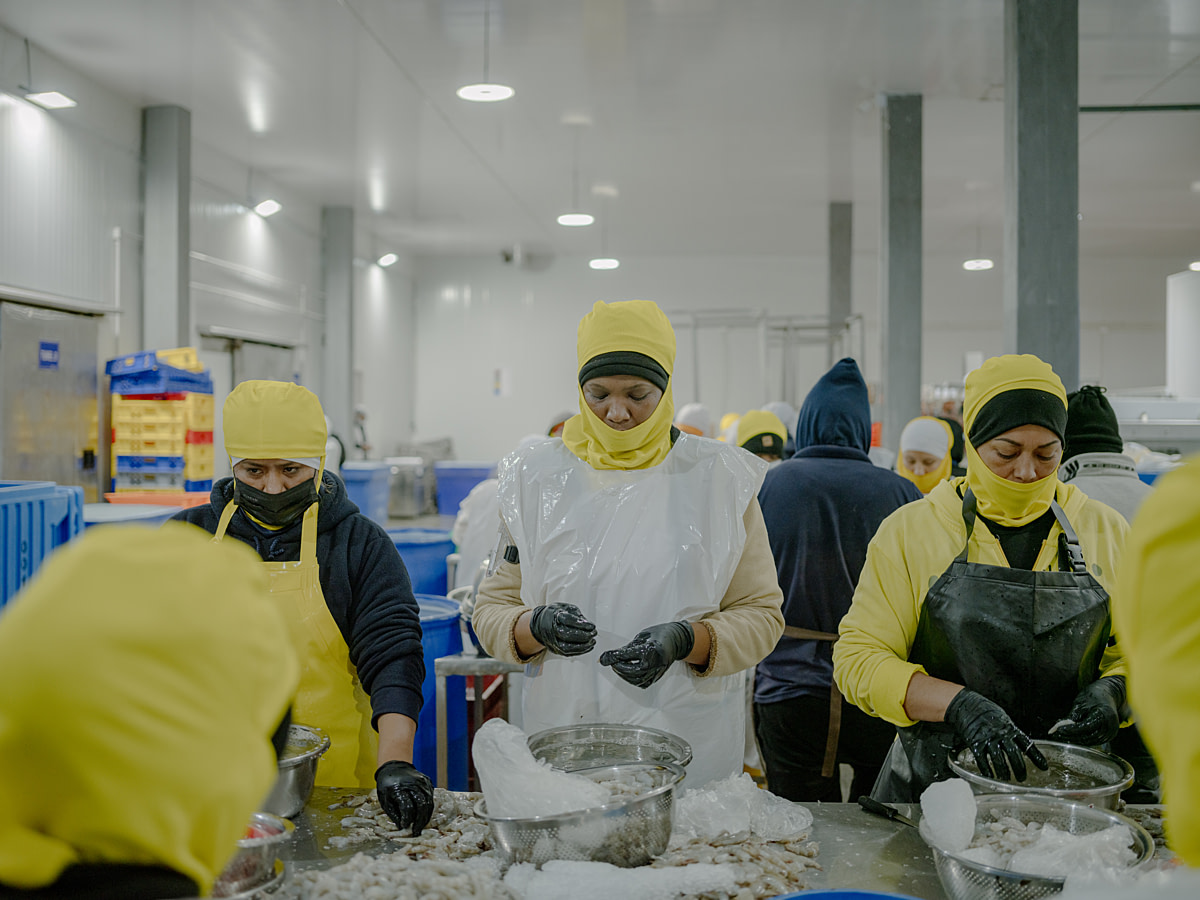
Photojournalist Marcos Zegers documented Ecuadorian shrimp farming at nearly every stage of production—from hatcheries producing millions of larvae each day to grow-out ponds stretching across hundreds of hectares, all the way down to processing plants where shrimp are peeled, frozen and packed for export.
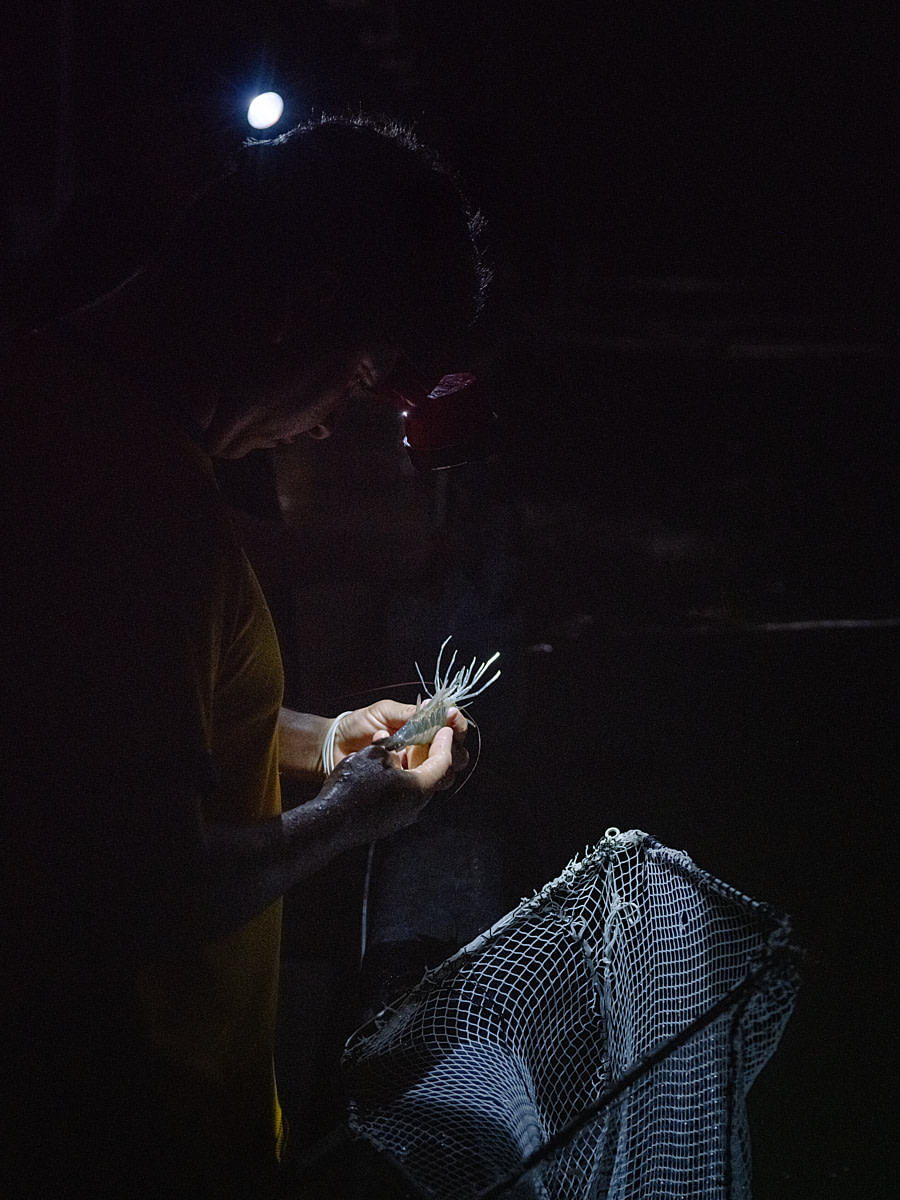
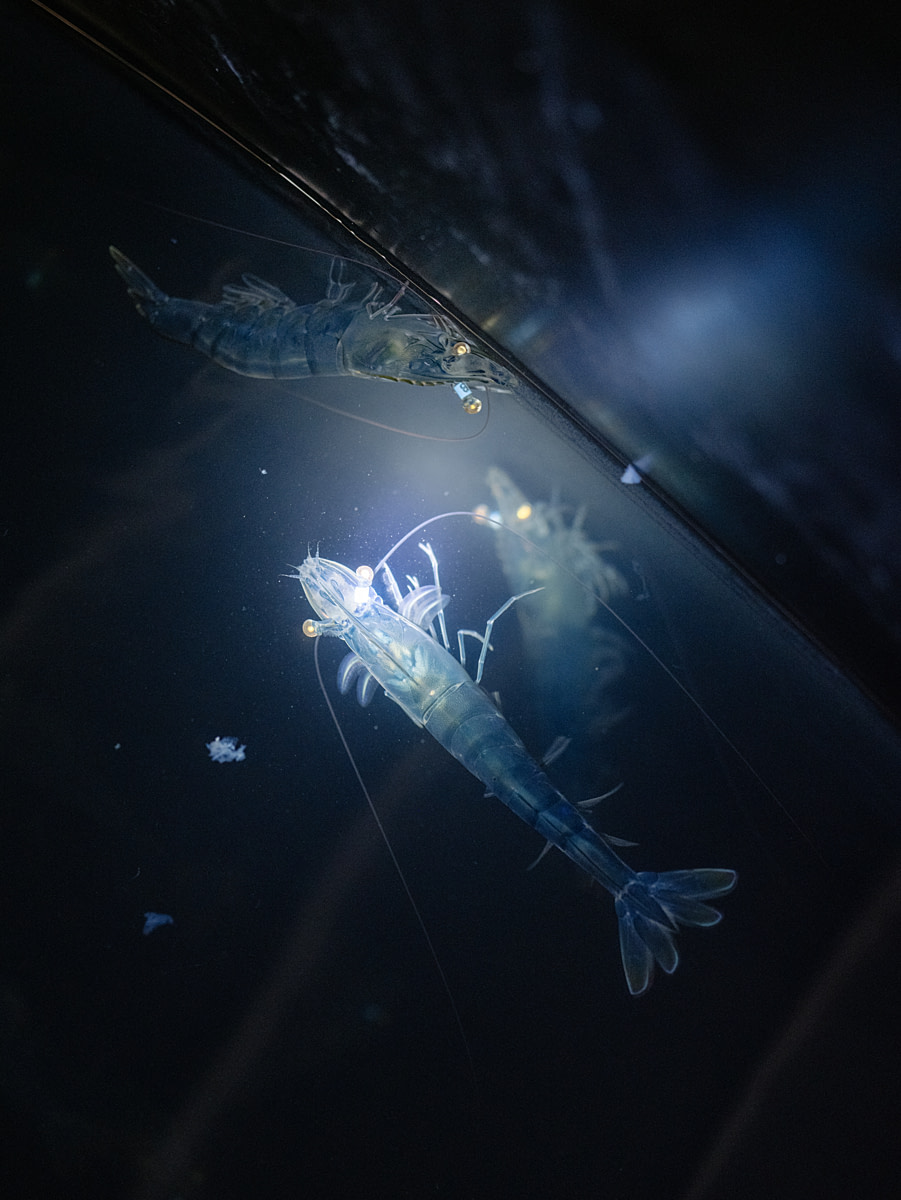
A worker at a laboratory that produces larval and postlarval shrimp destined for shrimp farming checks in the dark if a female broodstock shrimp is fertilized and healthy. These “mother shrimp” are removed from the tanks for about 20 seconds during examination before being returned to water maintained at ideal temperatures and light levels for spawning. Undisclosed location, San Pablo, Santa Elena Province, Ecuador, 2025.
Marcos Zegers / Animal Welfare Observatory / We Animals
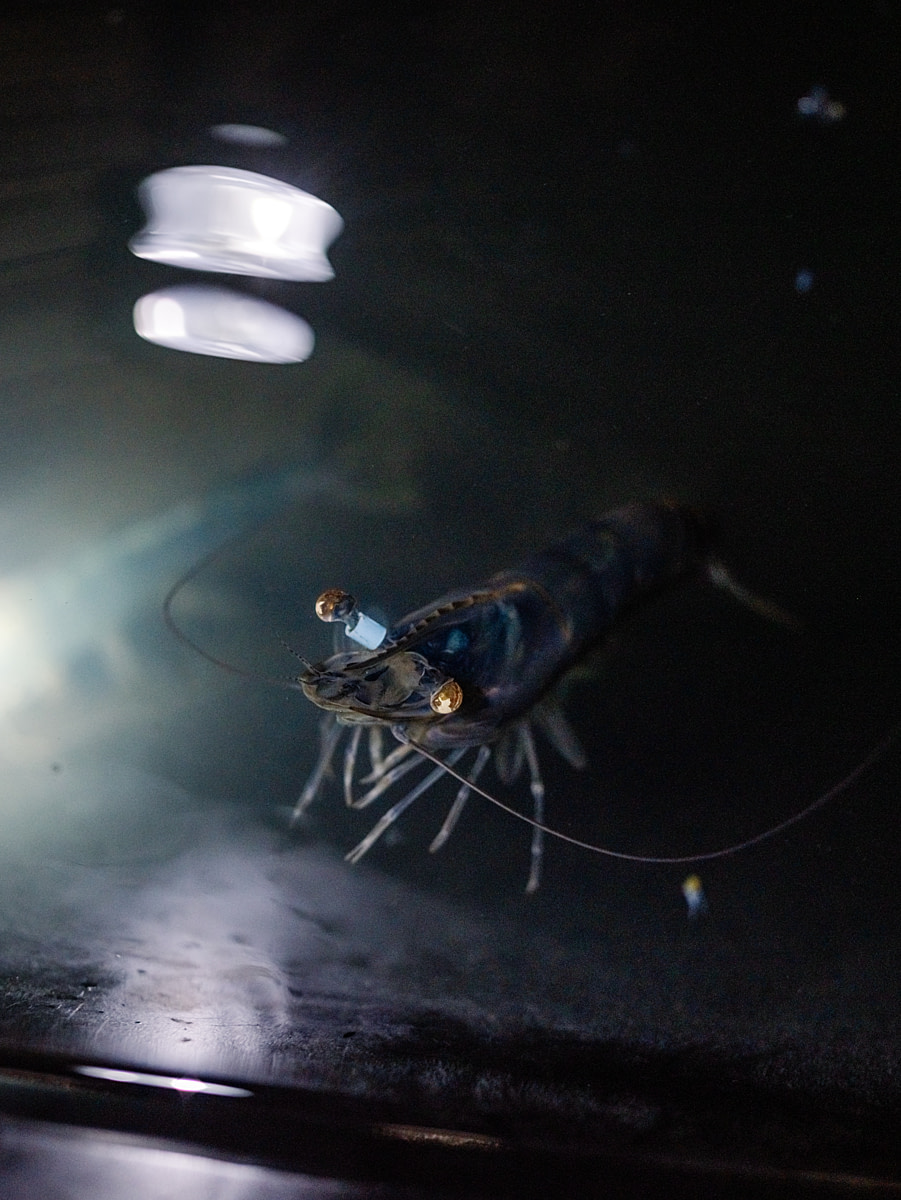
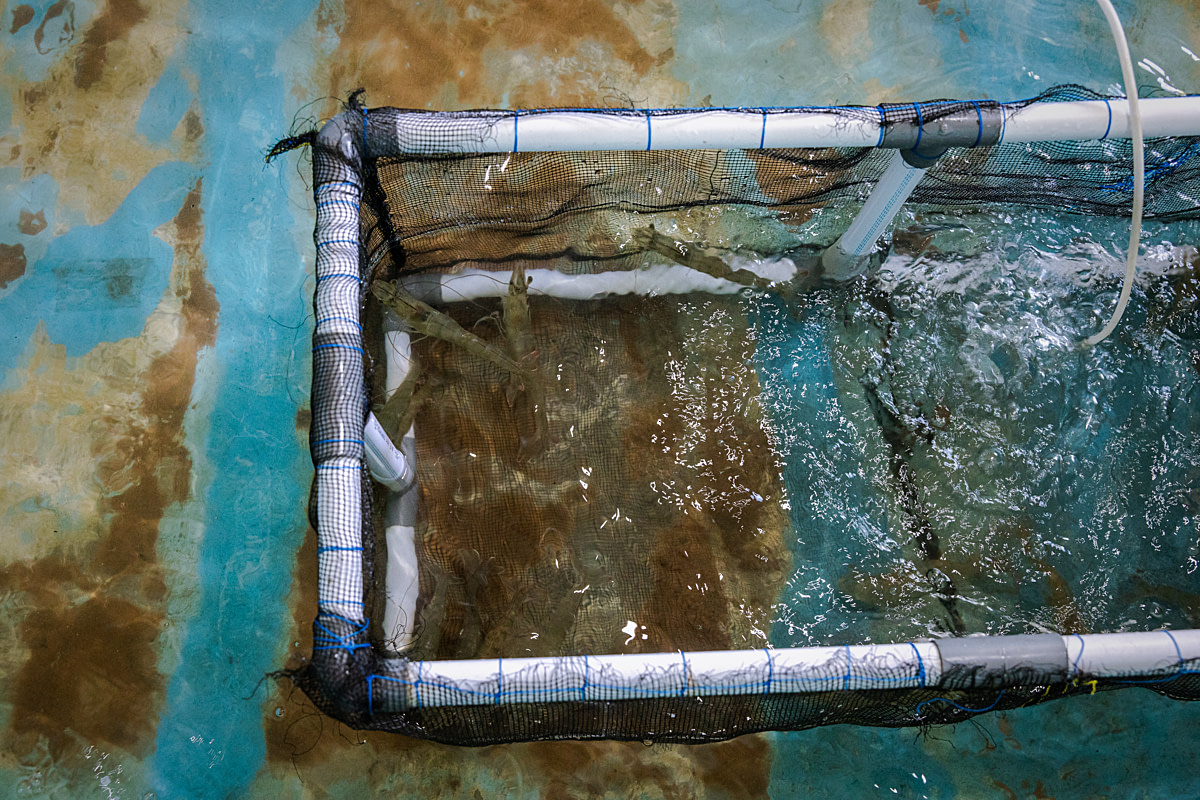
A female broodstock shrimp (also known as a “mother shrimp”) wears a tag around her eyestalk while she swims in a temperature and light-controlled tank at a shrimp laboratory. The facility produces larval and postlarval shrimp destined for shrimp farming. Undisclosed location, San Pablo, Santa Elena Province, Ecuador, 2025.
Marcos Zegers / Animal Welfare Observatory / We Animals
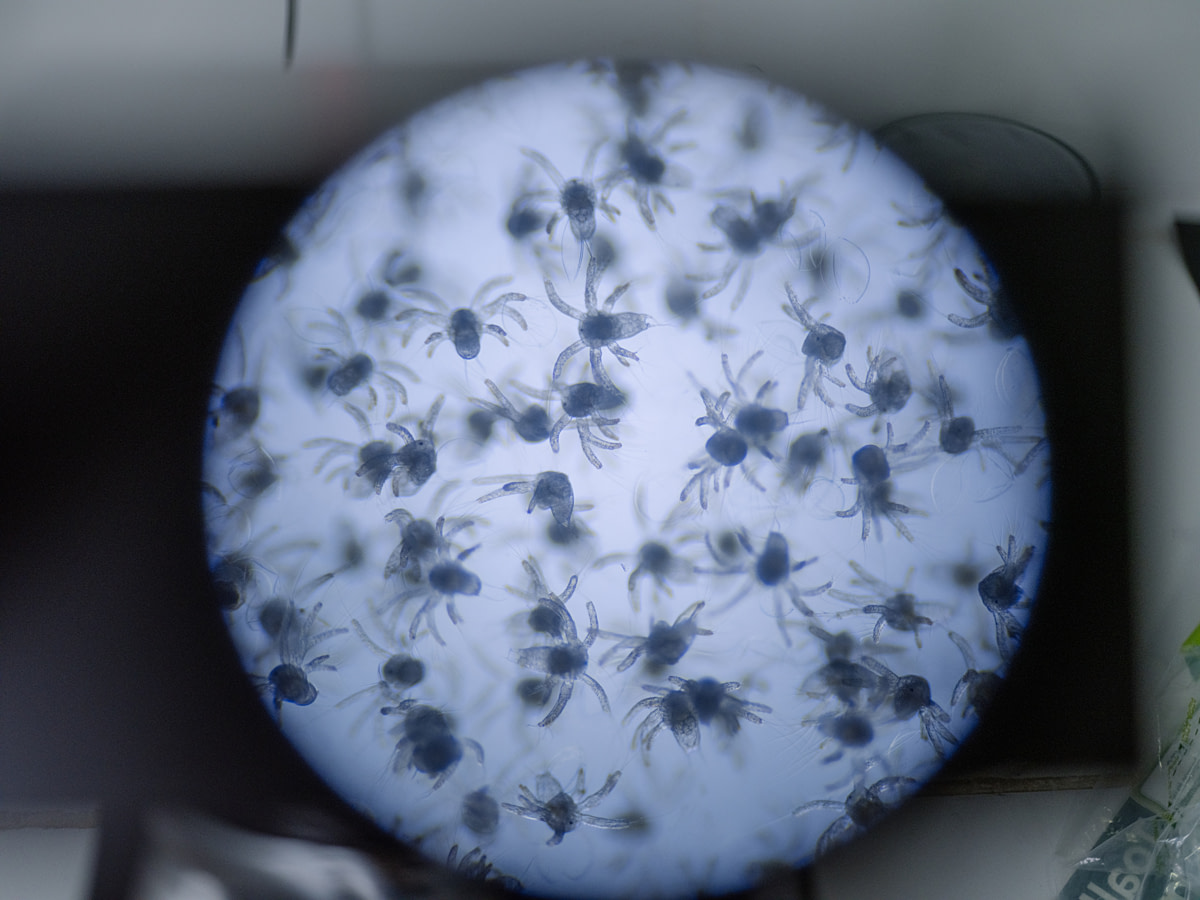
A magnified view of shrimp nauplii at a laboratory that produces larval and postlarval shrimp destined for shrimp farming. Nauplii, also known as “white dots” are the initial form of shrimp after hatching. Undisclosed location, San Pablo, Santa Elena Province, Ecuador, 2025.
Marcos Zegers / Animal Welfare Observatory / We Animals
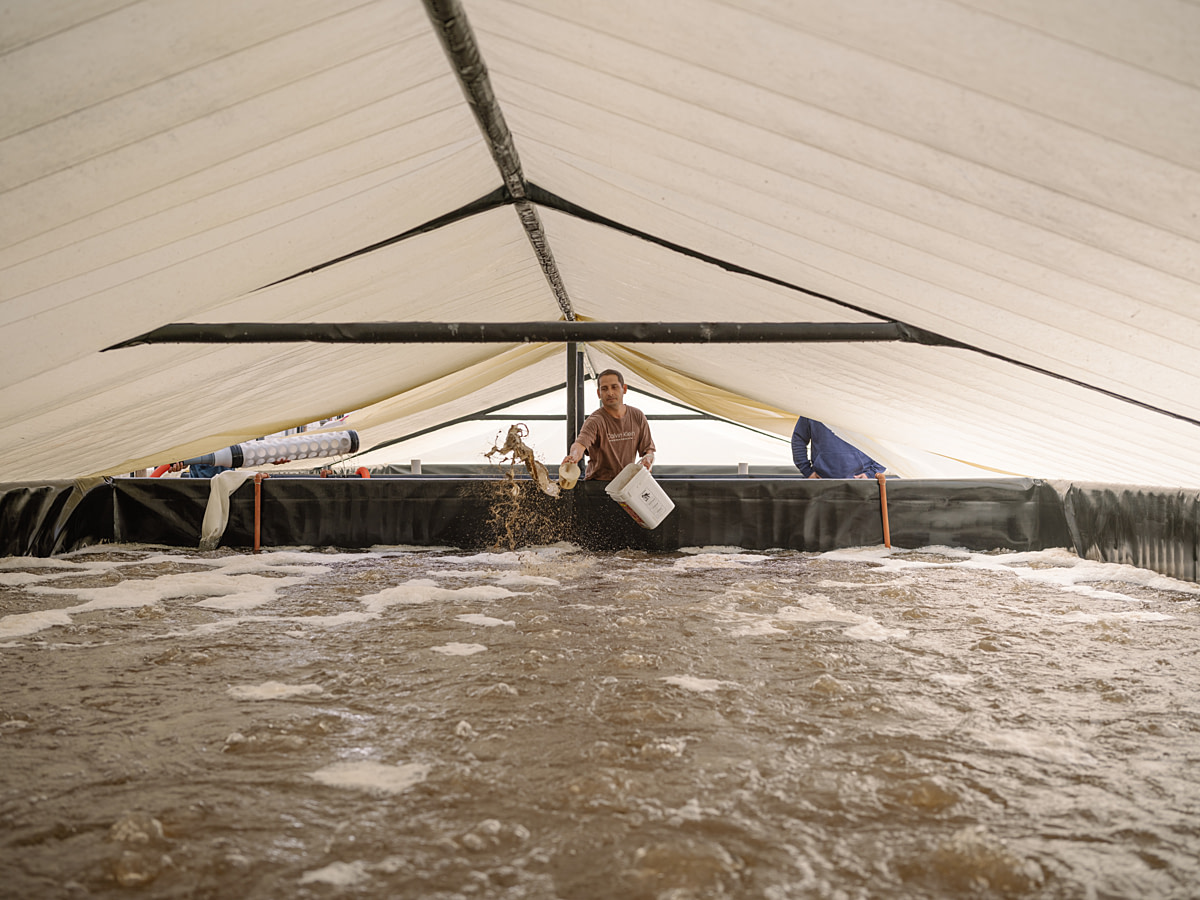
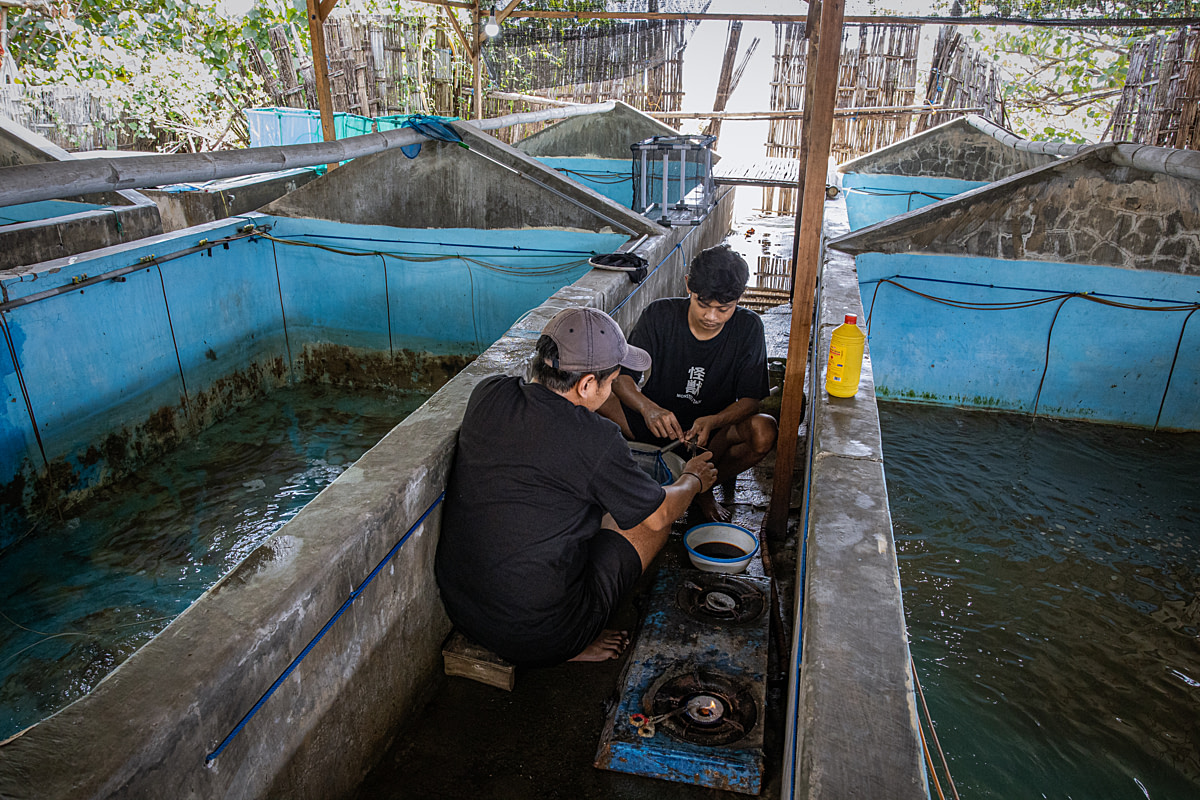
A worker at a shrimp hatchery and laboratory scoops feed into a growing tank containing larvae destined for farmed shrimp production. Undisclosed location, Manta, Manabí Province, Ecuador, 2025.
Marcos Zegers / Animal Welfare Observatory / We Animals
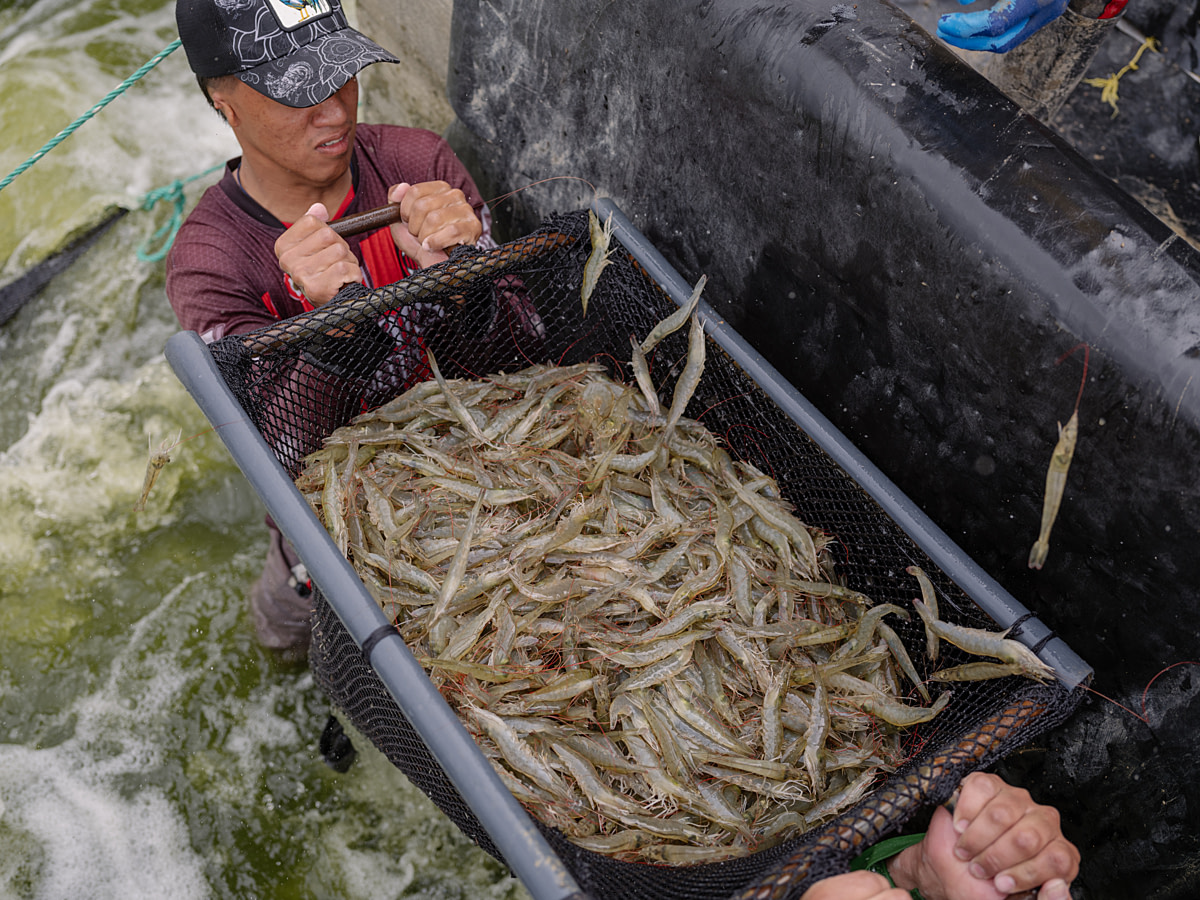
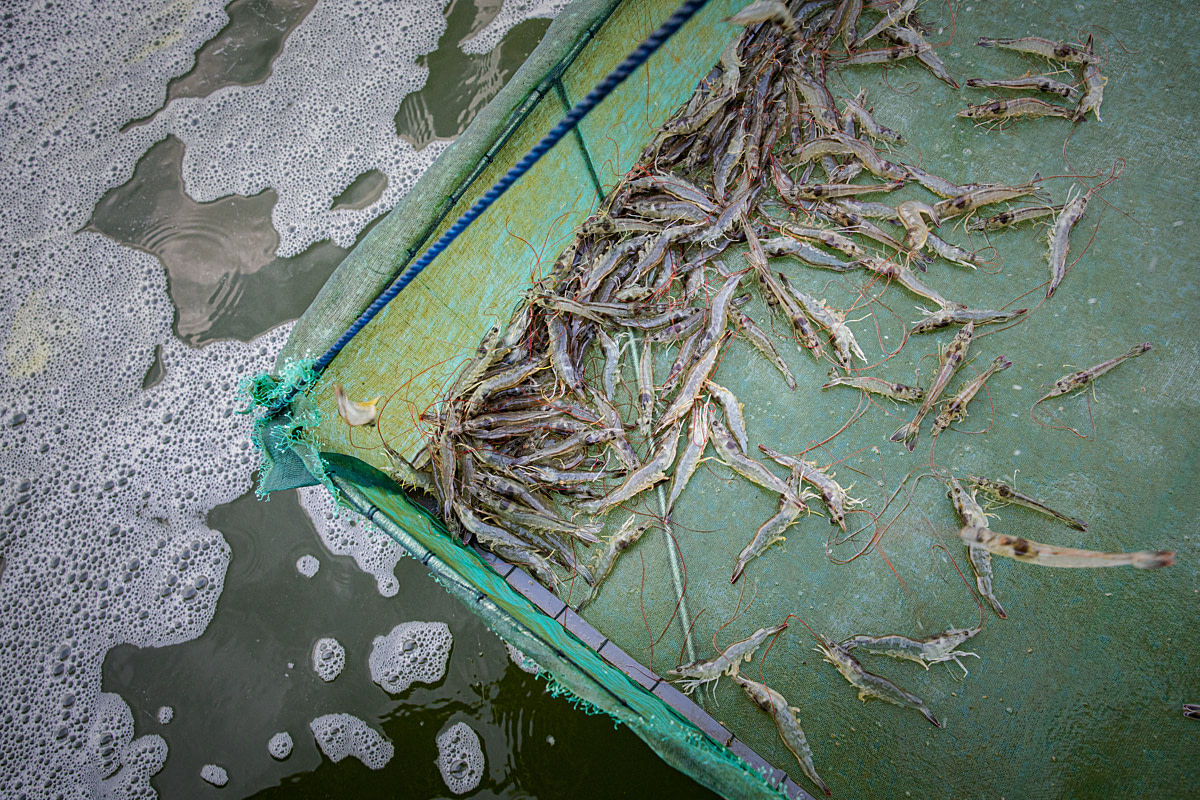
Shrimp held inside a basket leap to escape as workers lift them from the water during a harvest at a shrimp farm. The animals will next be carried to a washing station, weighed and packed in ice for transport. Undisclosed location, Chone, Manabí Province, Ecuador, 2025.
Marcos Zegers / Animal Welfare Observatory / We Animals
The true scale of Ecuador’s shrimp industry is difficult to grasp from the ground. Mangroves are nurseries for fish and crustaceans, nesting grounds for birds, and a vital source of food and income for coastal communities. They also stabilize shorelines and store vast amounts of carbon. Although mangrove clearing is now regulated, the legacy of decades of expansion remains visible across Ecuador’s coastline, and many on the ground say that oversight and enforcement of these rules are weak.
Travelling by boat through Ecuador’s coastal estuaries, mangroves appear to frame the waterways; their dense roots create the impression of an intact ecosystem. It is only from the air that another landscape emerges: hundreds of shrimp ponds stretching across the coastline in a vast network of earthen berms, canals and pumping stations.
“The aerial views made it possible to understand the true scale of shrimp farming.” — Marcos Zegers, photojournalist
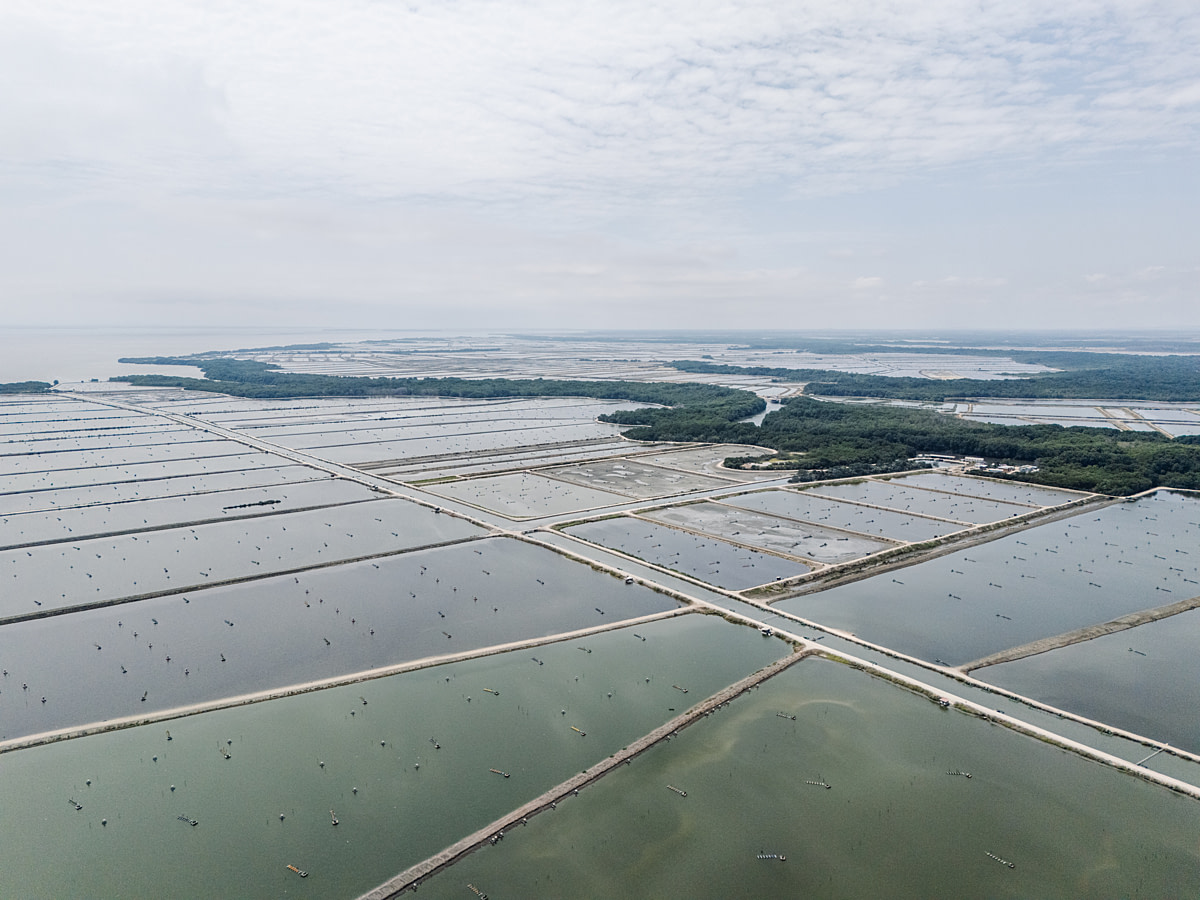
An aerial view of large shrimp farm ponds and water channels located within a vast mangrove ecosystem. Undisclosed location, Gulf of Guayaquil, Guayas Province, Ecuador, 2025.
Marcos Zegers / Animal Welfare Observatory / We Animals
Shrimp farm ponds border mangrove estuaries and forests. Infrastructure and machinery sit scattered throughout a large pond in the foreground. Water channels cut through mangroves and additional farms and cargo ships visible in the distance. Undisclosed location, Gulf of Guayaquil, Guayas Province, Ecuador, 2025.
Marcos Zegers / Animal Welfare Observatory / We Animals
Aerators and other equipment sit scattered throughout a series of large shrimp farm ponds situated within mangrove estuaries and adjacent to mangrove forests. Undisclosed location, Gulf of Guayaquil, Guayas Province, Ecuador, 2025.
Marcos Zegers / Animal Welfare Observatory / We Animals
According to NASA Earth Observatory, nearly 60 percent of shrimp ponds in parts of Ecuador’s Gulf of Guayaquil occupy areas where mangrove forests once stood. Their conversion into shrimp ponds has made industrial aquaculture one of the region’s defining environmental challenges.
“It is unacceptable that the shrimp consumed daily in Spain and Europe is sustained by the destruction of Ecuador’s coastlines. The companies that make them available to consumers should be well aware of the impact of their products on both animal welfare and the environment. More importantly, they should be transparent so their customers can make purchases with all the information.” — Miriam Martínez, Animal Welfare Director at the Animal Welfare Observatory
On July 8, in collaboration with Foodrise and supported by We Animals images, Animal Welfare Observatory released a scientific and technical report that uncovers the severe environmental, climate, and labour exploitation hidden behind Europe’s mass consumption of farmed shrimp.



Two Regions, A Common Lack of Visibility
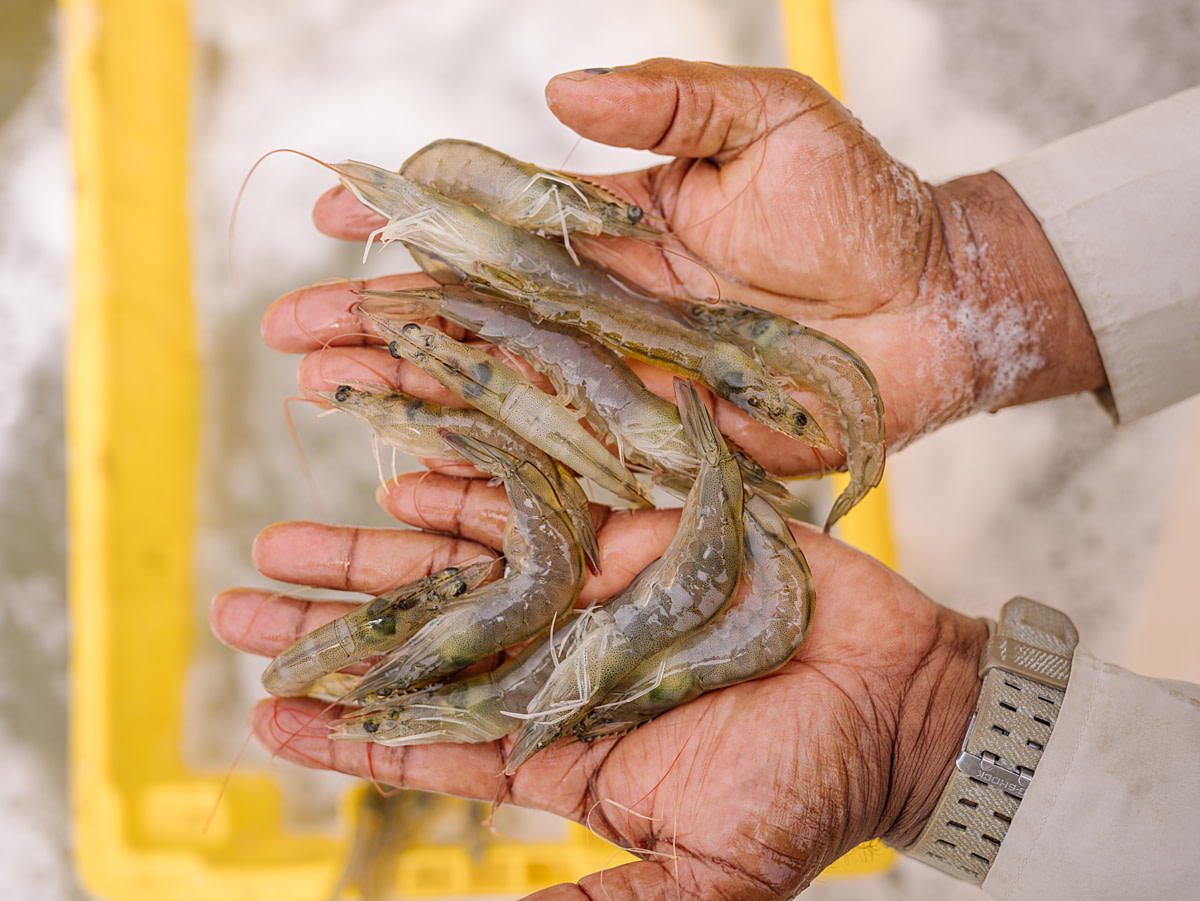
What these investigations share is not a single way of farming shrimp, but a common lack of visibility. Billions of shrimp are raised every year, yet their lives and deaths unfold almost entirely out of public view.
“Citizens have a right to know that the extremely low price of this product is being paid for through environmental destruction and precarious working conditions in other countries. We cannot continue to externalise our environmental impact without assuming any corporate or ethical responsibility.” — Miriam Martínez
See more stories like this. Subscribe to our newsletter.
Explore and download these visuals and more via the We Animals Stock Site.