
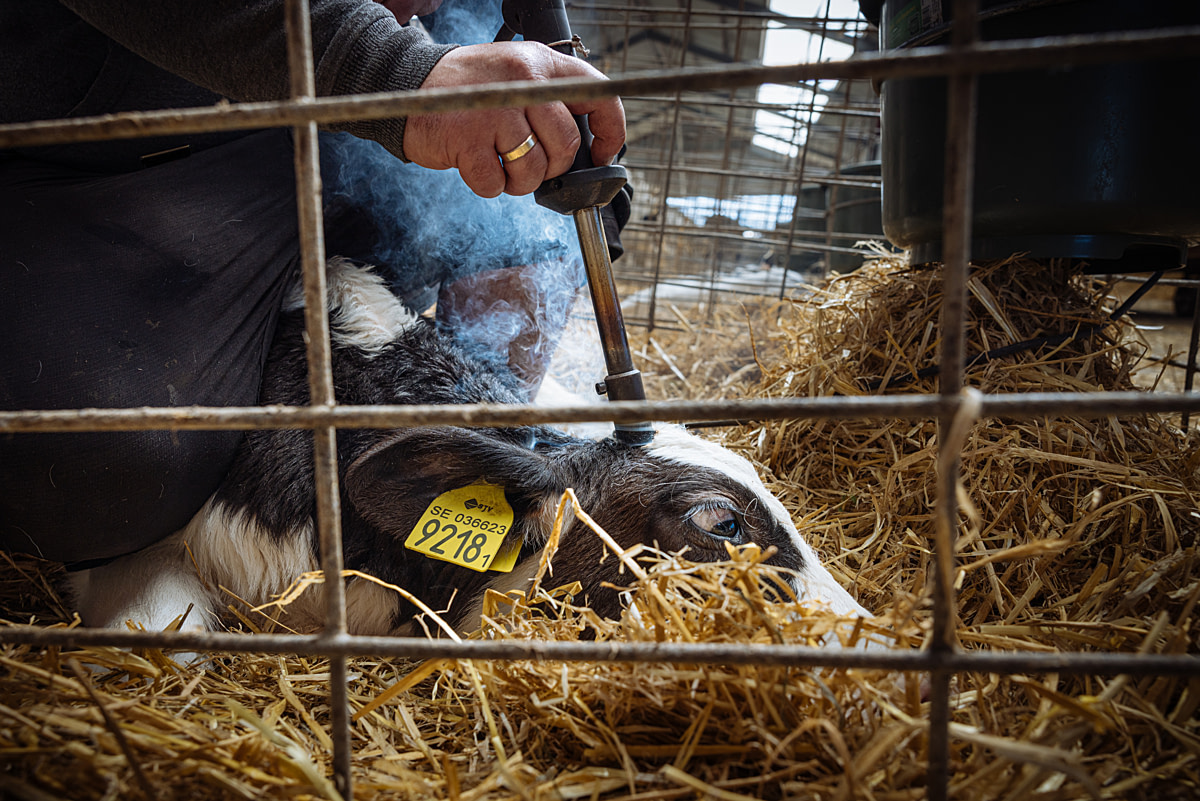

A young calf a few weeks of age lies under anesthesia while a worker uses a hot iron to remove their horn buds at a dairy farm. Despite painkillers, a calf’s horn area can remain sensitive for days. Sweden, 2025.
Noah Marsten / Djurrättsalliansen / We Animals
Today, nearly 300,000 cows are used for milk production on farms across Sweden. Dairy and bovine meat production together account for about one-third of the country’s agricultural economy. Dairy is big business, and milk ads often sell the idea of green fields and contented cows. But the reality on modern Swedish dairy farms is far more procedural than pastoral.

Dairy cows crowd together while waiting to be milked by an automated system at a dairy farm. Sweden, 2025.
Noah Marsten / Djurrättsalliansen / We Animals
In 2025, Djurrättsalliansen, a Swedish animal rights organization, documented Sweden’s dairy industry with photojournalist Noah Marsten. The visuals were used in a subway campaign, directly highlighting the gap between idyllic imagery and everyday reality.
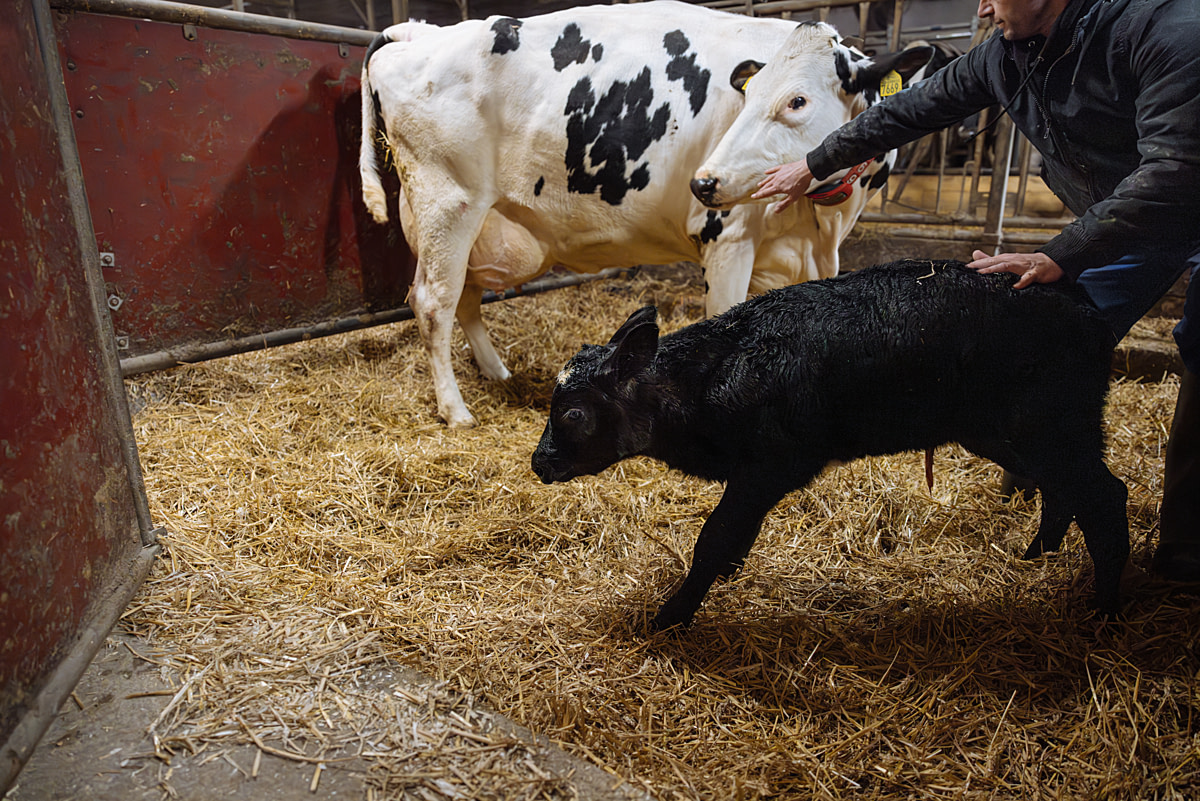
A mother dairy cow attempts to intervene as a worker takes her newborn calf away at a dairy farm. Sweden, 2025.
Noah Marsten / Djurrättsalliansen / We Animals

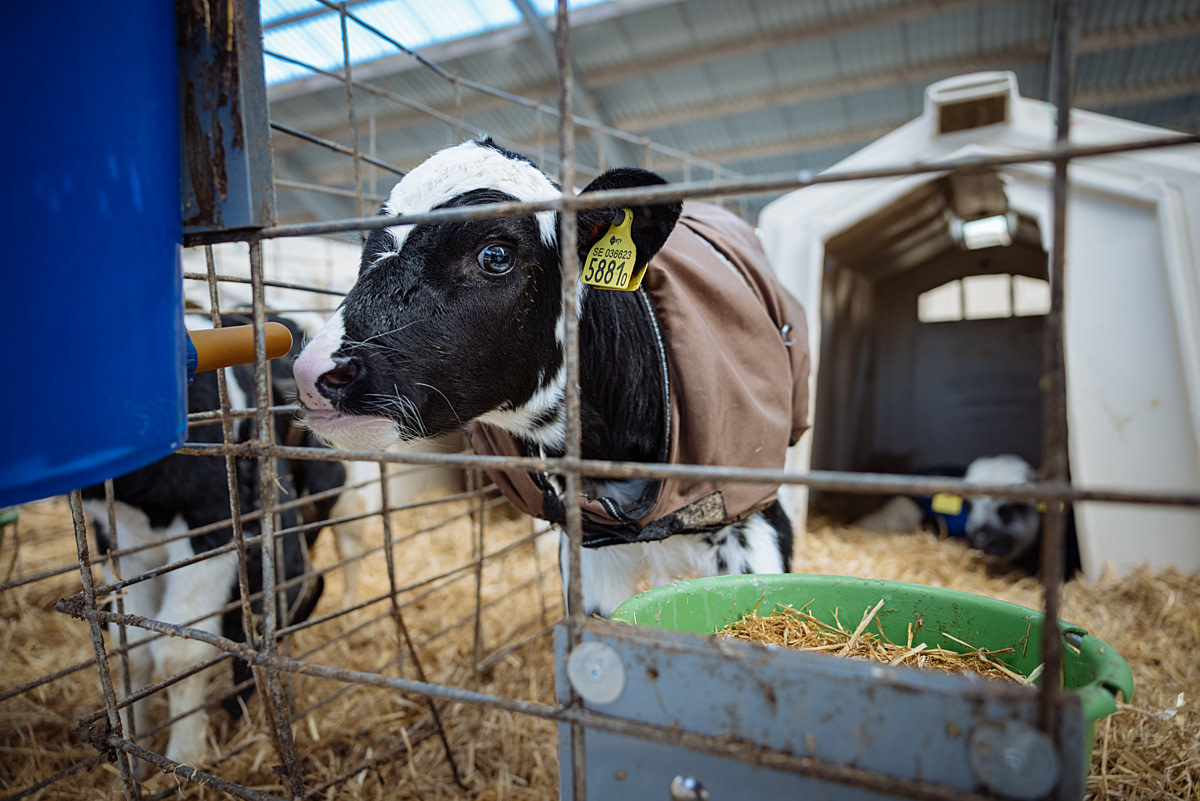
Flies crawl over a two-week-old dairy calf confined to a pen at a fattening farm. Sweden, 2025.
Noah Marsten / Djurrättsalliansen / We Animals
“One easily believes in the idyllic images of dairy commercials if a counternarrative is not provided, since animal industries are largely hidden operations. Therefore, we have documented the Swedish dairy industry to give the public the possibility to learn more about how cows, calves, heifers and young bulls are treated due to human milk consumption. We hope this will encourage people to take a stand by not supporting this industry.” — Malin Gustafsson, spokesperson for Djurrättsalliansen

Moments after birth, a dairy cow at a dairy farm gently licks and cleans her newborn calf who will be separated from her within two hours. Sweden, 2025.
Noah Marsten / Djurrättsalliansen / We Animals
Commuters moving through Stockholm’s subway are seeing a familiar milk slogan rewritten.
“Milk gives strong bones” becomes “Milk gives lasting scars,” paired with Noah’s images, taken inside Swedish dairy farms. The message is simple and hard to miss. What is marketed as wholesome and vital is actually tied to a system built on exploitation.

Djurrättsalliansen’s billboard ads in Stockholm’s subway. Photo: Noah Marsten
One cow Noah documented became an emblem of that system. She went into labour weakened by low calcium, a physiological state linked to high milk yields and repeated reproduction. She trembled as workers intervened, forcing supplementation to avert paralysis and using ropes to pull her calf into the world.
“Mother cow trembles, her body weakened by low calcium. She is separated from the herd, alone in a quiet pen. I wait, hours stretching into seven, as she struggles to bring new life into the world… Exhaustion wracks. She groans, pants, and shivers. From the neighboring stall, a cow stretches her head over the bars, watching the struggle silently.” — Noah Marsten, Photojournalist
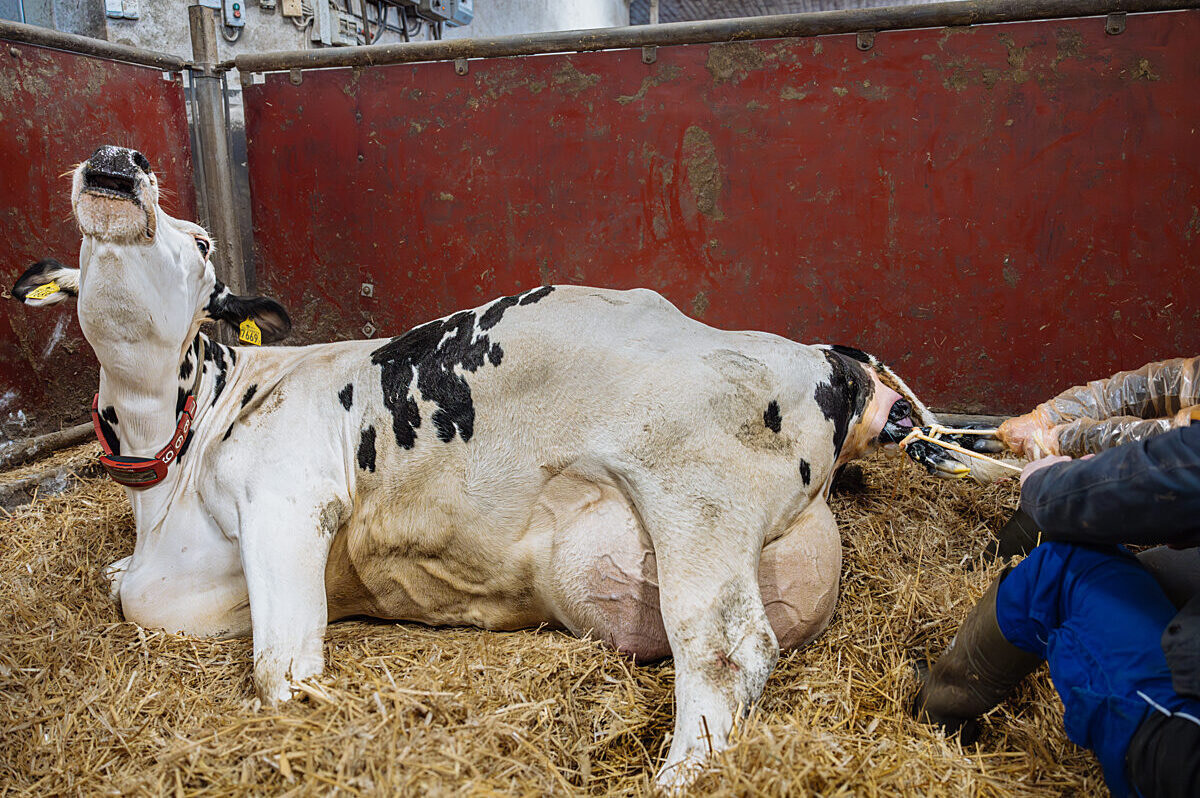
A mother cow enduring a difficult birth at a dairy farm strains as workers pull her calf out with ropes to save them both from dying. Sweden, 2025.
Noah Marsten / Djurrättsalliansen / We Animals

A newborn calf is force-fed colostrum after being unable to nurse from her mother at a dairy farm. Sweden, 2025.
Noah Marsten / Djurrättsalliansen / We Animals
When the newborn finally drew breath, her first meal came by force as colostrum was pumped into her. Within two hours, mother and calf were separated. The calf would never suckle, and the mother was returned, without her baby, to the milking parlour. This was her fifth birth and, as farm records show, her last. A few weeks later, she was sent to slaughter.
This particular calf was a cross-breed between a “dairy-breed” and a “beef-breed”. Approximately 25 percent of the farm’s business comes from breeding cattle for beef, generating additional income given the higher carcass value. This is a contributing factor to difficult births, as the mixed genetics tend to lead to larger calves.


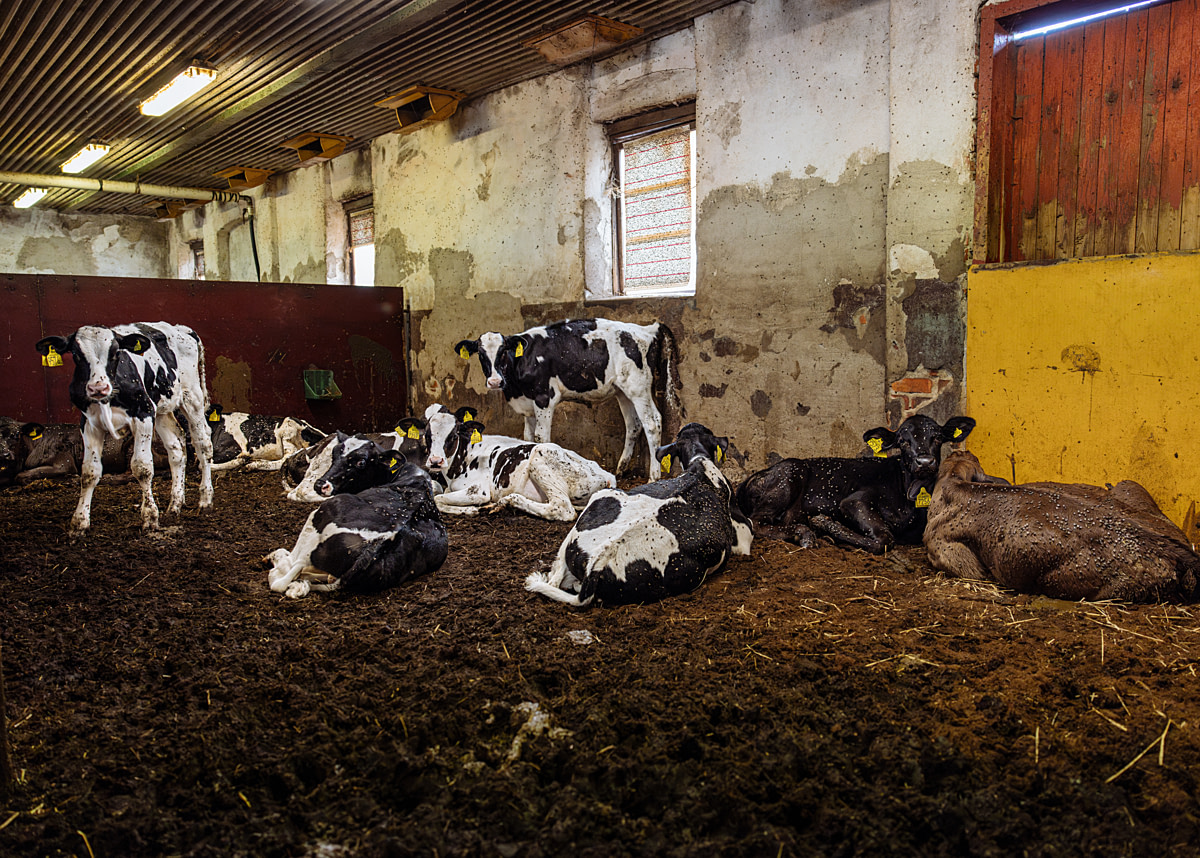



Djurrättsalliansen says they are not pointing fingers at individual farmers with their campaign. The subway ads simply show how the dairy system truly functions: repeated breeding, separation, and early slaughter, all kept largely out of public view…for a reason.
Learn more about Djurrättsalliansen’s ad campaign and see more of the material on their website.
Explore and download these visuals and more via the We Animals Stock Site.