
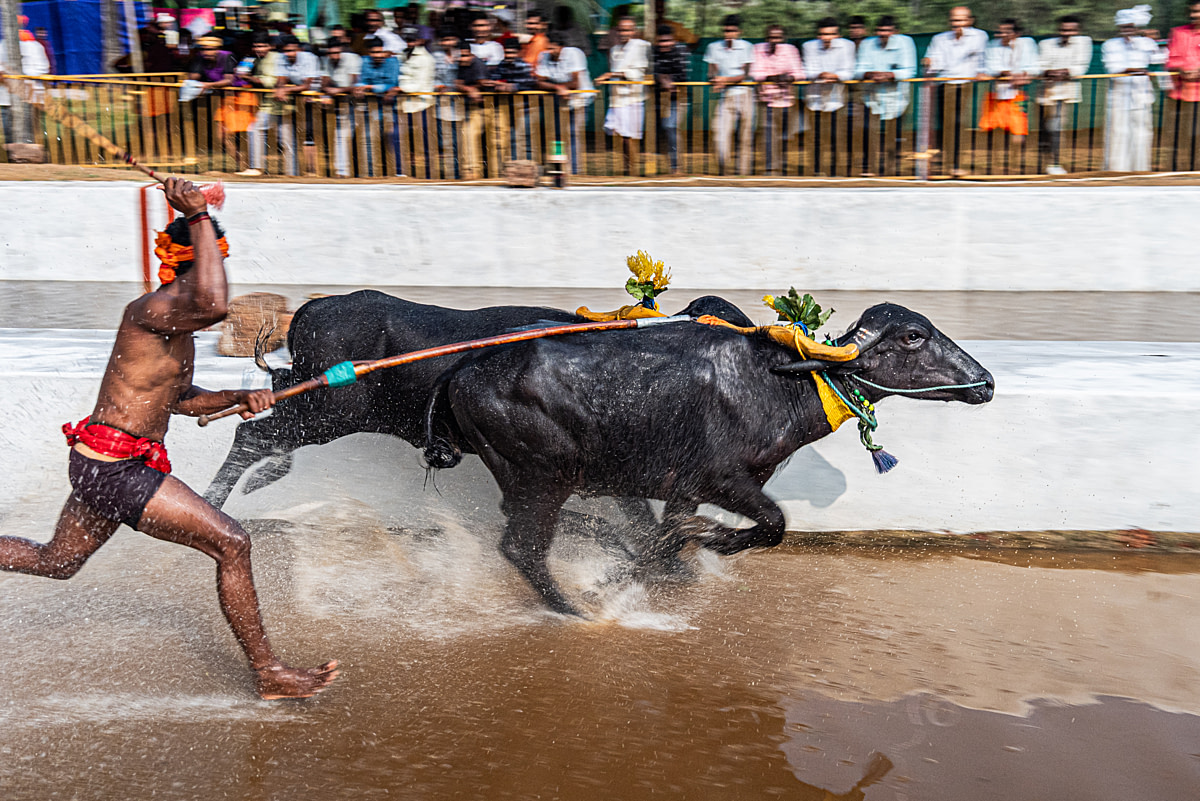

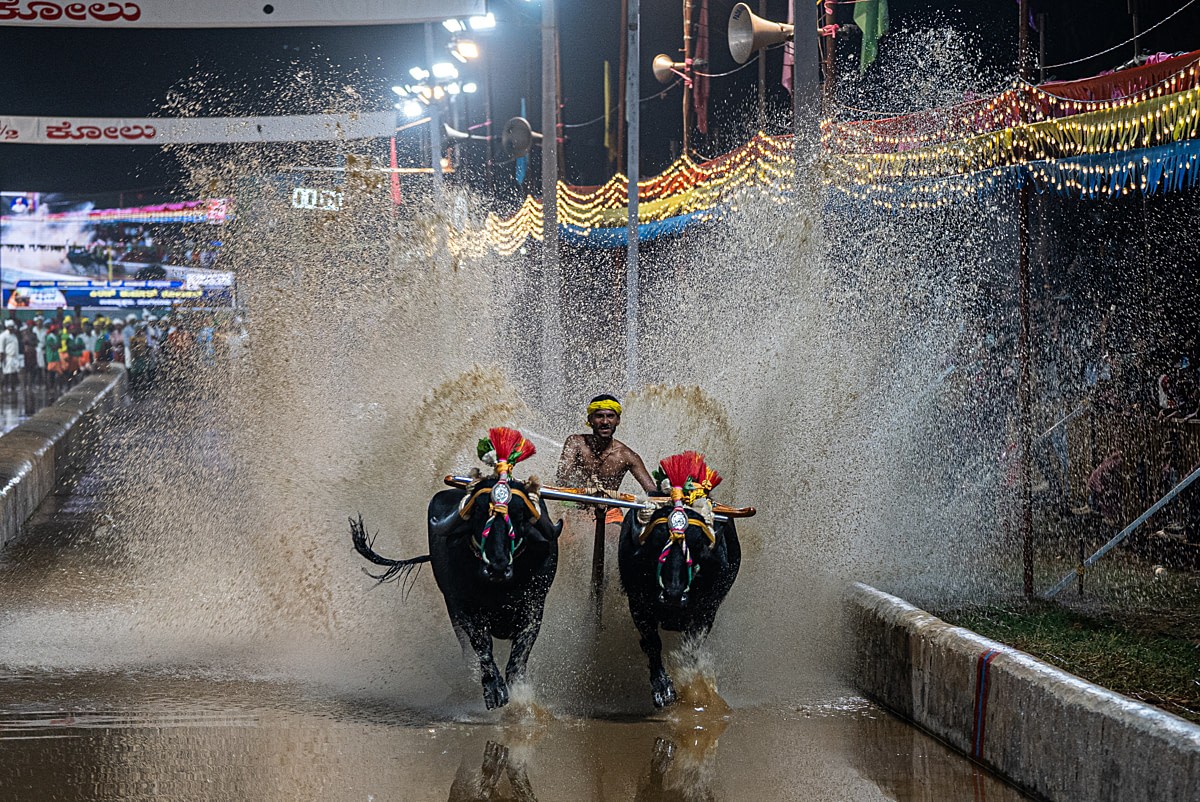
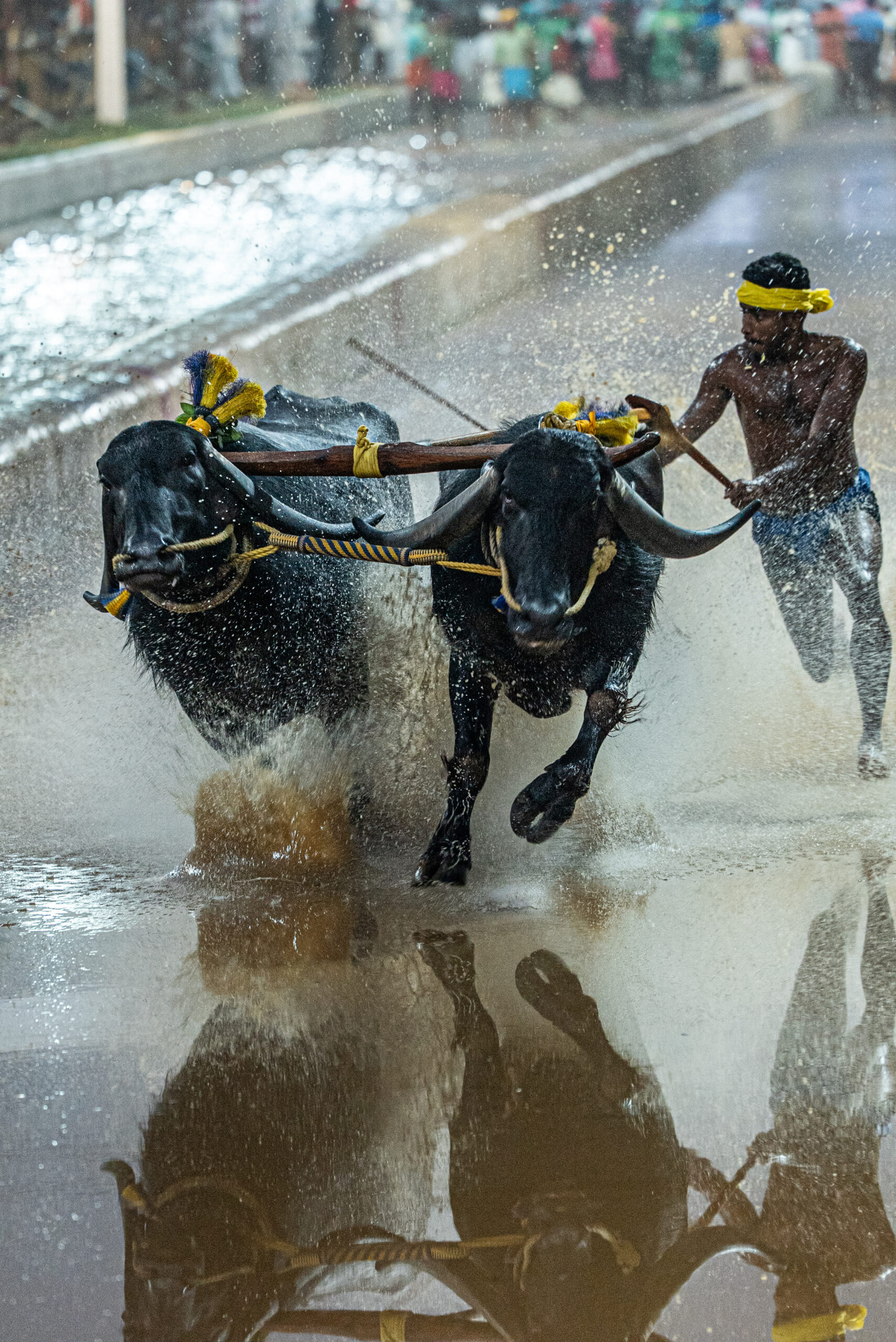
A jockey and a pair of yoked buffaloes begin a Kambala buffalo race. The jockey hits the animals with a bamboo cane to increase their speed and steers them with a plough handle. Loud vocalizations are made by the people present to urge the buffaloes on. Mulki Kambala Track, Mulki, Karnataka, India, 2025.
Manju N Gowda / FIAPO / We Animals
Every year from November through March, buffalo are raced along watery tracks in coastal Karnataka, India. Yoked in pairs and whipped by a bamboo cane in 30+°C heat, they sprint for the entertainment of large, shouting crowds and for the boasting rights of their owners.
Buffalo racing, or Kambala, is a cultural tradition deeply associated with the Tulu people, who used to race buffalo through watery rice paddies as village entertainment. Like rodeo in North America, though, what was once a small-scale, community tradition has become a commercialized event, drawing huge crowds and raising the stakes for the animals at the heart of the sport.
Unlike many other forms of animal entertainment—such as horse racing or cock fighting—Kambala does not typically involve betting or big prize money. Winning brings prestige and medals. But that doesn’t mean these events prioritize animal welfare over human gains, or that owners don’t benefit in other ways. Local politicians and the Kambala committee organize races in major venues with business sponsorships, and the animals are often owned by businessmen, politicians, and other professionals.
At the December 2025 Mangalore, one of the largest Kambala races, We Animals photojournalist Manju N Gowda documented buffaloes with old scars and new wounds from the bamboo canes they are beaten with to make them run faster. Although treated relatively well during much of the year, on race day Gowda observed many buffalo being shouted at and aggressively yanked towards the starting line by ropes tied through their noses.
Over 150 buffalo pairs competed before crowds of spectators at the Mangalore races. Though the buffaloes are usually raced once a week to allow for rest and recovery, the Mangalore and Mulki Kambala races were held on consecutive days in 2025.
“The handlers would be nice to them in one moment and yell at them and hit them the next moment. It was like seeing a kind of Stockholm syndrome unfold in front of me.” — Manju N Gowda, photojournalist
How Modern Kambala Races Are Run
Kambala tracks are 130 to 150 meters long, filled with mud and water to recreate paddy field conditions. Buffaloes run in yoked pairs on two parallel tracks, with the winners determined by the quickest time. Each buffalo pair is expected to cover the distance within 11 to 15 seconds.
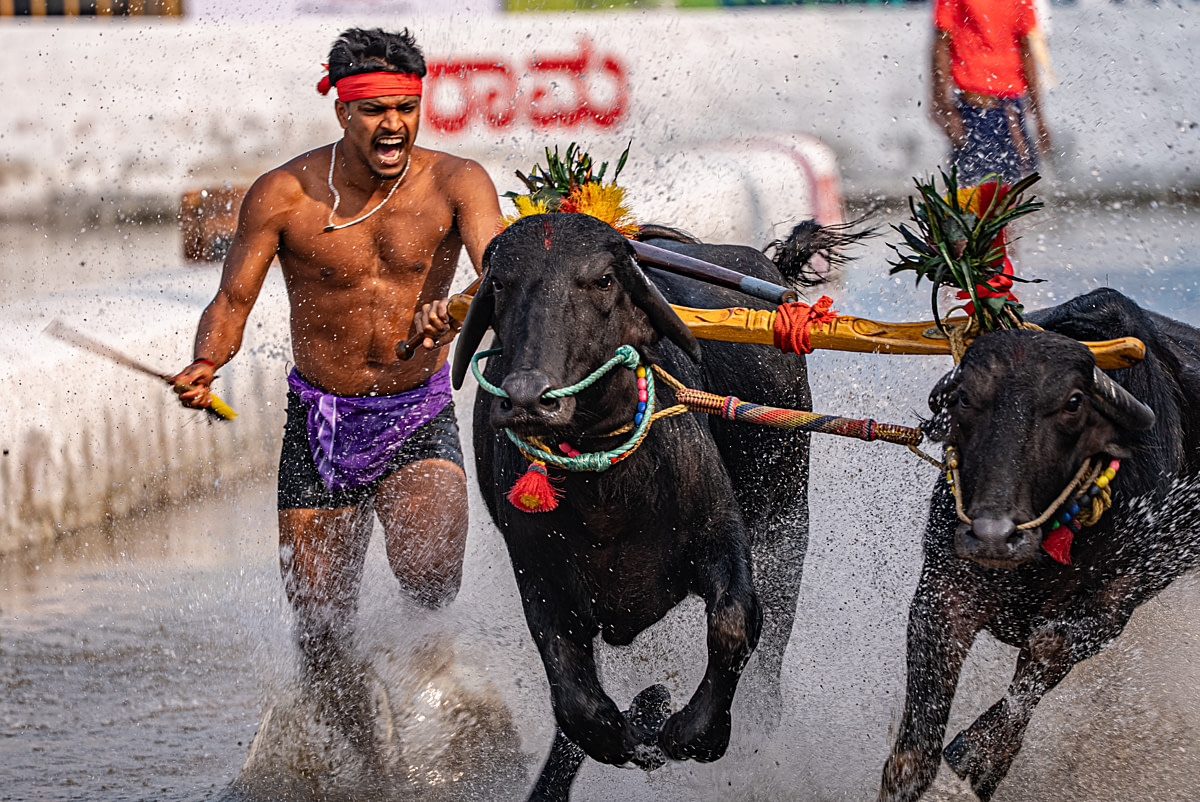
Jockeys use a bamboo cane, called a “betha,” to whip and control the buffaloes during races. Each buffalo pair typically runs three to four times per event, with races continuing from morning through the night, and sometimes into the next day.
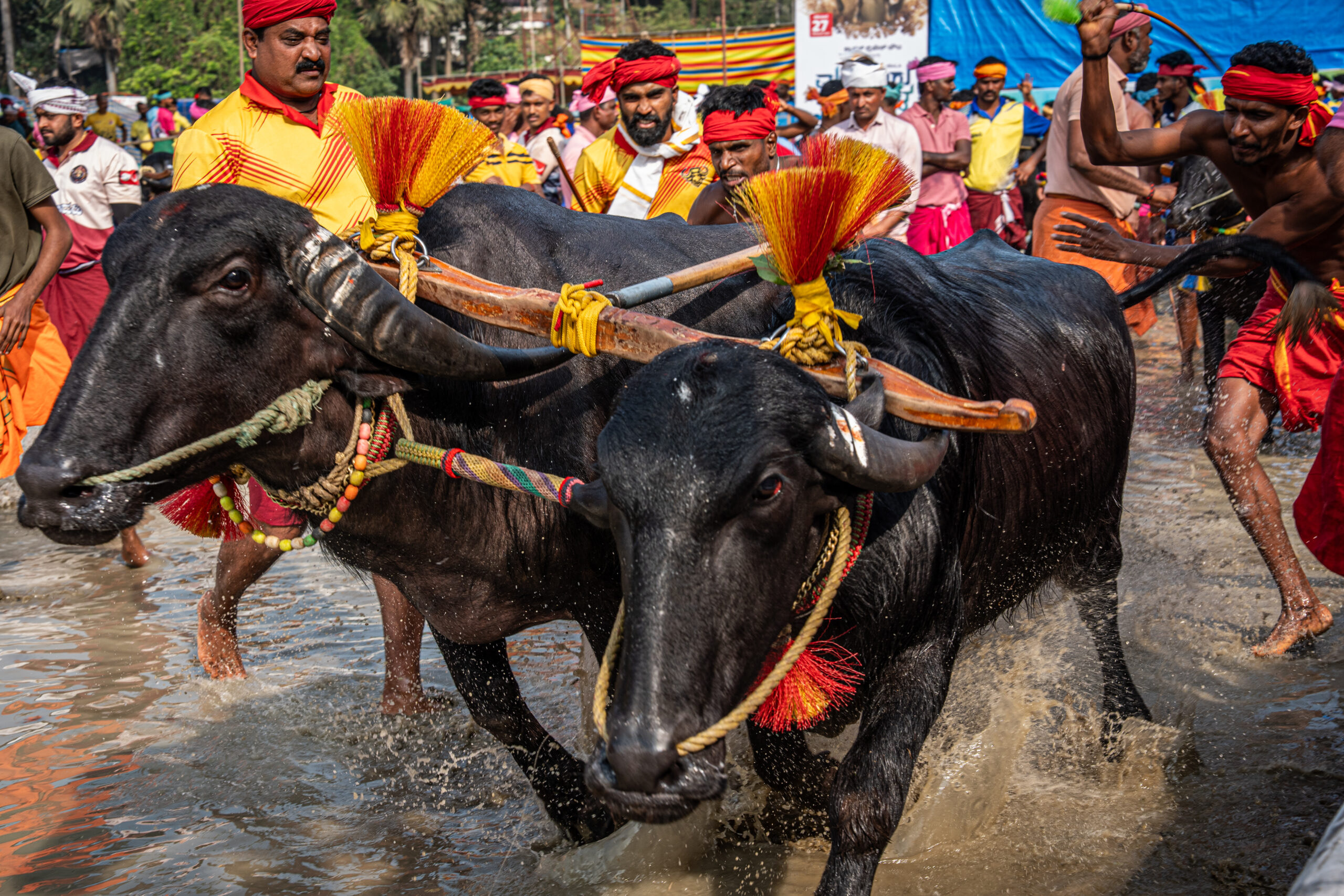
Gowda observed some of the buffaloes becoming difficult for handlers to control as the day grew hotter. Two or three handlers would push and shove them into position, some even hitting the animal on the body and the nose.
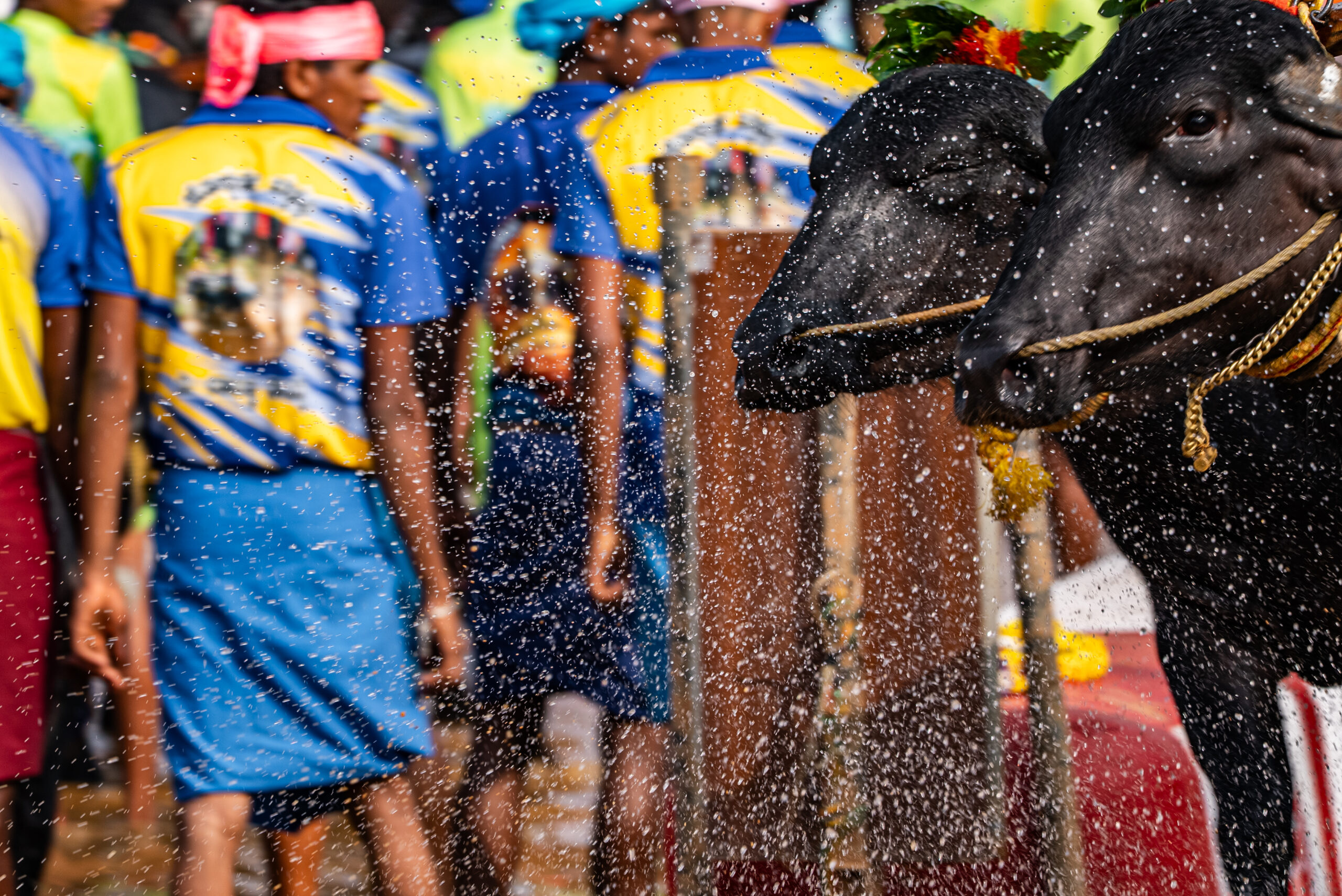
Before they enter the arena, the buffalo pairs are forced to walk around for the shouting crowds. Jockeys whack them and even scream in their faces, just as they do inside the track while running with the animals.
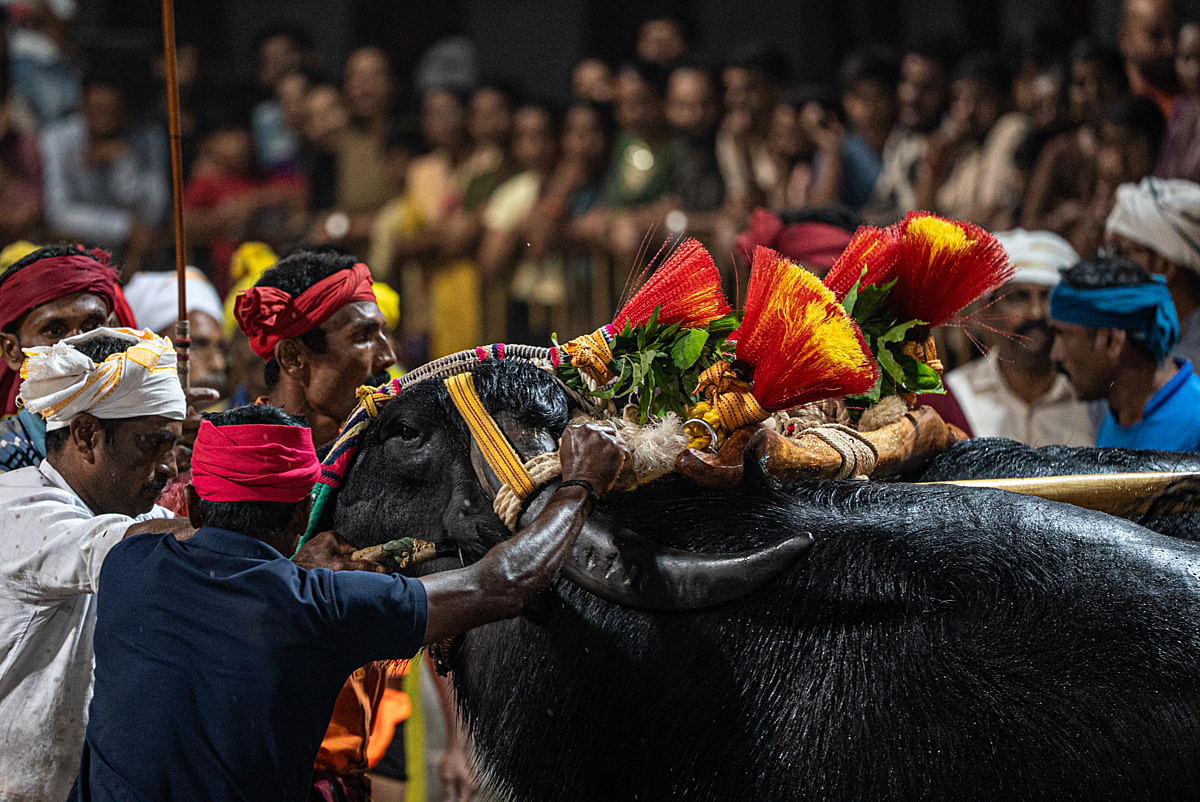
Handlers control and hold a pair of yoked and colourfully decorated buffaloes in position by gripping ropes that pass through the buffaloes’ nostrils just before the start of a Kambala buffalo race. Mangalore Kambala Track, Mangalore, Karnataka, India, 2025.
Manju N Gowda / FIAPO / We Animals
“When I tried shooting this activity, I was asked to lower my camera. The owner, an advocate, said that this doesn’t look nice, but if they are not beaten at this time, they will not run. I failed to understand—were they scaring the animals or were they agitating them just before the run so that, either way, they run?” — Manju N Gowda, photojournalist
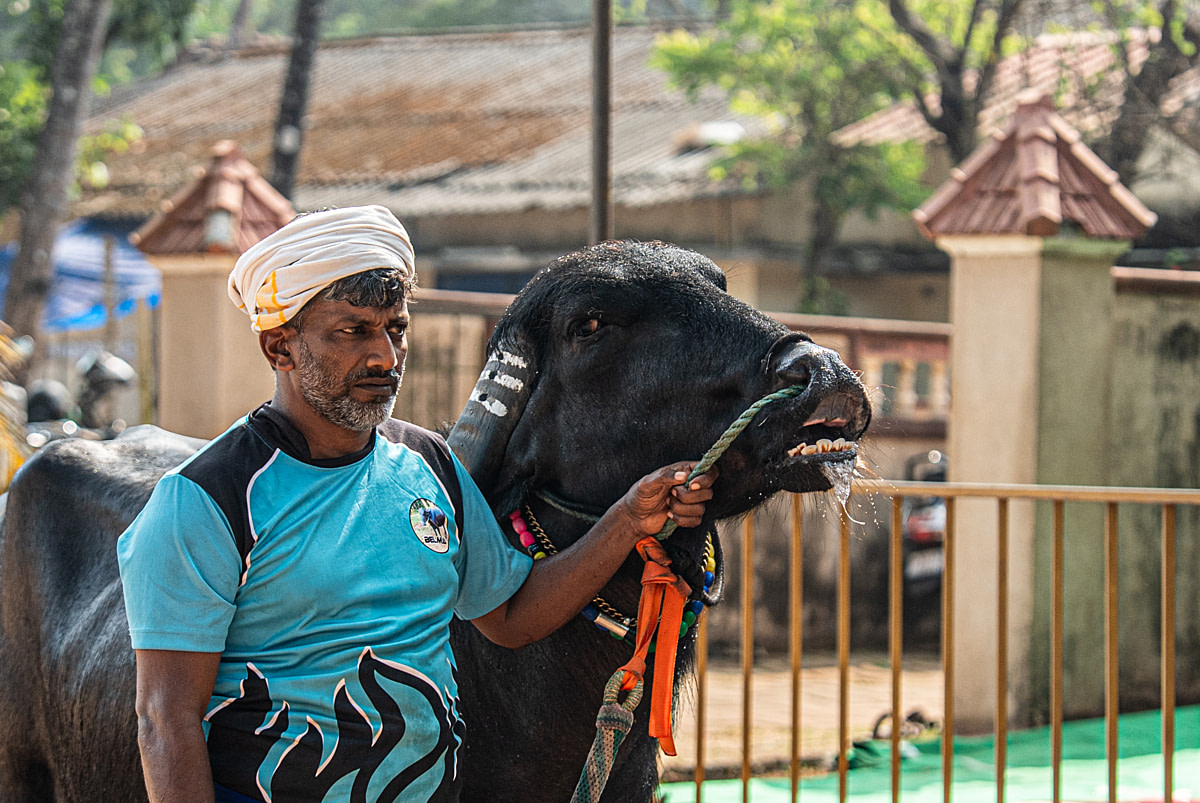
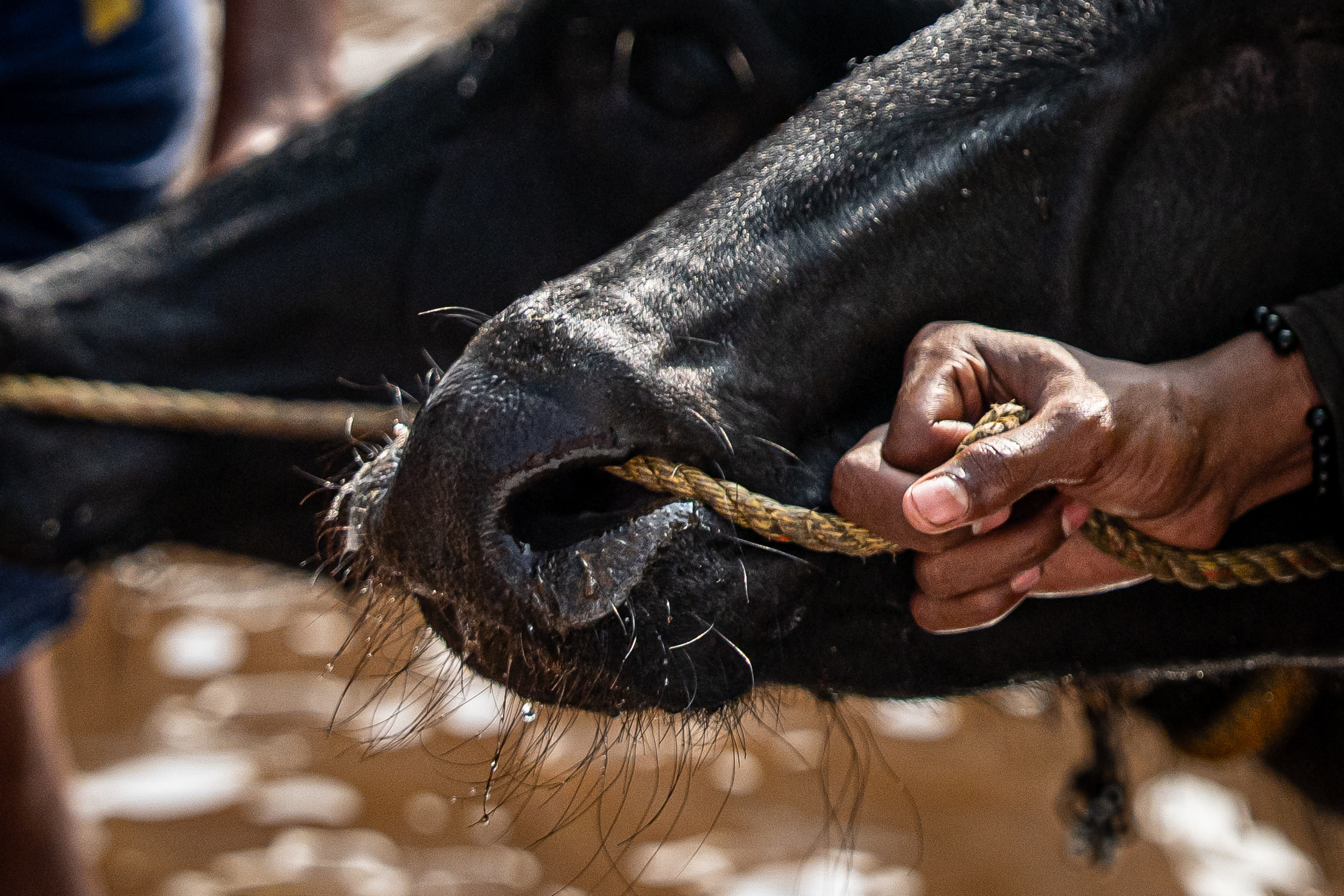
A heavily salivating buffalo gapes his mouth open as his handler leads him away by pulling the rope passing through the animal’s nostrils at a Kambala buffalo race. Mulki Kambala Track, Mulki, Karnataka, India, 2025.
Manju N Gowda / FIAPO / We Animals
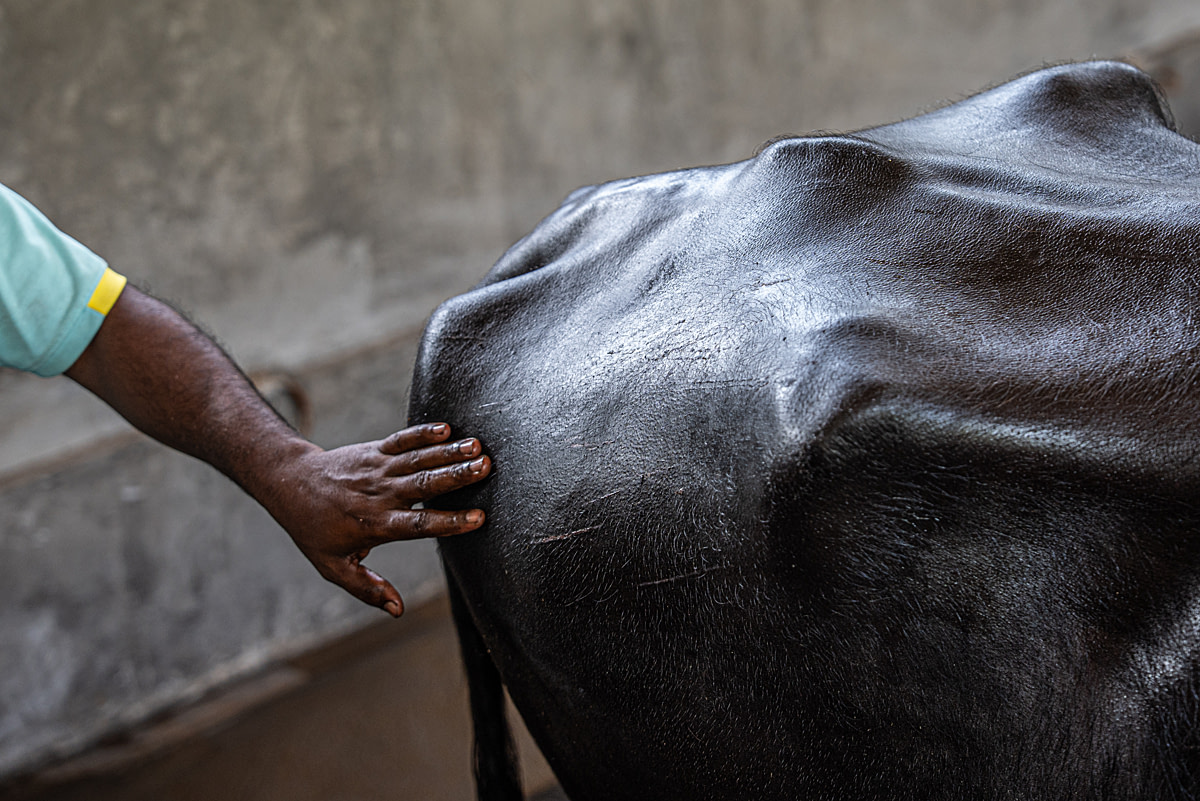
Welts mark the back of a racing buffalo as his caretaker massages him inside a holding shed. Buffaloes used for racing are given careful maintenance with nutrient-rich organic foods, oil massages, warm water baths and in some instances housed in air-conditioned rooms. Mulur Village, Udupi District, Karnataka, India, 2025.
Manju N Gowda / FIAPO / We Animals
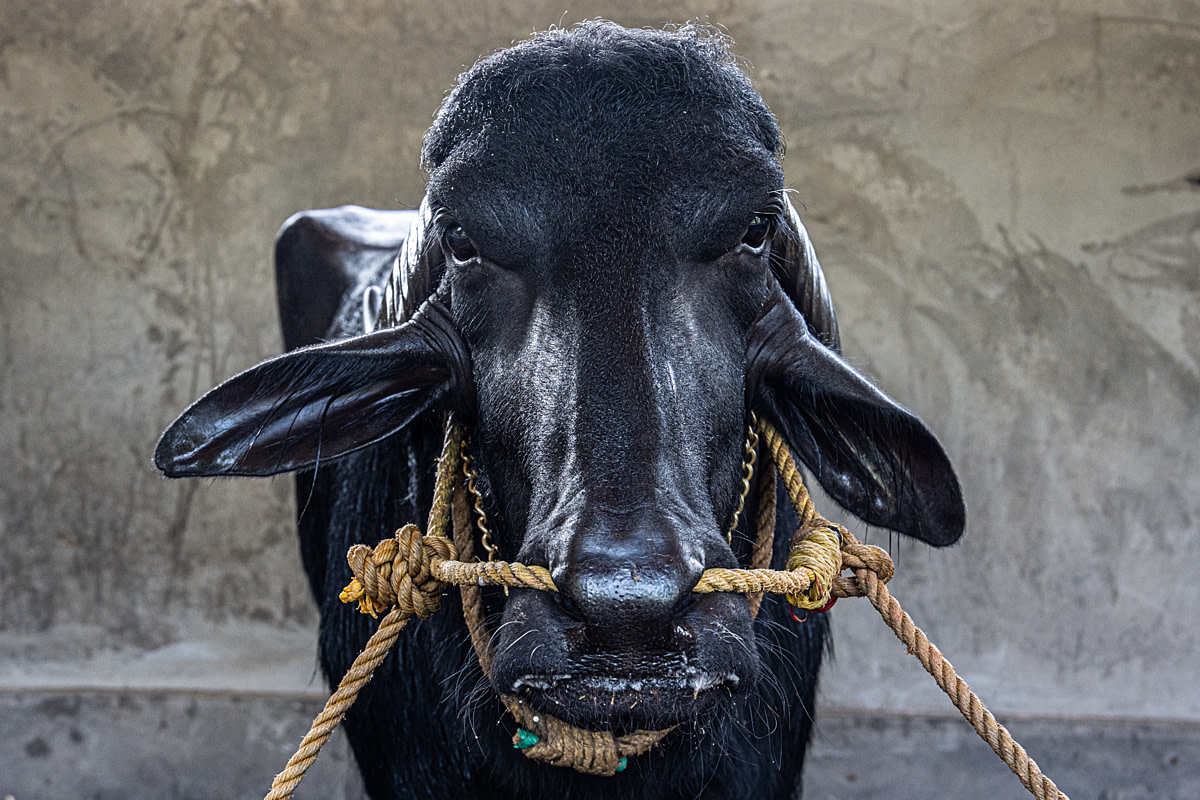
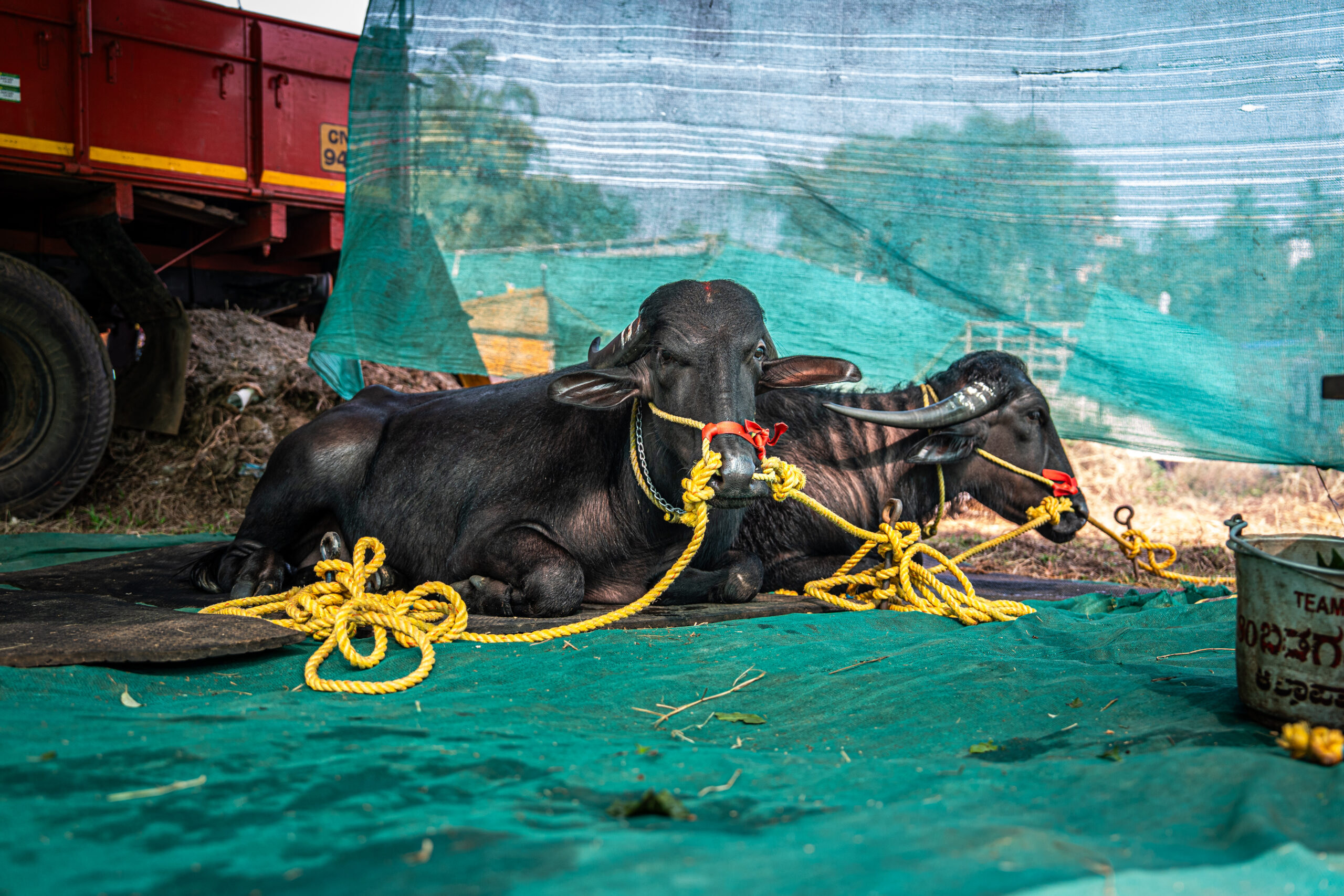
A tethered buffalo rests inside his holding shed ahead of being used in the Kambala buffalo races. Before race day, the animals are kept in a calm environment to rest. The thick rope through his nostrils is used to control his movements and keep him tied in place. Mulur Village, Udupi District, Karnataka, India, 2025.
Manju N Gowda / FIAPO / We Animals
EXHAUSTED ANIMALS ON THE SECOND DAY OF RACING
On the second race day, the same animals were forced to race again. Since the second event was held in another location, the buffaloes were reloaded into vehicles, transported, and unloaded. Many had bleeding cuts, and, with temperatures reaching up to 32 degrees Celsius, the heat clearly affected them.
At the event’s vet station, every pair of buffalo was taken to get their age checked so they ran in the correct category. Buffaloes younger than three years old aren’t allowed to run. However, the vets did not appear to check the wounds or condition of the animals to deem them fit to run.
“Once the race started, very soon it became clear that the animals were a lot more difficult to handle today. I am sure this was because they were being made to race again, without any proper rest or recovery. It was taking the handlers a lot more time to position the pairs near the starting point. There was a lot of hitting, as the buffaloes would not listen to any instructions.” —Manju N Gowda, photojournalist
THE LEGAL STATUS OF KAMBALA
In 2014, India’s Supreme Court banned buffalo and bull racing, including Kambala. In 2017, though, Karnataka’s government re-legalized the races based on their cultural importance. Officially known as the Prevention of Cruelty to Animals (Karnataka Amendment) Ordinance, the law exempts Kambala from the Prevention of Cruelty to Animals Act, 1960, provided the sport is conducted with “no unnecessary pain or suffering” to the animals. Given what our animal photojournalist documented, it is difficult to see what pain and suffering would be deemed “necessary” or justifiable.
Although the practice was legalized in the state based on its cultural associations, in March 2026, the Indian Supreme Court dismissed a plea that would have banned Kambala outside coastal areas of Karnataka, where it has little or no cultural significance and is run mostly for commercial purposes.
The visuals captured by Gowda are part of an assignment undertaken in collaboration with the Federation of Indian Animal Protection Organisations (FIAPO) to support greater transparency in monitoring mechanisms, clearer enforcement of welfare guidelines, and independent oversight of Kambala races.
See more stories like this. Subscribe to our newsletter.
Explore and download these visuals and more via the We Animals Stock Site.