
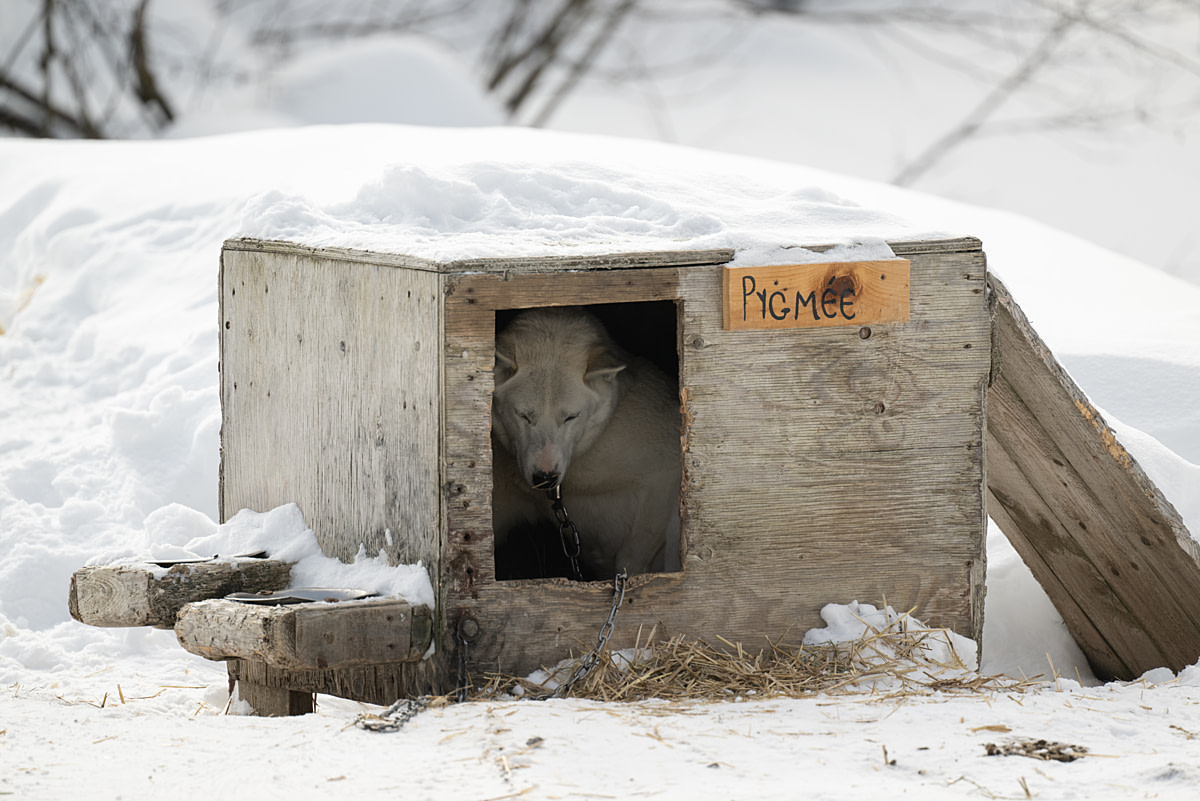

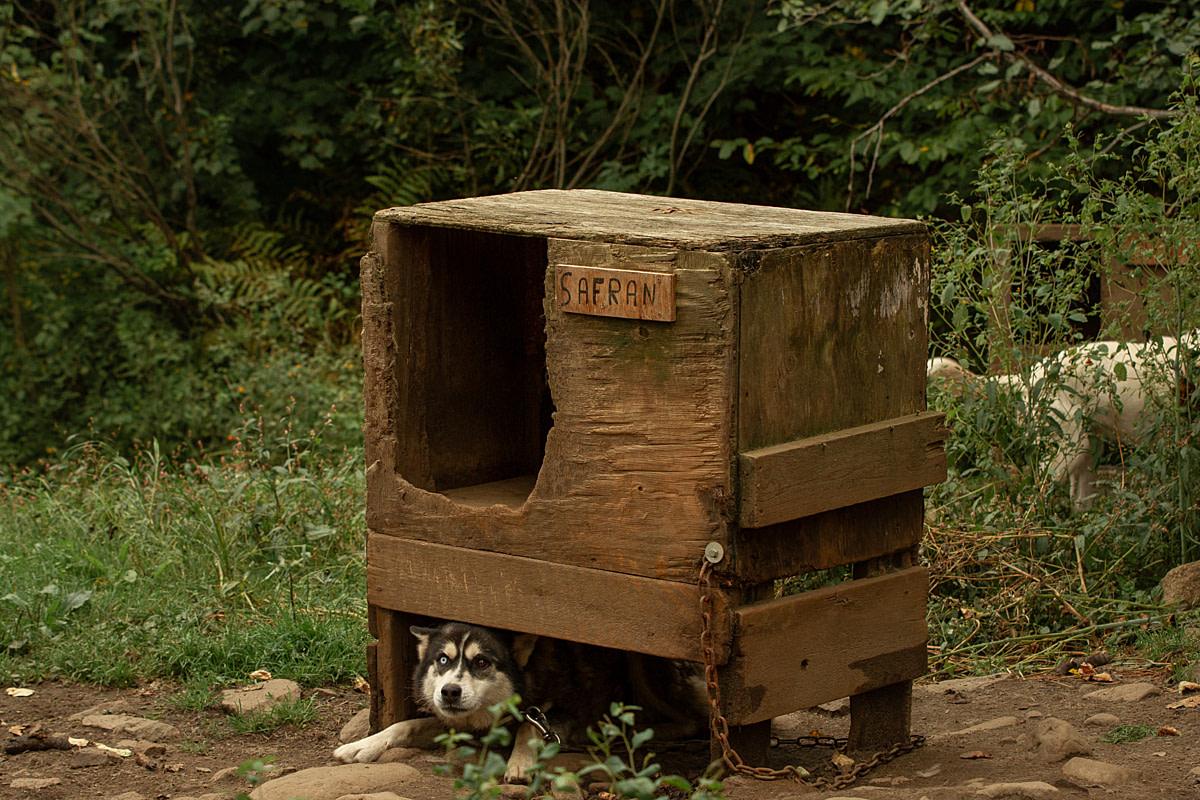
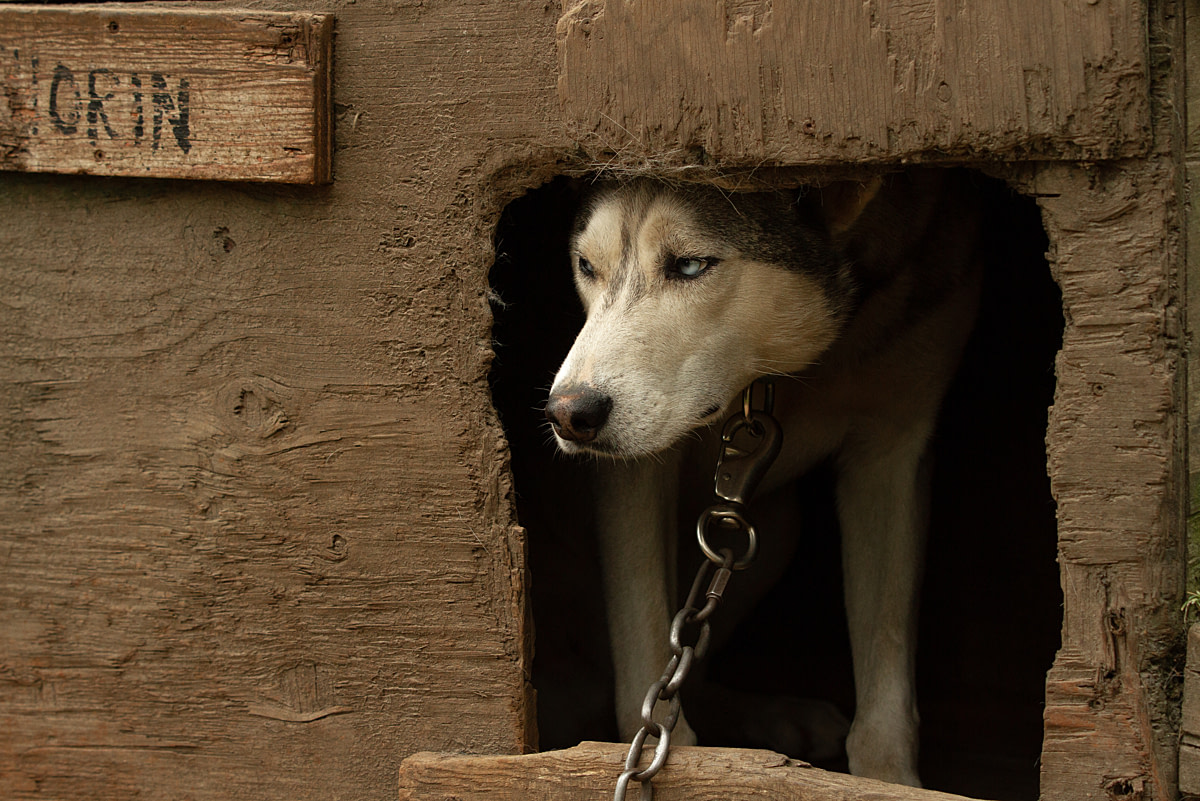
A chained husky or husky-mix dog named Pygmee sits in his small wooden shelter at a dog-sledding operation in Quebec, Canada, 2025.
Monroe Styles / We Animals
Last winter and again in spring, our team documented dog-sledding facilities in Quebec, Canada.
“Dogs love to run.”
“An authentic Canadian experience.”
“Time in nature with man’s best friend.”
These are promises that draw tourists to dog-sledding operations across Canada each winter. On a bright, blue-skied day in Quebec — the kind tourists hope for — our team arrived at two popular dog-sledding facilities to document what life actually looks like for the dogs used in this industry.
We were there following a tip alleging animal cruelty.
“Our team is welcomed at the dog-sledding companies. Warmly so. They have nothing to hide. I’ve documented so many places where cruelty is hidden in plain view because it’s masked by things we love and cling to: culture and tradition, enjoyment and entertainment. That animals are for our use and entertainment is implicit.” — Jo-Anne McArthur, Animal Photojournalist (APJ)
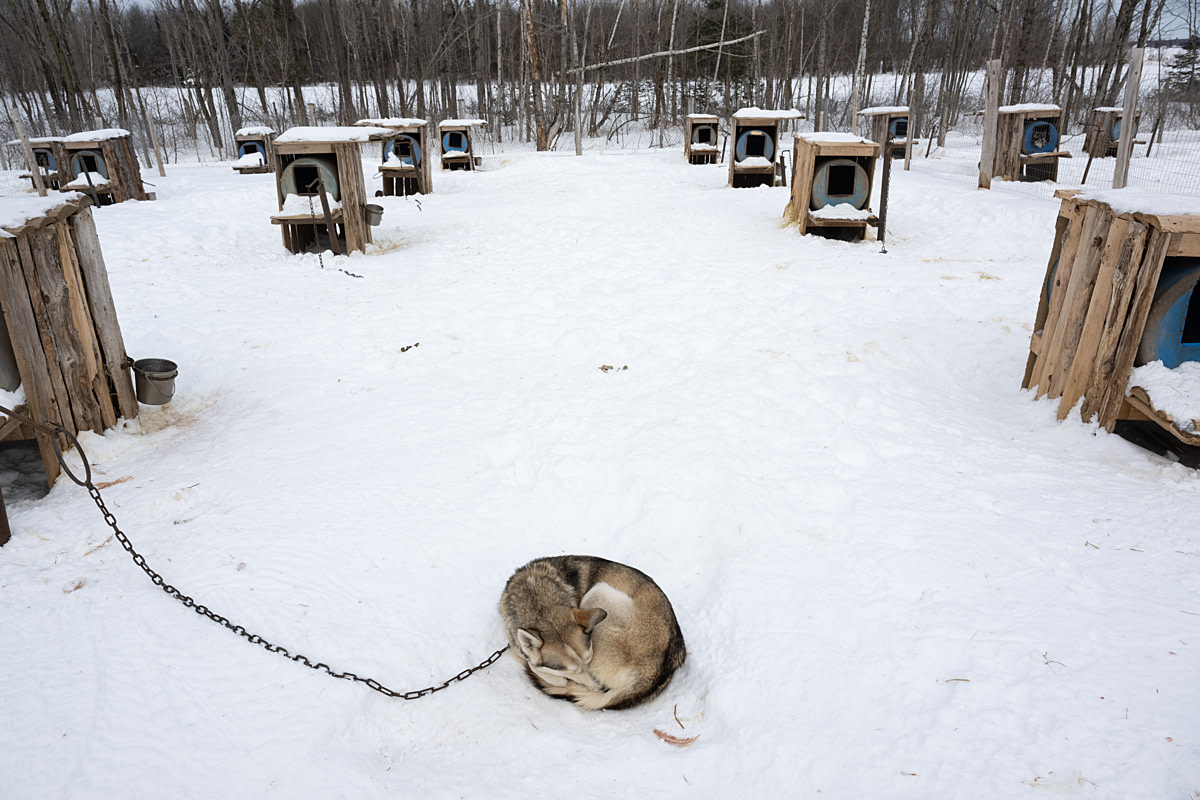
A chained husky or husky mixed-breed dog sleeps curled up in the snow near his small shelter at a dog-sledding operation. Numerous similar shelters sit in the background. Quebec, Canada, 2025.
Monroe Styles / We Animals
What We Documented
A recent New York Times article promotes images of happy, energetic dogs eager to run. But what our team documented told a different story.
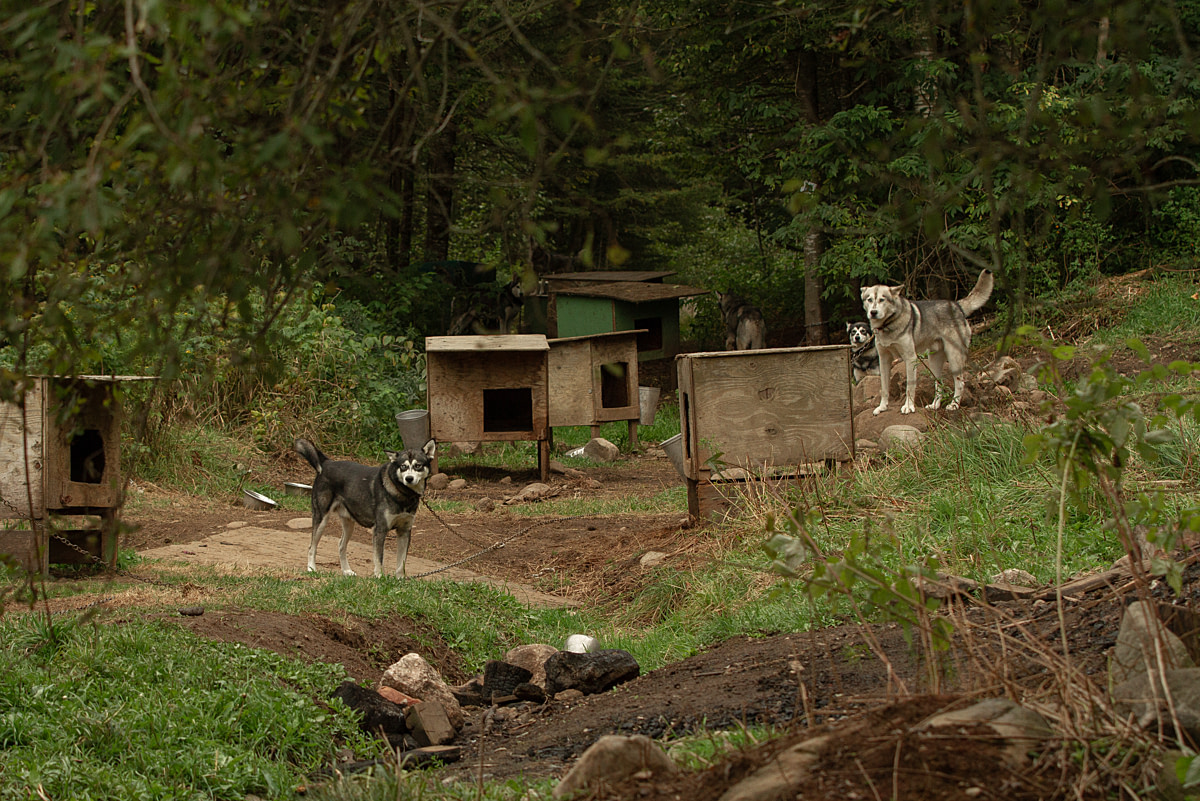
Most dogs we observed were tethered outdoors to chains four to eight feet long. Each chain allowed a perfect circle around a small plywood box. In the hours we spent at these facilities, they were released from their chains only to pull sleds, running tourists through snow, chains clinking, before being returned to their posts. The boxes offered their only shelter; water bowls were crusted with urine. Some dogs paced in circles; the chains allowed little room to move.
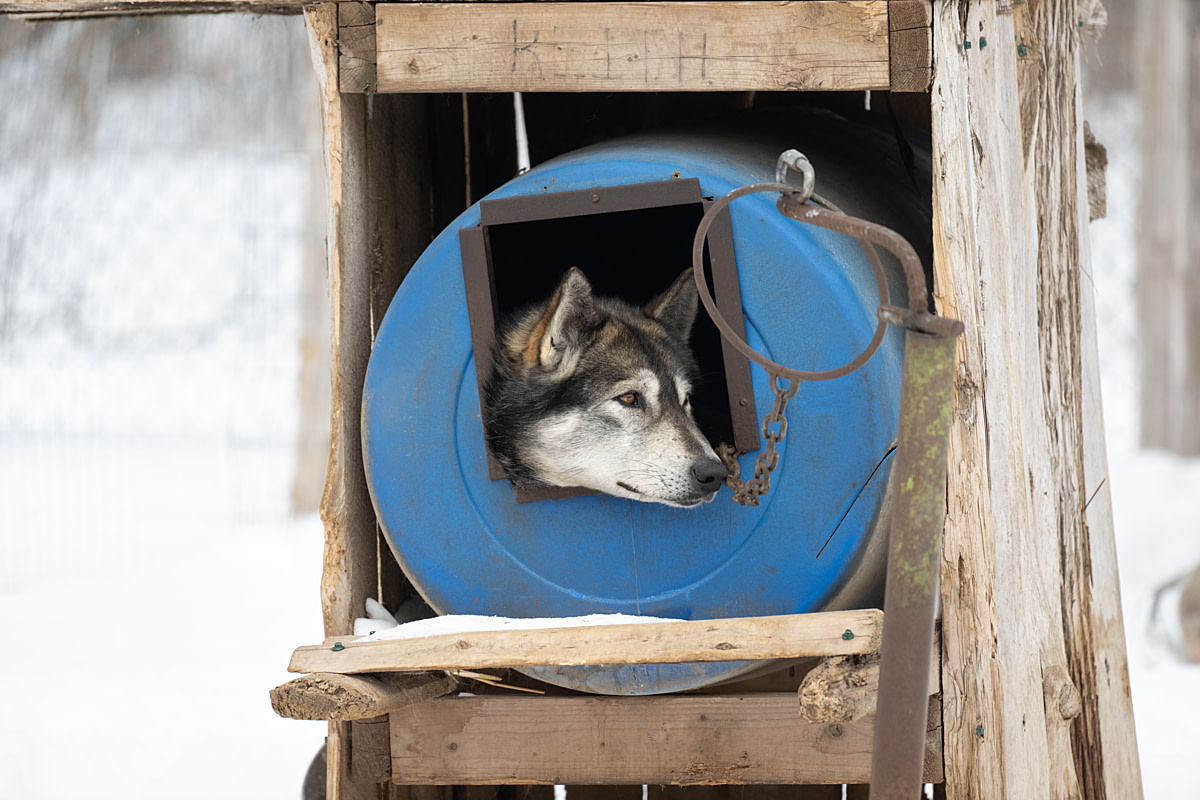
A chained dog peers out of a small shelter at a dog-sledding operation. The shelter consists of a plastic barrel inside an elevated wooden box. Quebec, Canada, 2025.
Monroe Styles / We Animals
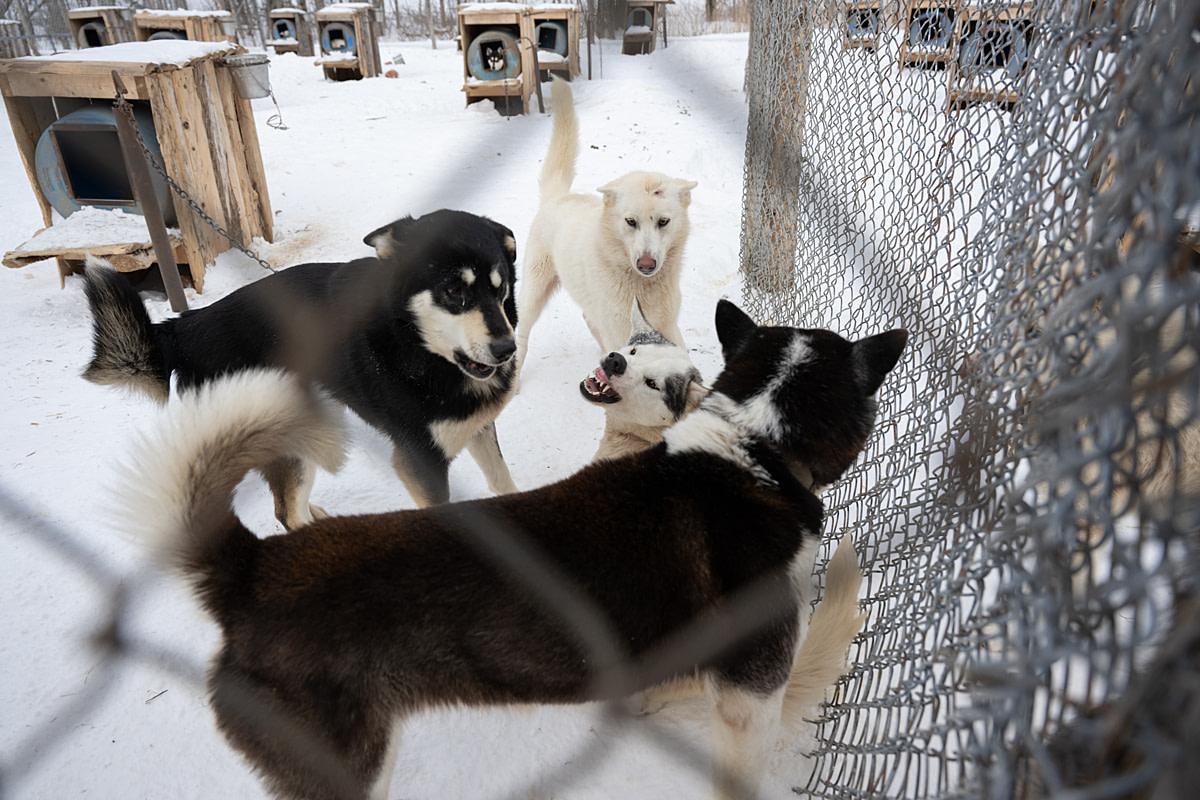
Husky and husky mixed-breed dogs, some unchained, play and roughhouse in a group enclosure at a dog-sledding operation. Quebec, Canada, 2025.
Monroe Styles / We Animals
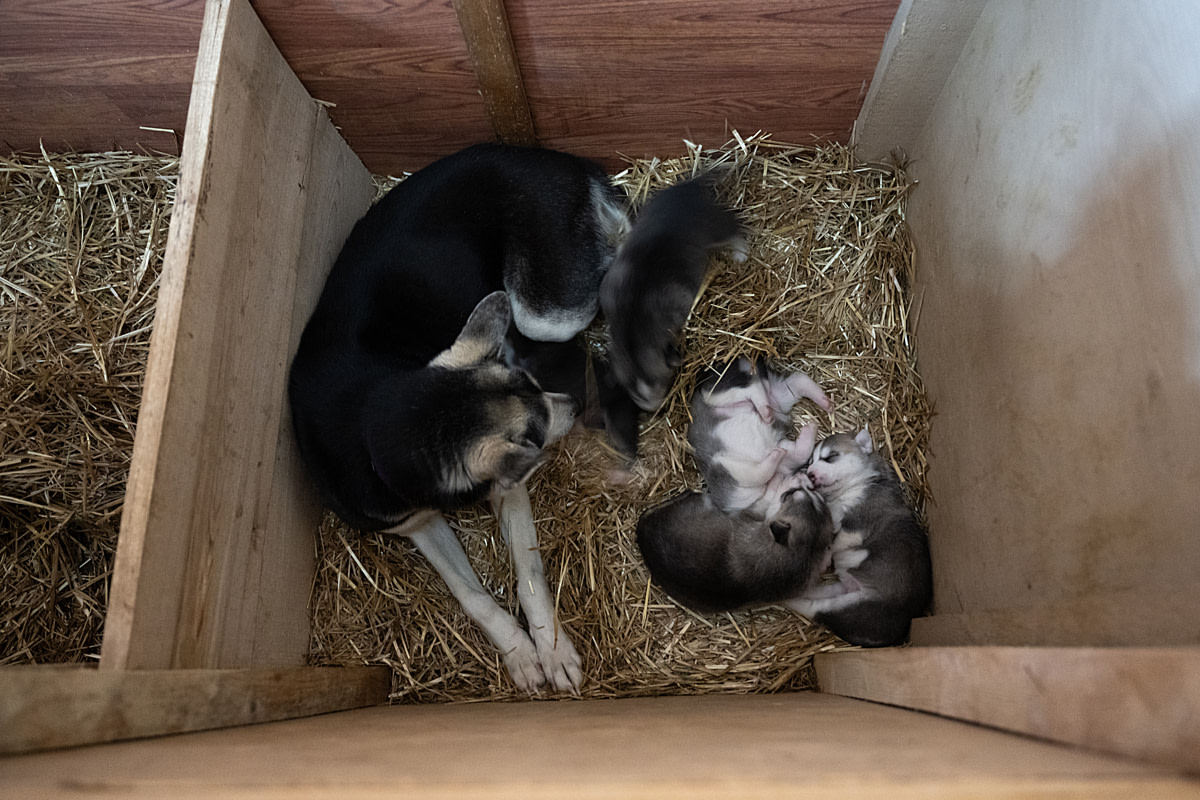
A mother husky or husky-mix dog lies with her young pups inside a cramped indoor enclosure at a dog-sledding operation. Quebec, Canada, 2025.
Monroe Styles / We Animals
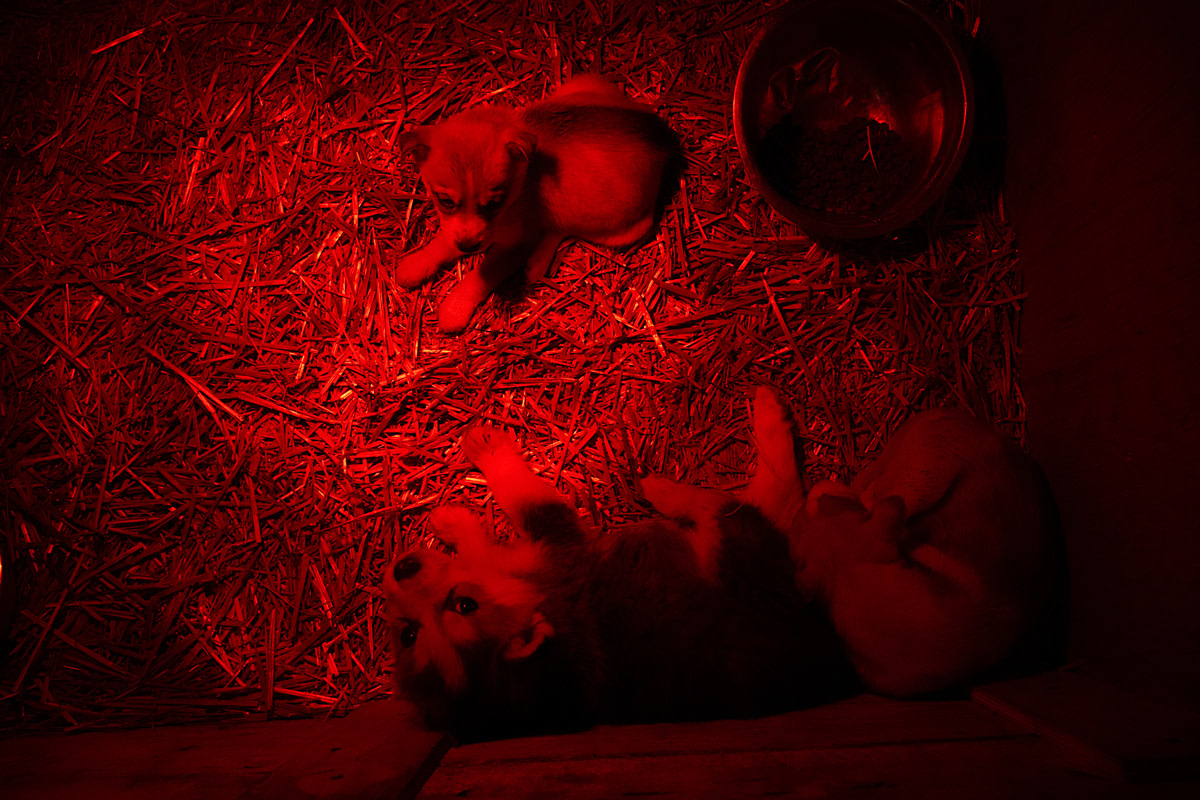
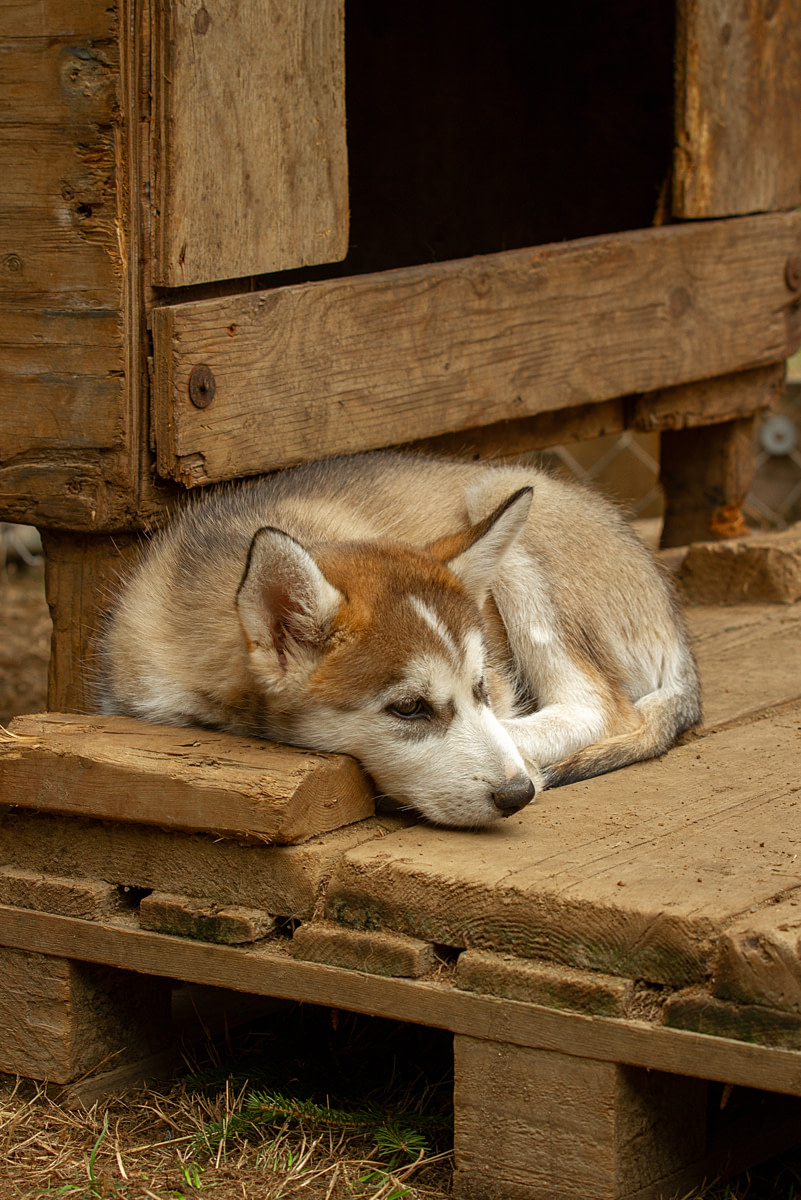
Husky and husky-mix puppies of varying ages sleep and rest under a heat lamp in a small indoor enclosure at a dog-sledding operation. Quebec, Canada, 2025.
Monroe Styles / We Animals
From The Inside
Almost a decade earlier, one member of our team had worked as a horseback trail guide in Australia. Three tours a day. Smiling for tourists. Tending to horses’ wounds in the evening until management asked her to cut back — medicine was expensive.
Those experiences came rushing back when she visited one of the dog-sledding operations. Nothing appeared openly cruel, yet something felt wrong.
“The guide’s reassuring tone was one I recognized — I had used it myself years earlier as a horseback trail guide, selling adventure to tourists while overworked horses paid the price. From the inside, as a staff member, exploitation is easy to justify; you tell yourself it isn’t so bad. But when animals become the product, profit decides their fate, and the stories we tell are meant to comfort us, not protect them.” — Eva von Jagow, We Animals Marketing Manager
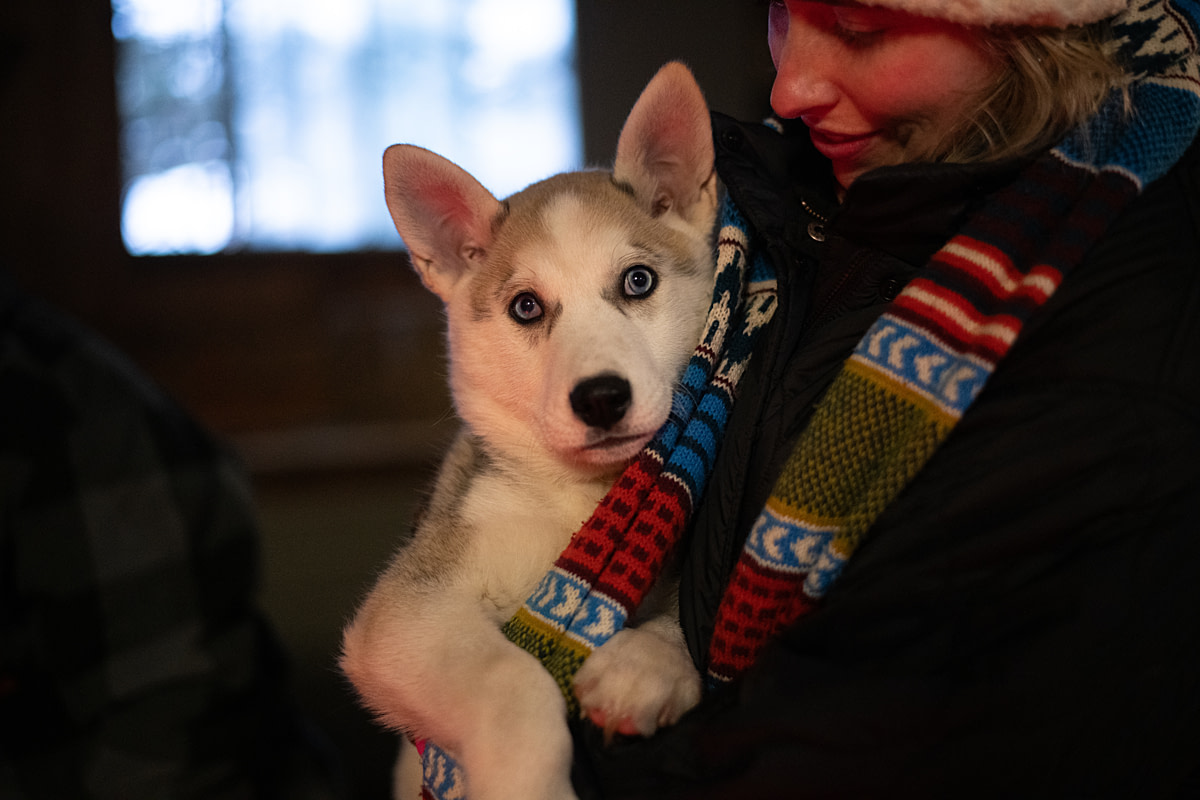
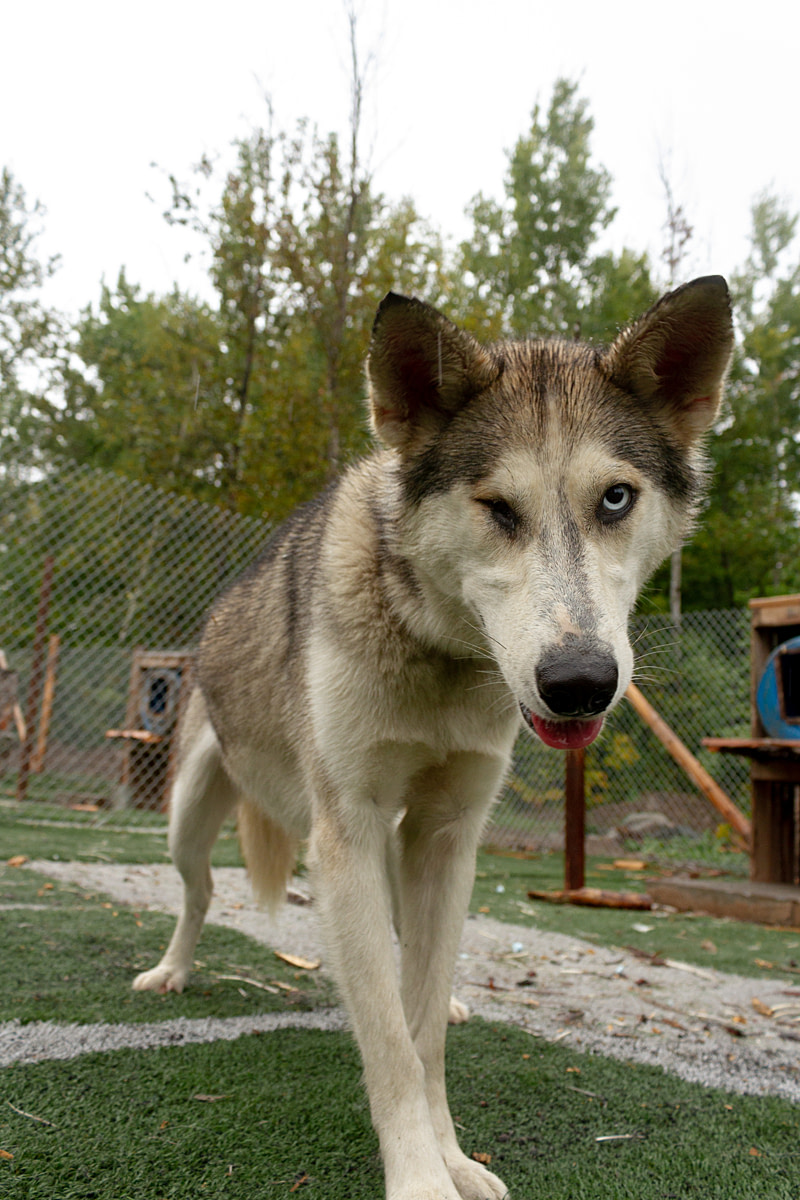
A husky or husky-mix puppy makes eye contact while being held by a visitor at a dog-sledding operation. Quebec, Canada, 2025.
Monroe Styles / We Animals
The Story We Tell Ourselves
Inside exploitation, it rarely looks monstrous. It looks routine. Justified. Even affectionate.
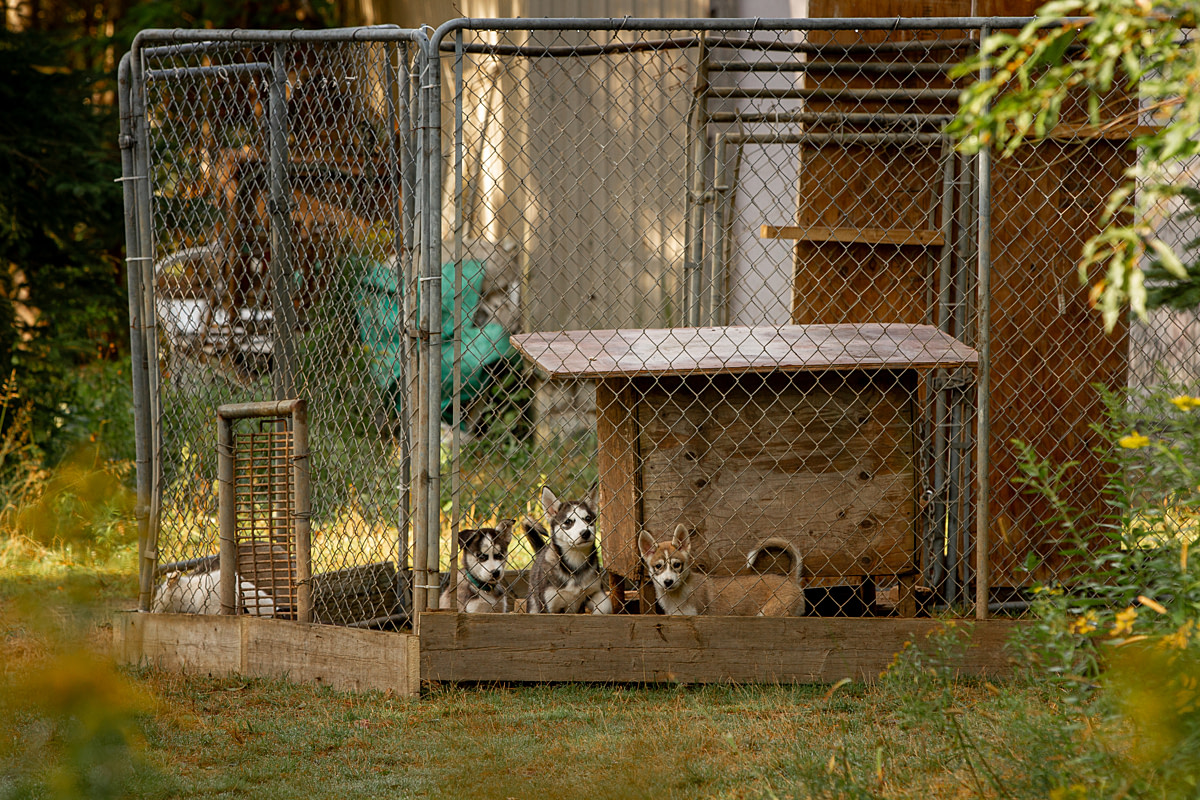
Confined puppies, just a few months old, peer through the fence of the enclosure where they live at a dog-sledding operation. Toys aren’t provided because the puppies break them too quickly, and the puppies are provided only with pine branches for stimulation. Quebec, Canada, 2025.
Julie LP / We Animals
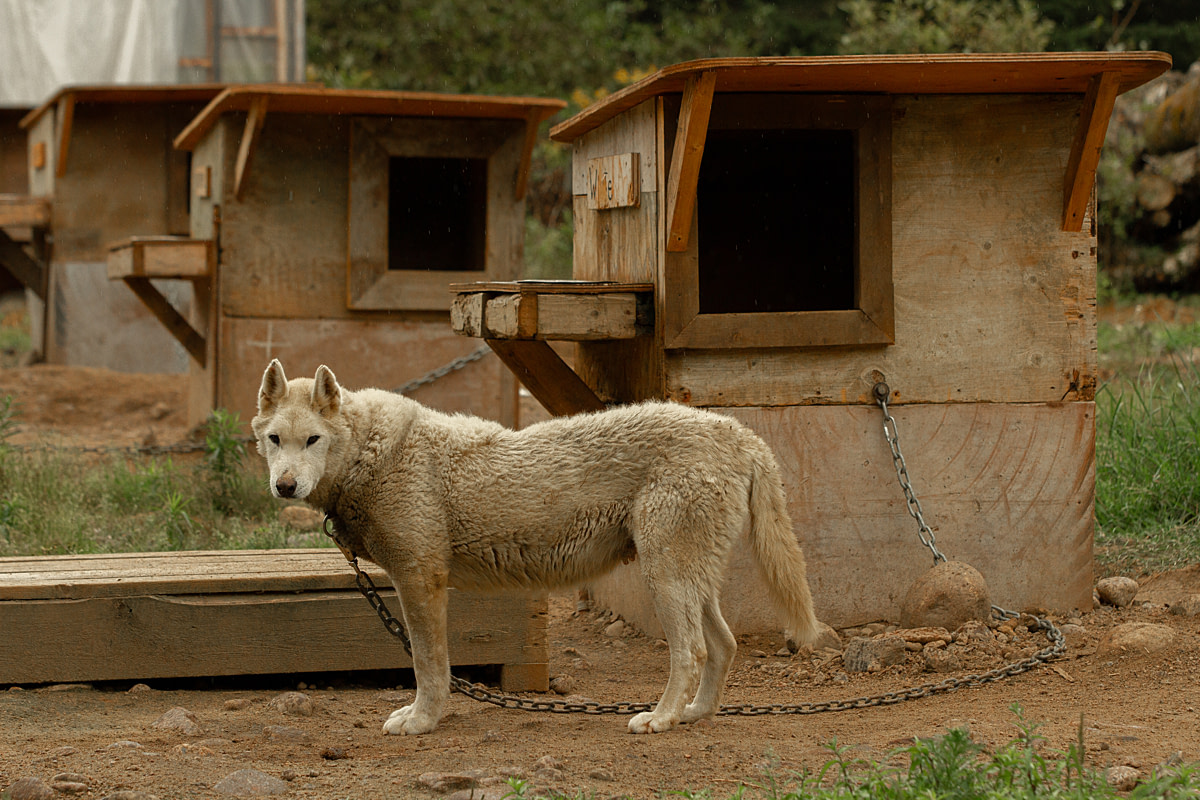
A white dog with dirty, dry-looking fur makes eye contact while standing chained to a rudimentary wooden hut at a dog-sledding operation. The hut is exposed to the elements and serves as his year-round home. Quebec, Canada, 2025.
Julie LP / We Animals
Unlike traditional sledding operations, where huskies are used, many dogs at this facility were mixed breeds, part Labrador, part Retriever, even a Duck Toller. A staff member stated that people sometimes abandon their dogs at the facility in the middle of the night. These dumped dogs are sometimes taken in, later used for sledding or breeding.
When asked whether they worried someone might try to take the dogs, who lived outdoors overnight, one worker replied:
“Who would want these dogs? They’re not like the dogs we have at home.”
For Julie LP, one of the animal photojournalists documenting the facility, that moment stayed with her.
“These are curious, sensitive beings, made to explore the world. Instead, they are turned into living vehicles. And worse — we maintain machines with more care than we offer these dogs … Since that visit, I’ve walked through forests, I’ve run, I’ve explored new places, and I’ve ridden my bike for miles. I’ve enjoyed the basic freedom of movement — something that should be a birthright for all sentient beings. Meanwhile, those dogs have likely not moved more than a few feet — anchored to chains or, at best, confined to tiny enclosures. Not by choice, but because a human decided it was acceptable.” — Julie LP, APJ
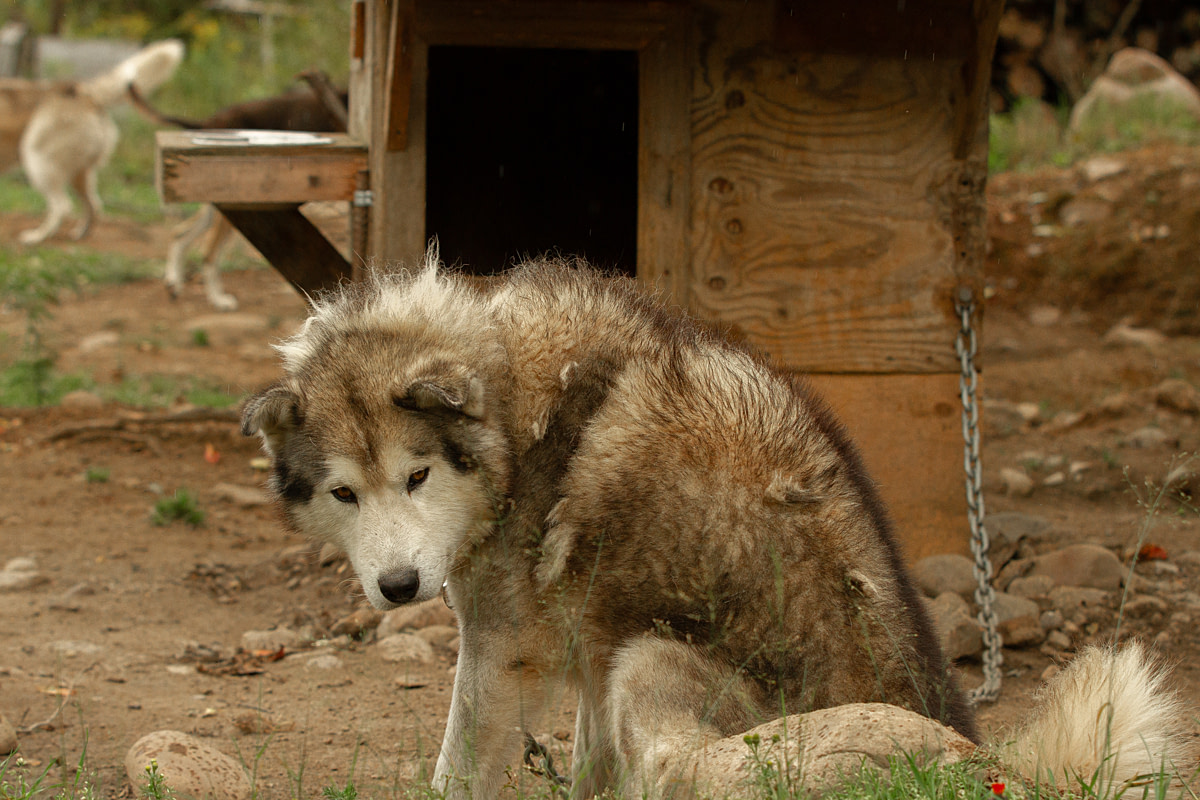
A dog with loose fur, an indicator of possible poor health, makes eye contact while chained to a rudimentary wooden hut at a dog-sledding operation. The hut is exposed to the elements and serves as his year-round home. Quebec, Canada, 2025.
Julie LP / We Animals
Not Looking Away
In a 2024 position statement, the Montreal SPCA notes that Quebec’s sled dog industry has approximately 5,000 dogs across 130 facilities and operates without specific oversight. The organization states that few dogs are spayed or neutered in the industry, resulting in unwanted litters and puppy killing, and that dogs considered unfit for sledding may die on their chains or be killed. As of 2024, dogs in Quebec can be legally chained for up to 23 hours daily.
“Chains don’t melt when the sled tracks do; they stay, season after season, binding dogs bred, sold and discarded for sport. If “man’s best friend” still means anything, it must start with this: no animal should freeze, pull, or spend a life in chains so that humans can be entertained. Tourists will keep buying the fairytale unless we show them the footnotes: a not-husky named T-Rex, balancing on splintered wood, paw aching, eyes pleading for something we haven’t yet learned to give. The least we can do is not look away.” — Victoria de Martigny, APJ & We Animals Director of Visual Content
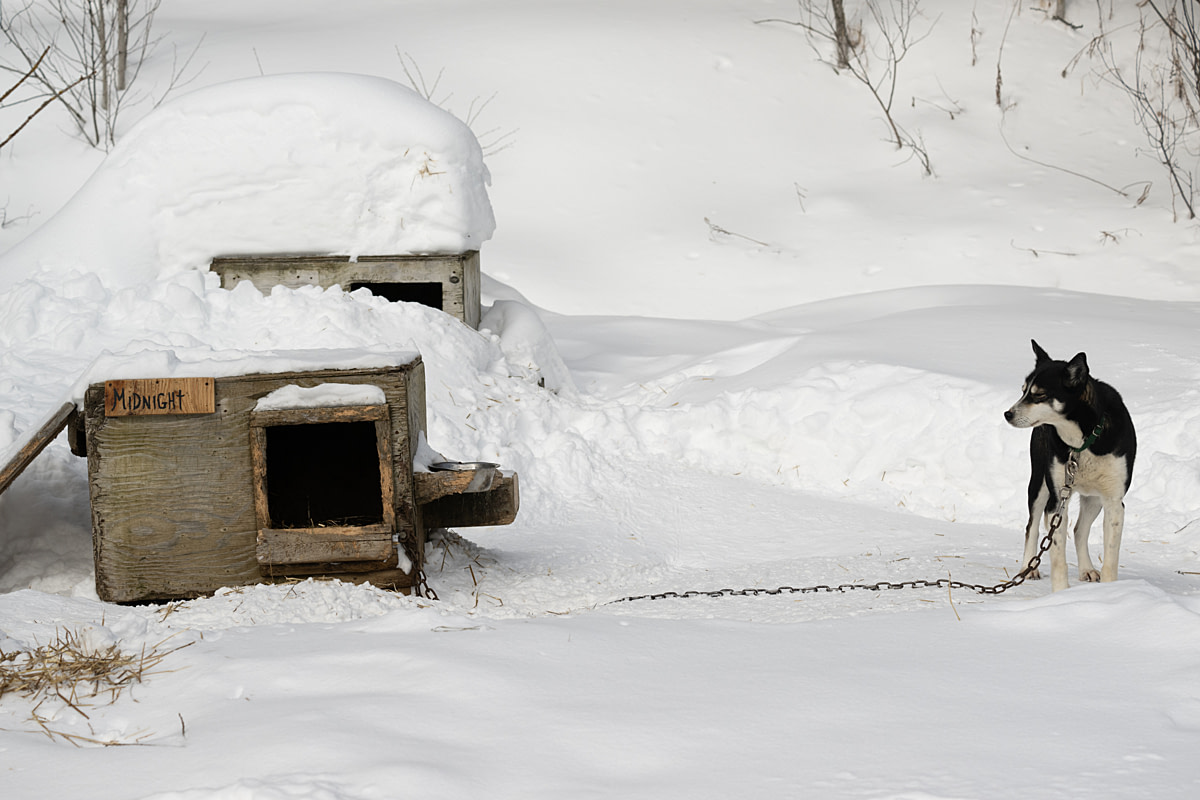
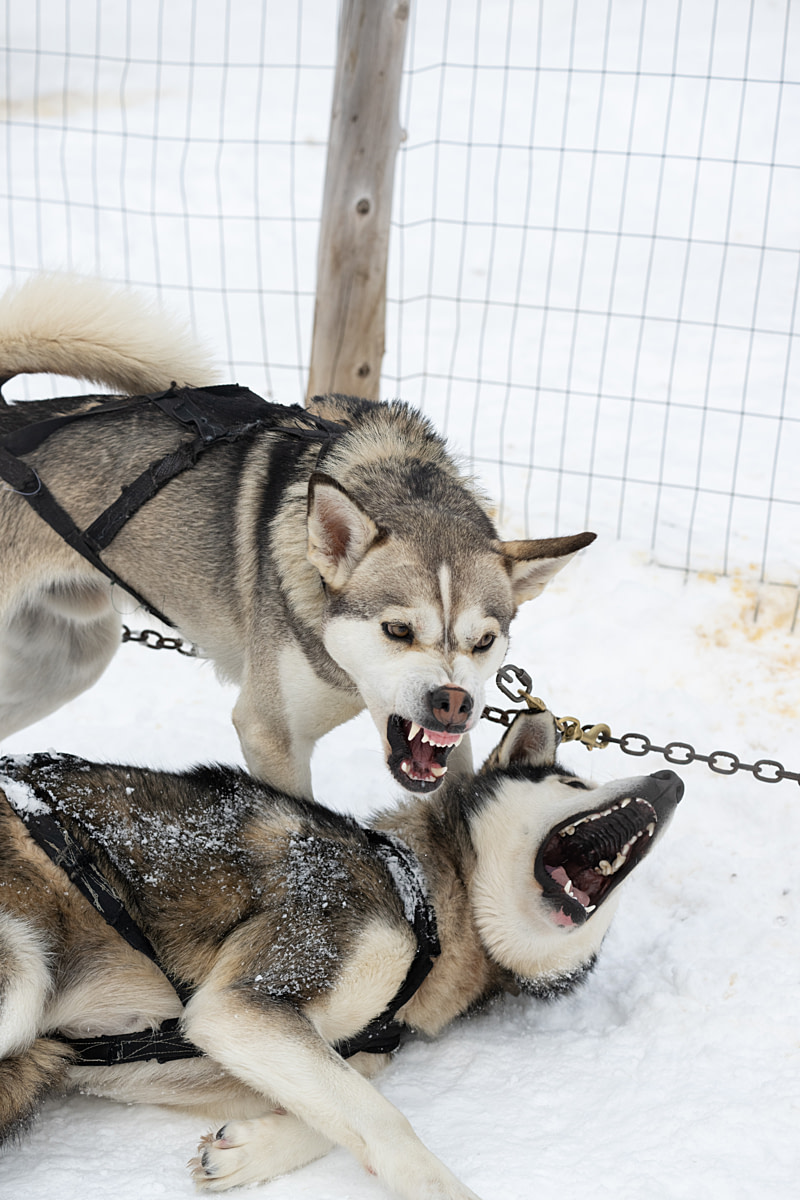
These visuals are available for media and advocates working to discourage dog-sledding this winter.
Explore and download these visuals and more via the We Animals Stock Site.