
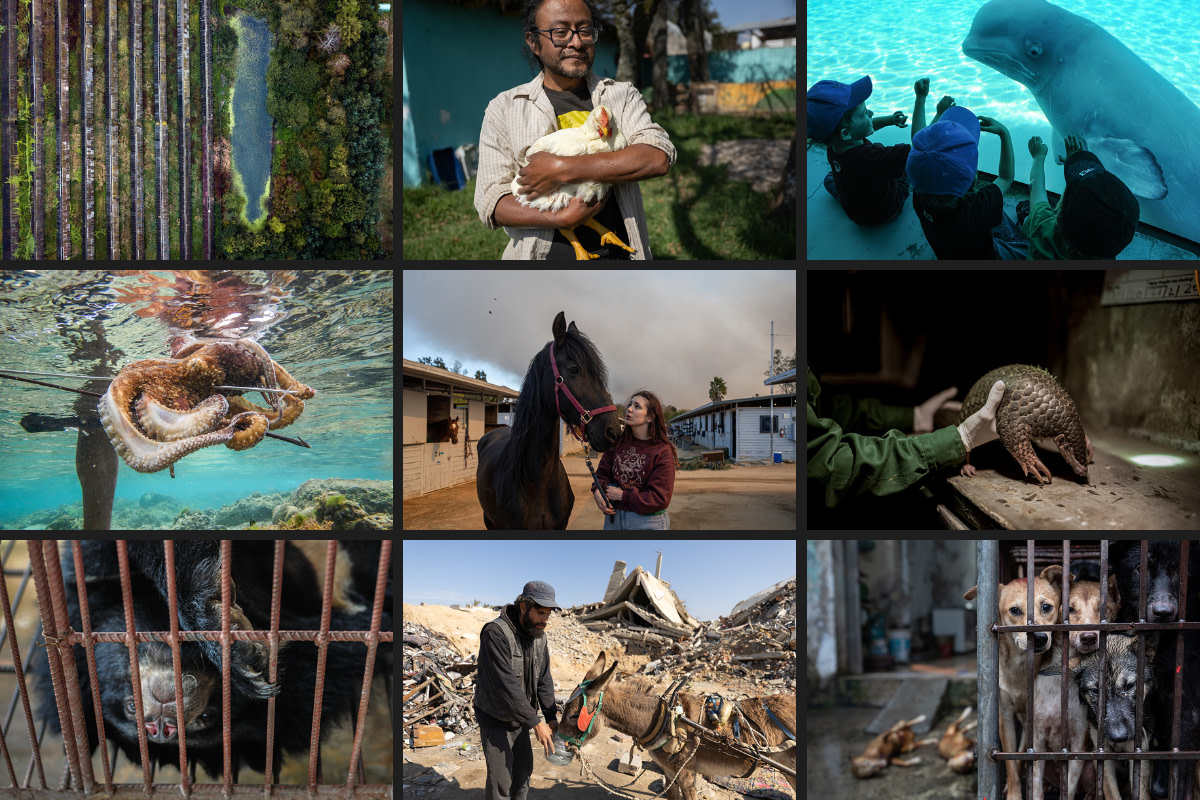
Progress in animal advocacy isn’t typically neat or fast. It takes one step forward, backslides, and then advances again.
We Animals’ photojournalists are there for all of it. They go to where animals are trapped, displaced, exploited, and forgotten, and they also go to where change and progress are beginning to bloom.
Our 2025 highlight collection shows the best and the worst this year for animals: the harm that persists, and the systems that are starting to crack.
When Systems Begin To Break
Poland Bans Fur Farming
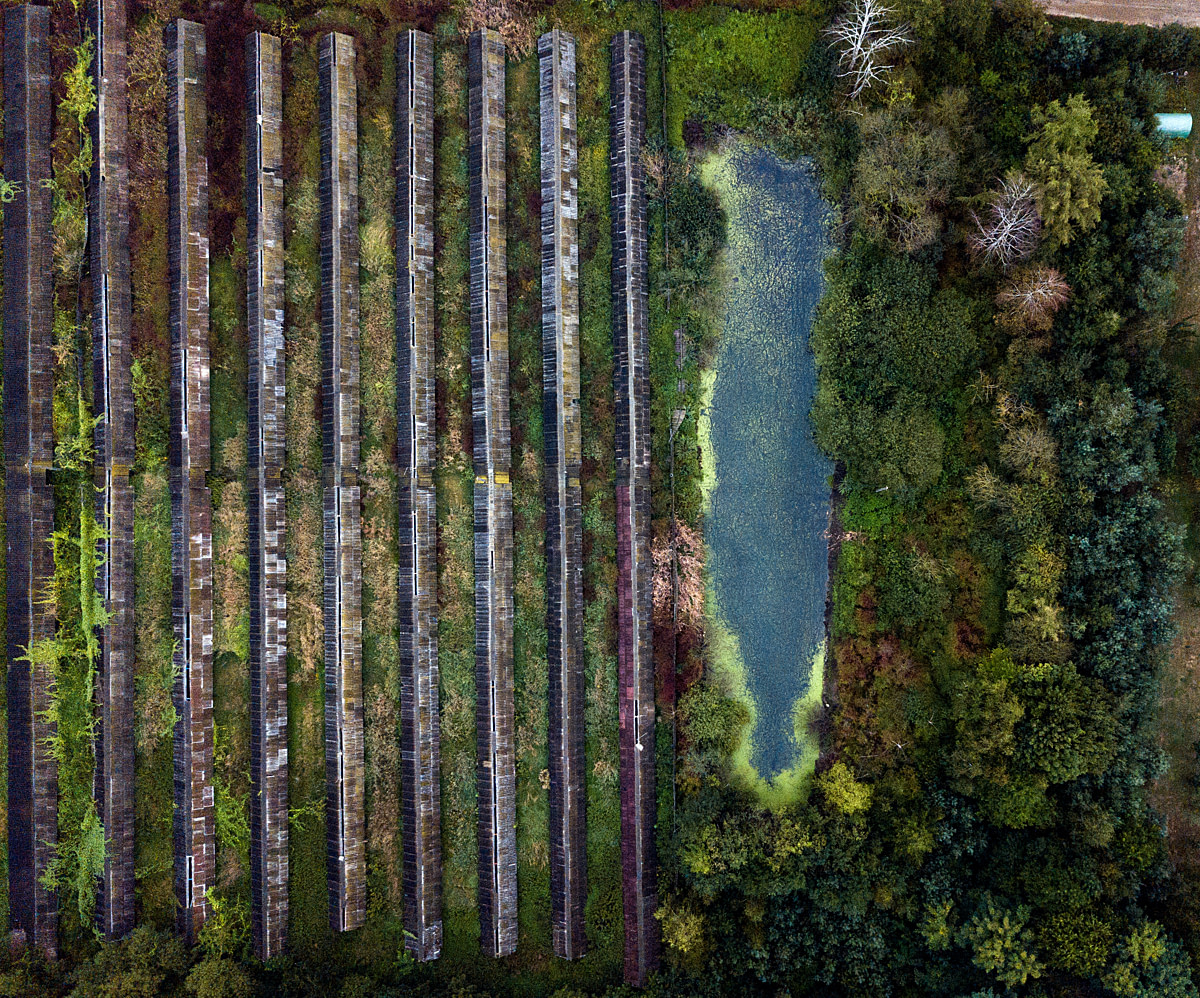
An aerial view of a shuttered mink farm, closed for several years and located deep in a forest near a town. The facility once housed tens of thousands of mink who were raised for their fur. Vegetation grows over what remains of the partially dismantled structures. Poland, 2019.
Andrew Skowron / We Animals
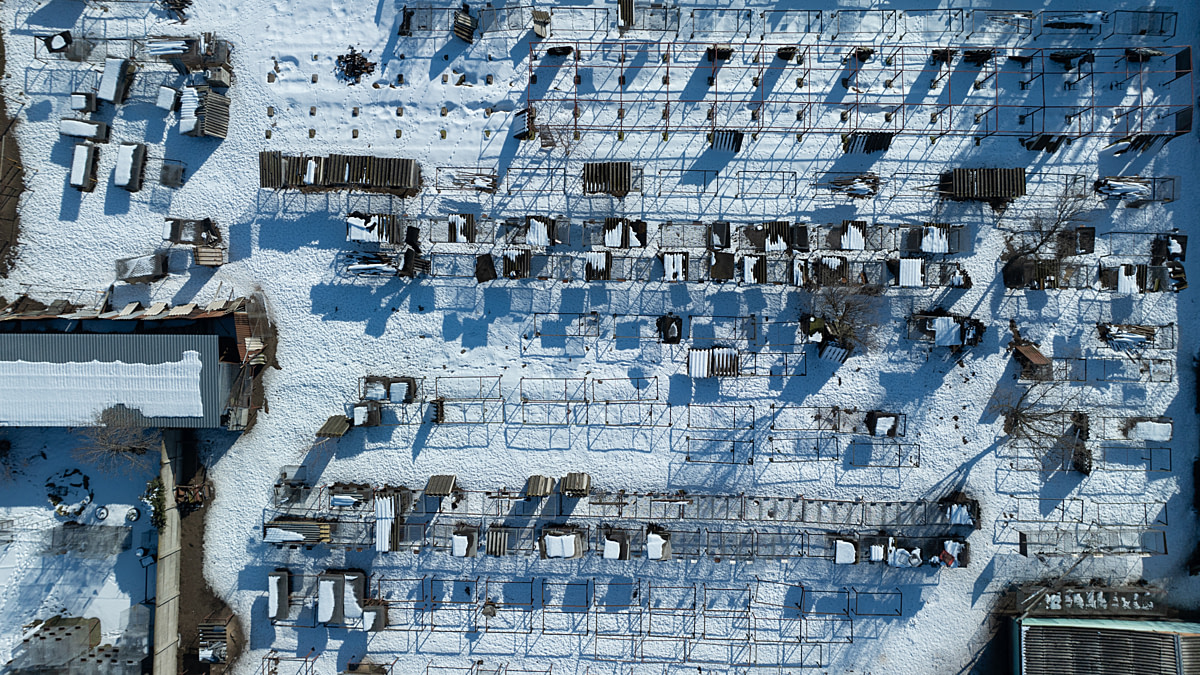
An aerial view of a former fox and raccoon dog fur farm built in an open field. According to the photojournalist, the farm operated for several years before the owner shut it down due to declining profitability in the fur sector. As of early 2025, the animals cages are being dismantled and the farm is for sale. Poland, 2025.
Andrew Skowron / We Animals
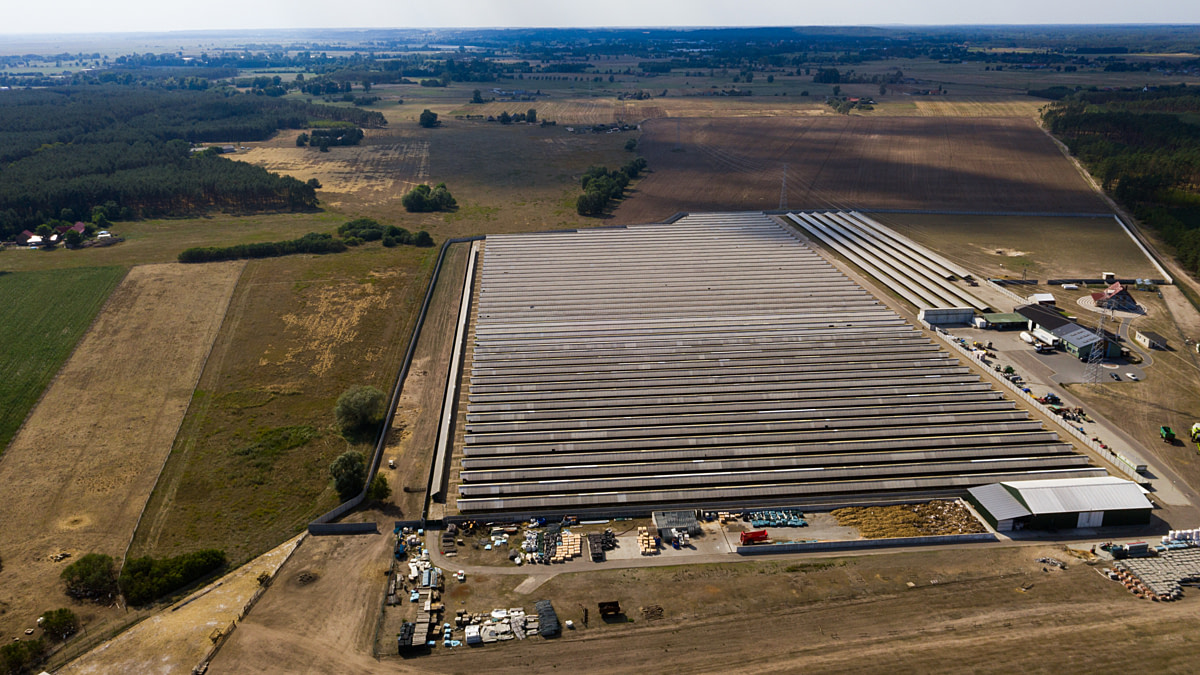
An aerial view of a large mink farm with several dozen sheds housing caged mink. According to the photojournalist the farm has faced years of opposition from some local residents over environmental concerns. Poland, 2025.
Andrew Skowron / We Animals
Recently released aerial photographs of abandoned fur farms, rusting cages, empty sheds, and weeds reclaiming concrete offered a glimpse of what it looks like when an entrenched system runs out of ground to stand on.
Once a symbol of industrialized cruelty, fur farming continued to unravel in 2025. On December 2nd, 2025, Poland officially banned fur farming. A landmark victory for animals, this decision marks a turning point in the fight to make fur farming history. In the coming years, 281 farms will shut down — the result of repeated parliamentary efforts, investigations, public pressure and a movement that refused to stop.
As Europe continues its shift away from fur production, aerial visuals of dilapidated fur farms illustrate how it looks when an entrenched system finally begins to crumble.
Cages, On Notice
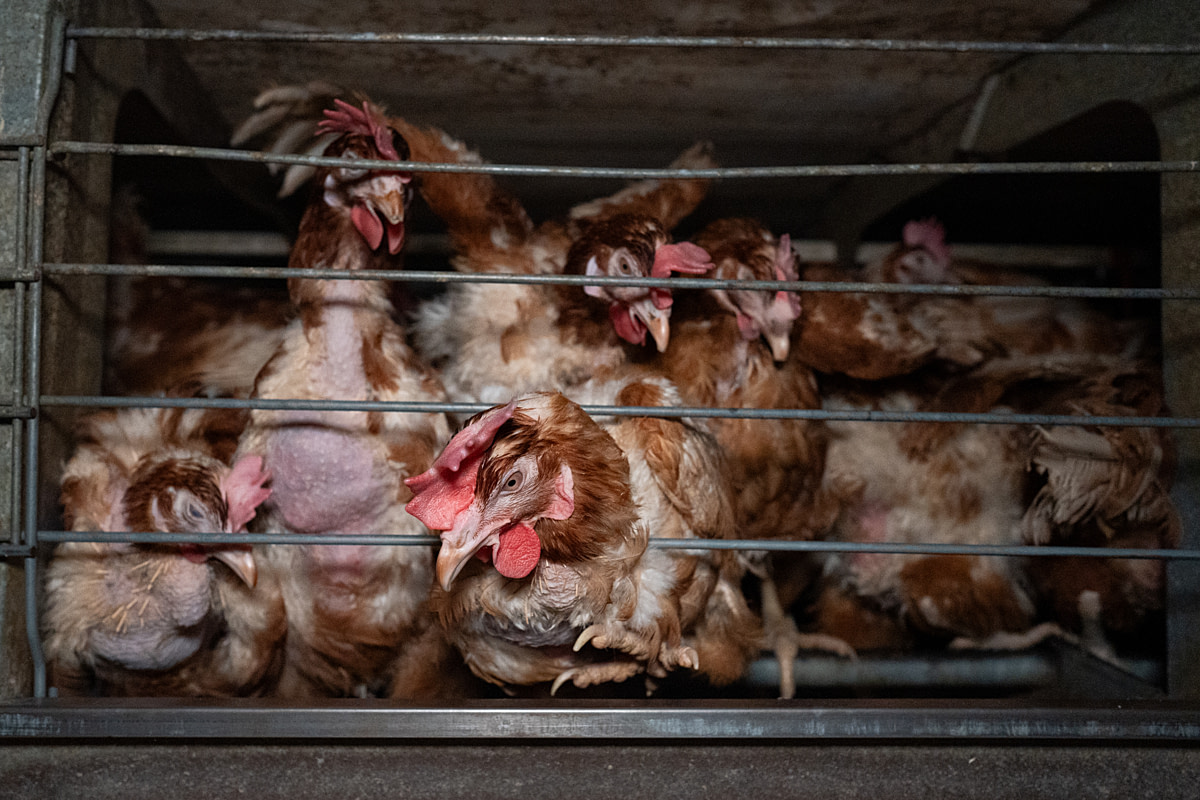
Laying hens exhibiting feather loss peer through the bars of a crowded cage at an egg farm. Undisclosed location, Bulgaria, 2025.
Bogna Wiltowska / Anima International / Open Wing Alliance / We Animals
For years, cage-free commitments lived on paper. In 2025, they faced daylight. As long-delayed cage-free laws in places like Colorado and Michigan moved from transition periods into full effect, promises were no longer just theoretical.
This year, we released the world’s largest global egg investigation. Working with the Open Wing Alliance, a coalition of nearly 100 organizations coordinated by The Humane League, and Reporters for Animals International, the multi-year investigation documented industrial egg farms across more than 35 countries and six continents, capturing footage never before made public. The investigation revealed what happens when cage-free pledges are quietly ignored. Photographs of unsanitary conditions and tiny wire cages showed the cost of inaction, and why visibility remains one of the strongest forces for change.
Over 100 celebrities signed an open letter demanding that corporations eliminate cages from their global supply chains. Their message is clear: cruelty is bad for business, and even worse for public health. Learn more at www.realcostofeggs.org.
Bear Bile Farms, Closing Slowly
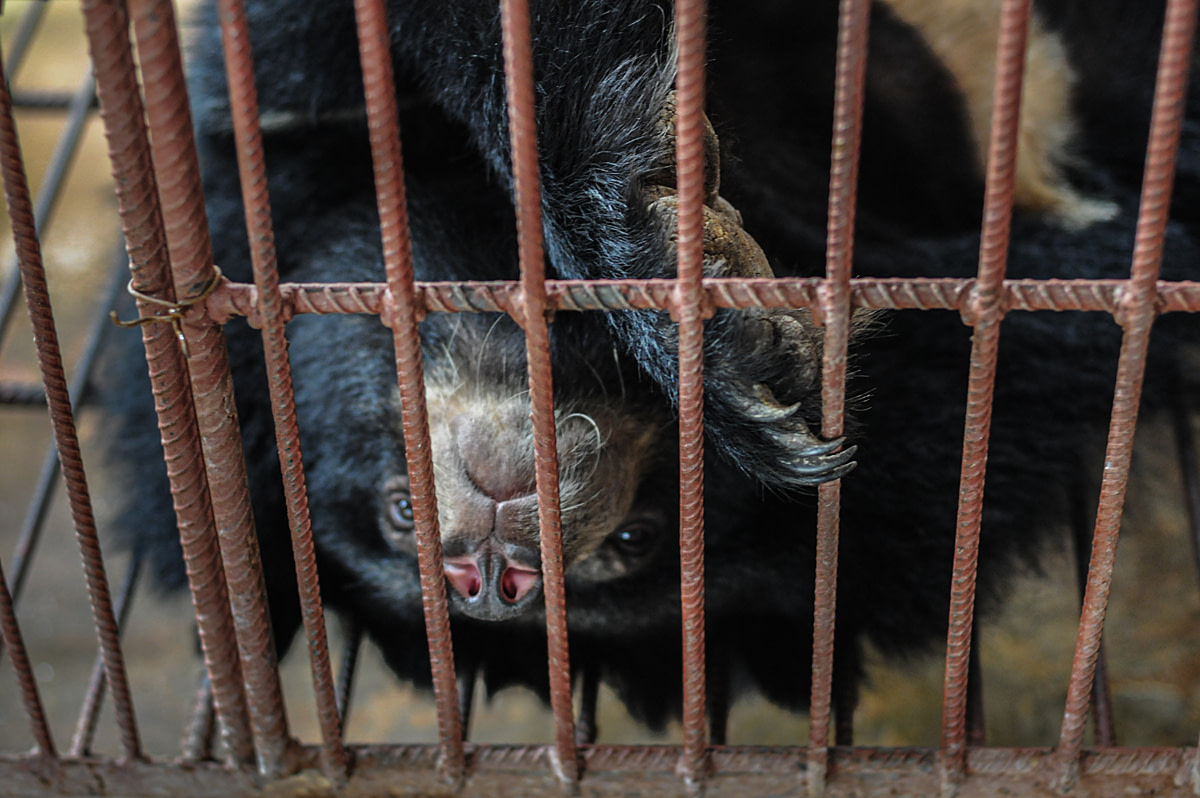
The face of a moon bear lying on their back inside a bare metal cage at a bear bile farm. Laos, 2008.
Jo-Anne McArthur / We Animals
Some stories take years to finish.
In 2008, Jo-Anne McArthur entered a bear bile farm in Laos. A guard was asleep nearby. She stepped past him softly. She then quietly photographed what advocacy groups like Free the Bears and Animals Asia needed to prove what was happening inside. When she was eventually caught, she played the role of a confused tourist. She left with her photos, damning evidence of what was happening behind closed doors. This year, nearly two decades later, that same bear bile farm closed. In parts of Southeast Asia, bear bile farming is now completely banned—not because of a single moment, but because the record kept growing.
Captive Wildlife In Focus
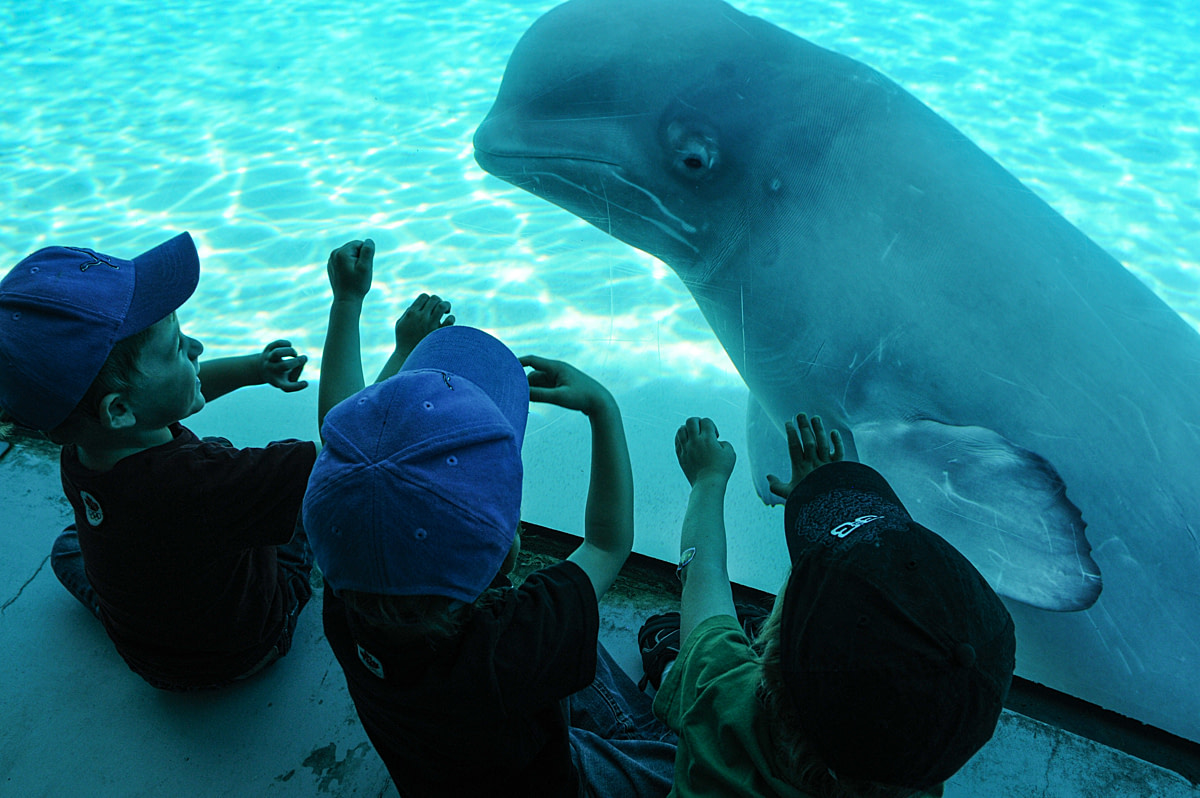
A beluga whale on display at Marineland peers at children through the tank glass. Niagara Falls, Ontario, Canada, 2011.
Jo-Anne McArthur / We Animals
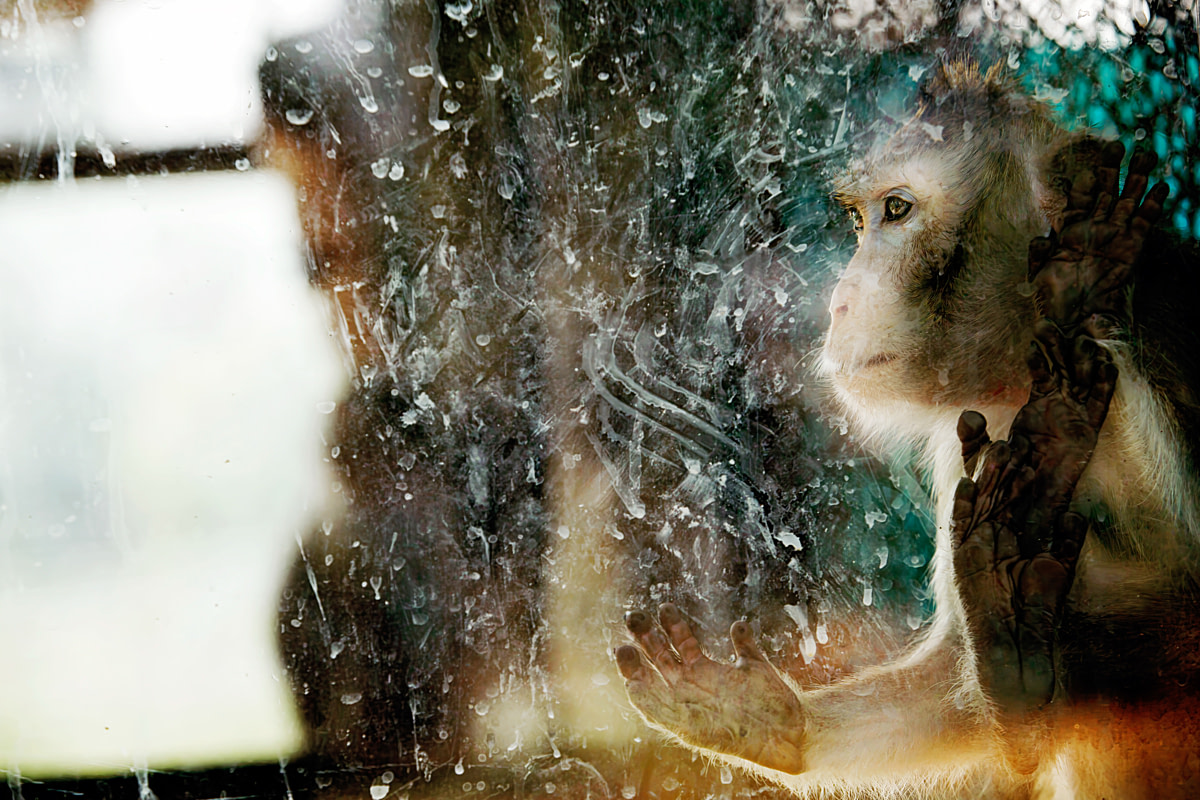
A captive long-tailed macaque at a zoo presses their hands against a dirty plexiglass window as they peer through its surface clouded with smudges and fingerprints. Hanoi Zoo, Hanoi, Vietnam, 2024.
Cynthia Hughes / We Animals
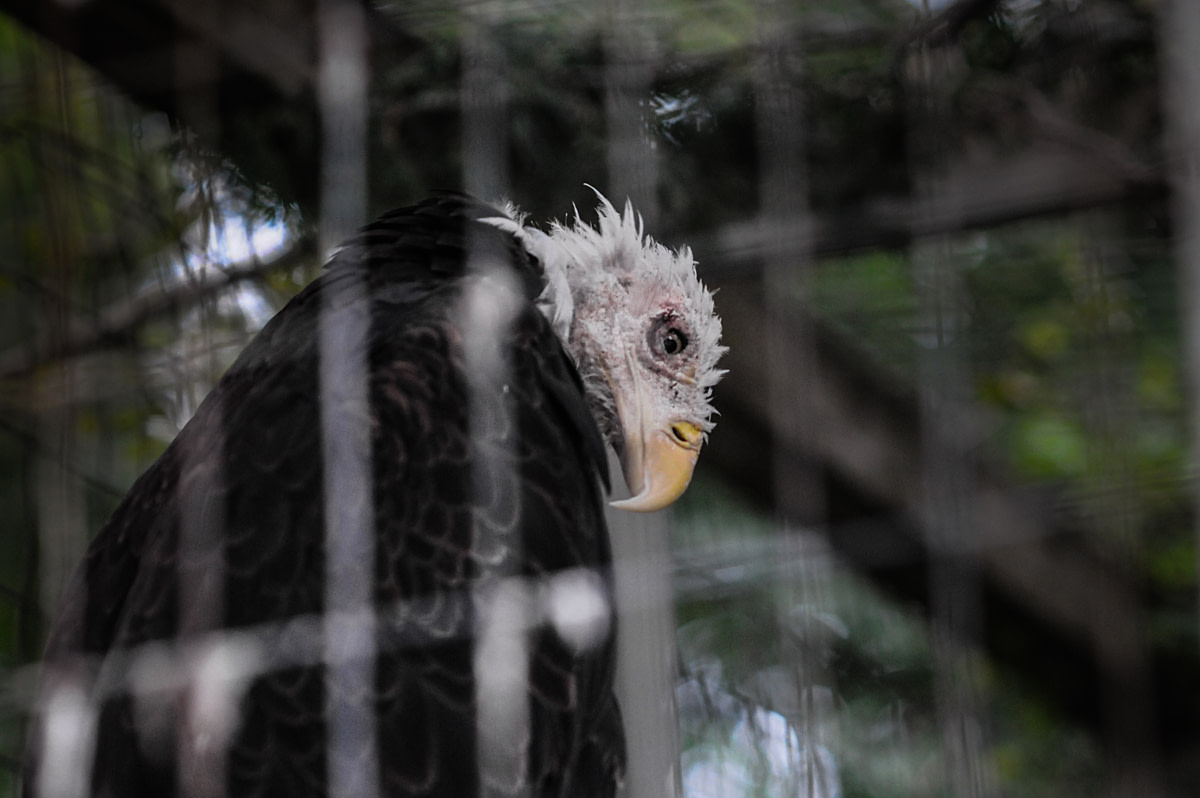
Eagle in a wire enclosure at a roadside zoo. Ontario, Canada, 2008.
Jo-Anne McArthur / ZOOCHECK / We Animals
In 2025, pressure continued to mount on roadside zoos, marine parks, and captive wildlife facilities. In Ontario, Canada, the reintroduction of the Captive Wildlife Protection Act aimed to strengthen zoo licensing, restrict wild animal performances, and enable the closure of facilities that do not meet provincial standards.
Marineland became a focal point of that scrutiny. Photographs of belugas in bare concrete tanks highlight the unresolved future of the animals held there. Since Canada banned whale captivity in 2019, the issue has been less about whether the park could continue, and more about what happens to the whales once it does not. This issue is ongoing.
Dog Meat Bans
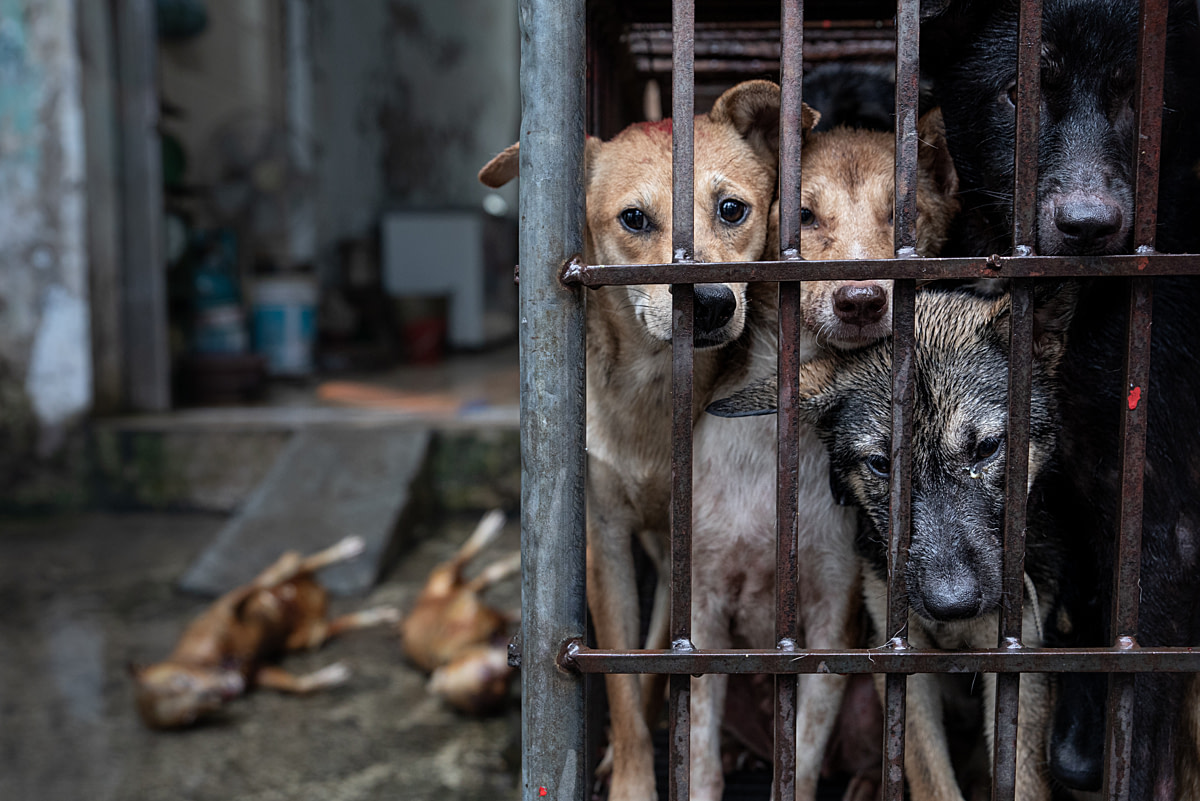
Dogs slated to be killed for their meat stare into the camera from within a small and crowded cage at a streetside slaughterhouse. From within the cage, these dogs have a full view of the other individuals slaughtered before them. Behind this cage lie the charred bodies of two recently killed dogs. Huu Hung Street, Hanoi, Vietnam, 2022.
Aaron Gekoski / Asia for Animals Coalition / We Animals
In 2025, after years of campaigning and pressure, cities such as Jakarta and countries like South Korea moved to ban or phase out the dog meat trade, marking a shift away from practices that have long relied on invisibility and weak enforcement.
Our Octopus Friends
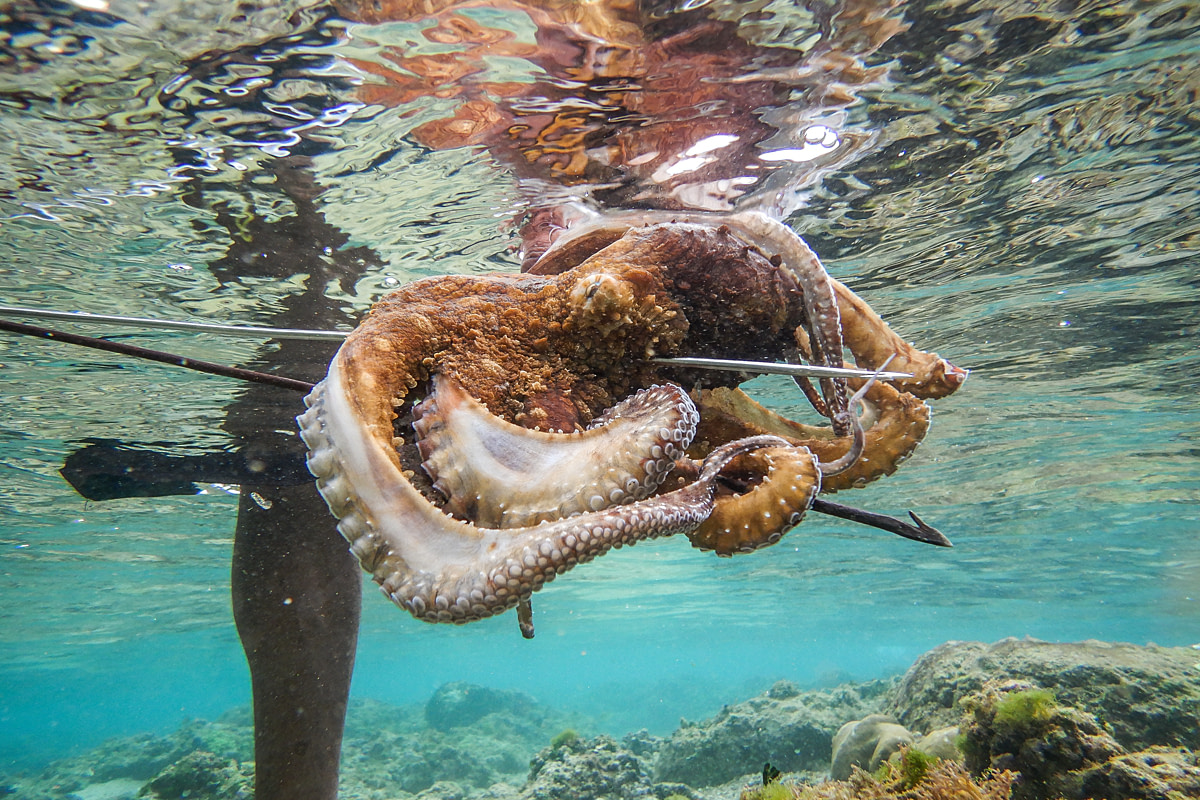
Muhammad Fajri / We Animals
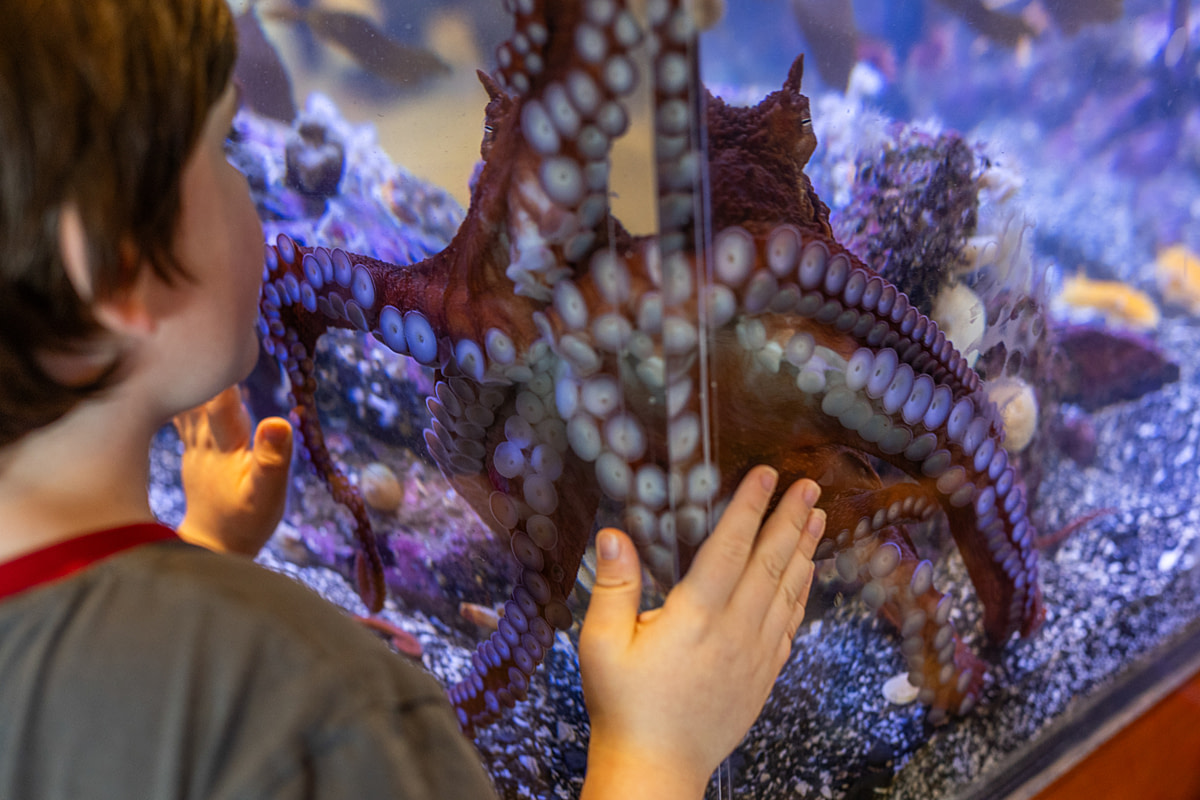
Cynthia Hughes / We Animals
Pressure is growing against the idea of octopus farming. In the United States, a federal ban is now before the Senate. Chile has recently introduced similar legislation.
As lawmakers move to stop an industry before it takes hold, images from aquariums and octopus hunts make the stakes clear. This is what industrialization looks like when it targets an animal too complex, too aware, and too poorly understood to be treated as a unit of production.
Horse Live Export Is on Trial (…Yeah, Still)
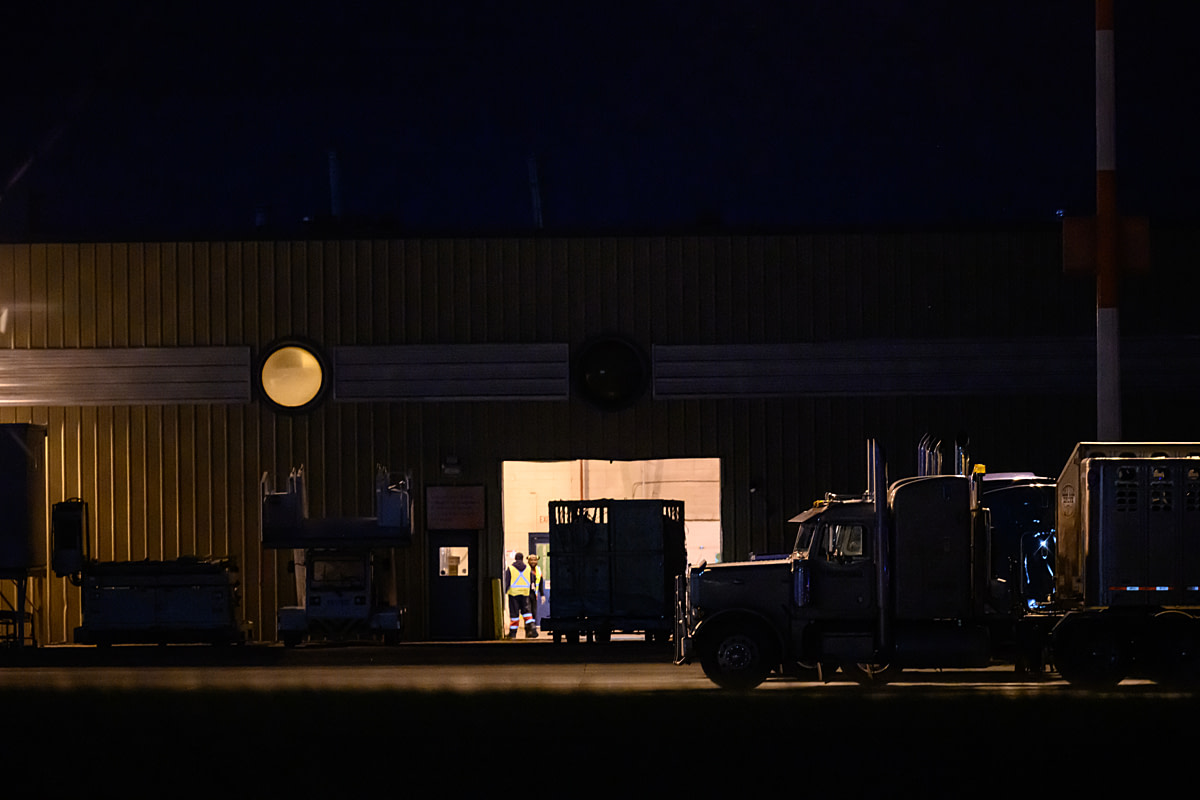
Animal transport trucks carrying horses wait outside a building used to inspect and reload horses into wooden crates for air shipment to Japan the following morning. The horses will be slaughtered in Japan to become fresh sashimi. Two workers stand in the building’s doorway as a crate filled with horses is moved. Edmonton International Airport, Edmonton, Alberta, Canada, 2024.
Jo-Anne McArthur / HSI Canada / We Animals
In 2025, the export of live horses from Canada for slaughter remained a flashpoint after years of protests. Despite a long-standing government promise to ban this practice and a private member’s bill introduced to do so, the legislation has not passed by year’s end, and the long-distance transport continues.
This year, advocates across the country held vigils and protests to honour horses lost on gruelling flights and to keep pressure on lawmakers. We expect this fight to continue to amplify into 2026.
When Animals Were Caught In Human Crises
Animals in War
Mahmoud Abu Hamda / Sanctuary Doc / We Animals
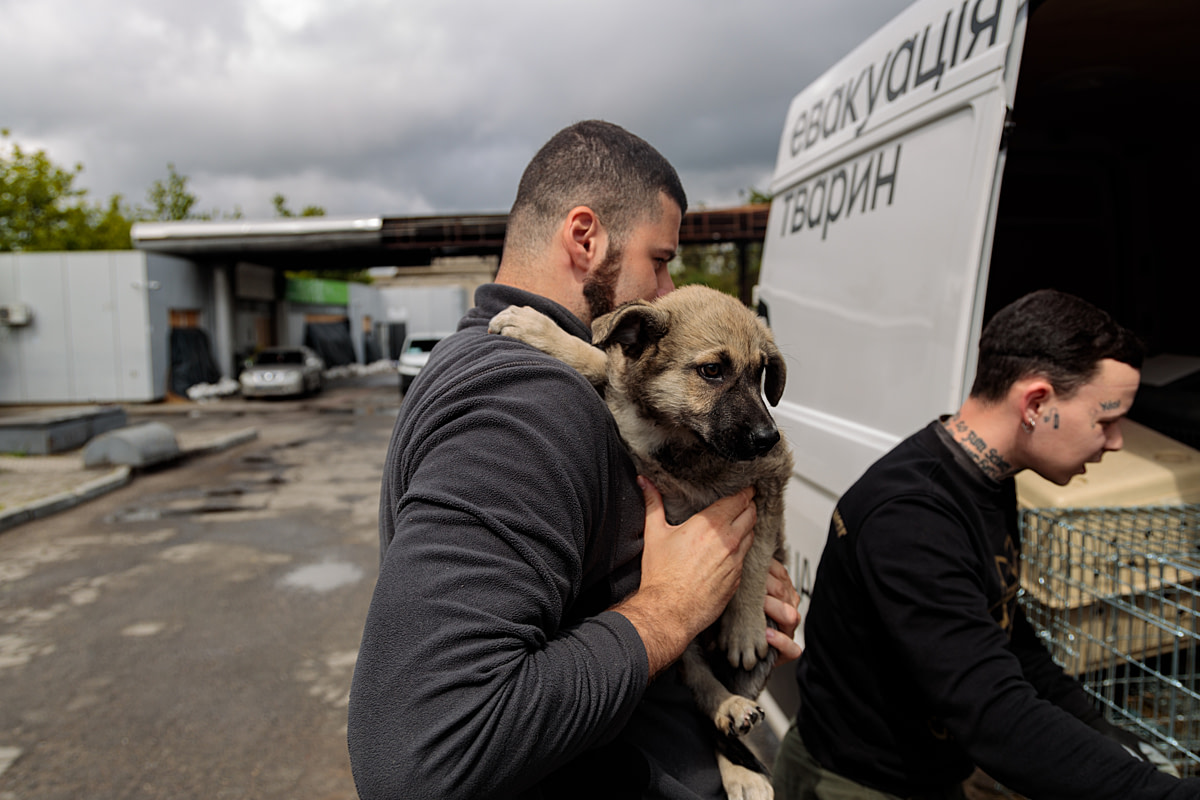
UAnimals team member Vlad (L) holds one of three puppies rescued from the parking lot of a damaged gas station. The puppies have been living with the military and will be evacuated to an animal shelter in another region. Ukraine, 2024.
Anzhelika Kozachenko / UAnimals / We Animals
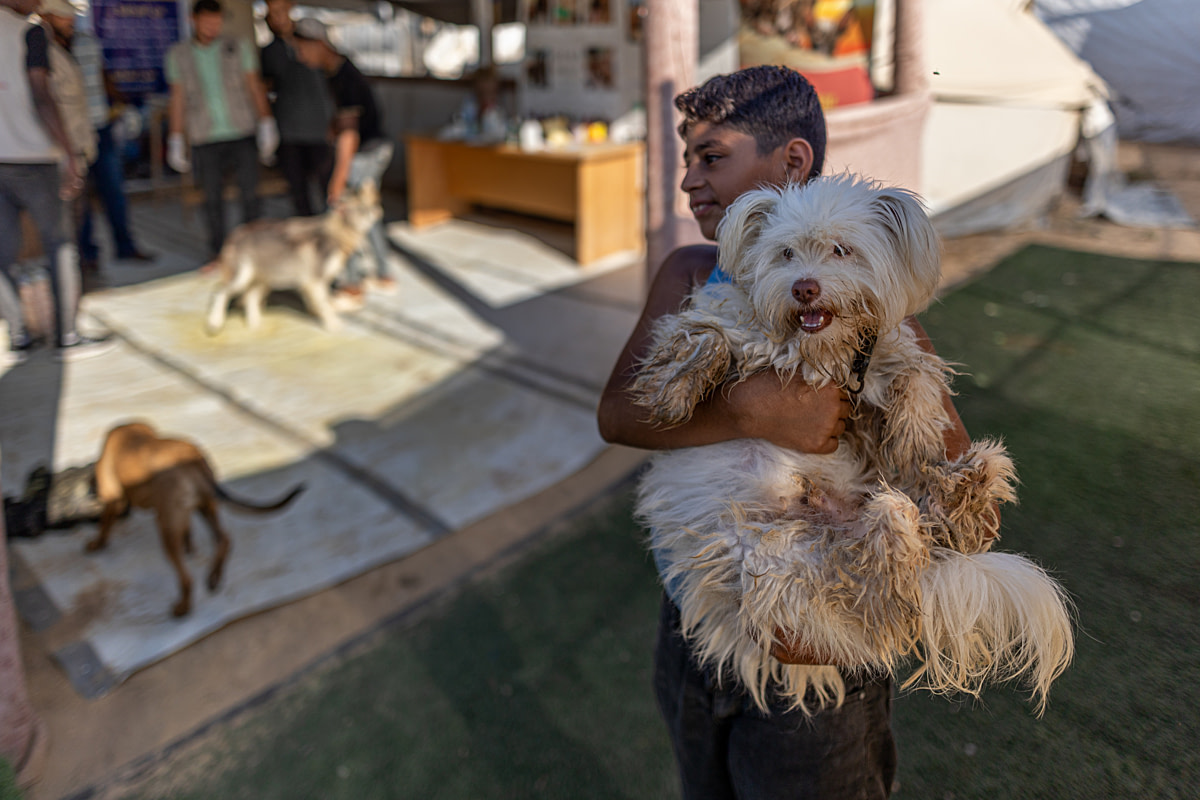
A boy smiles as he carries his dog to a Sulala Animal Rescue pop-up clinic at a refugee camp. Gaza Strip, State of Palestine, 2024.
Mahmoud Abu Hamda / Sanctuary Doc / We Animals
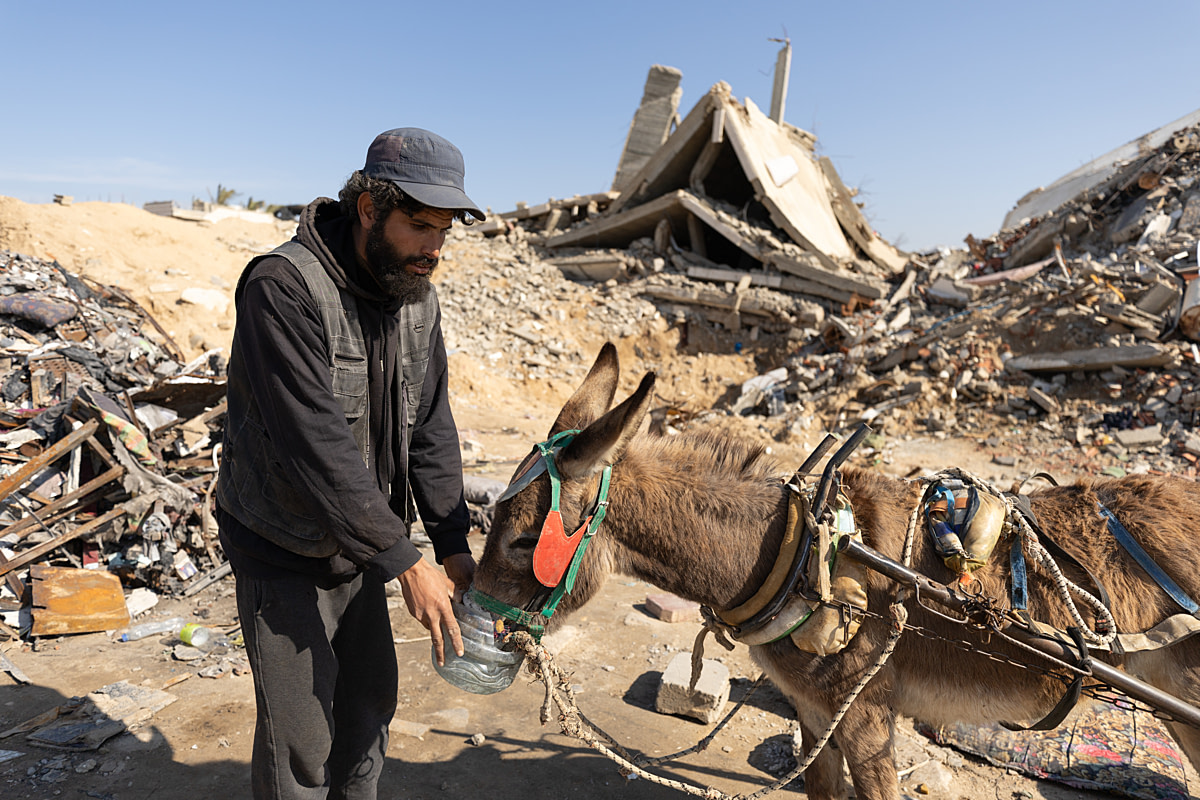
In 2025, animals continued to suffer in conflicts not of their making.
From Gaza and Lebanon to Ukraine, visuals showed animals navigating bombed streets, abandoned homes, and collapsing infrastructure, often dependent on civilians struggling to survive themselves. These images did not frame animals as symbols but as individuals trying to endure alongside their humans.
A Not-So-Slow Burn
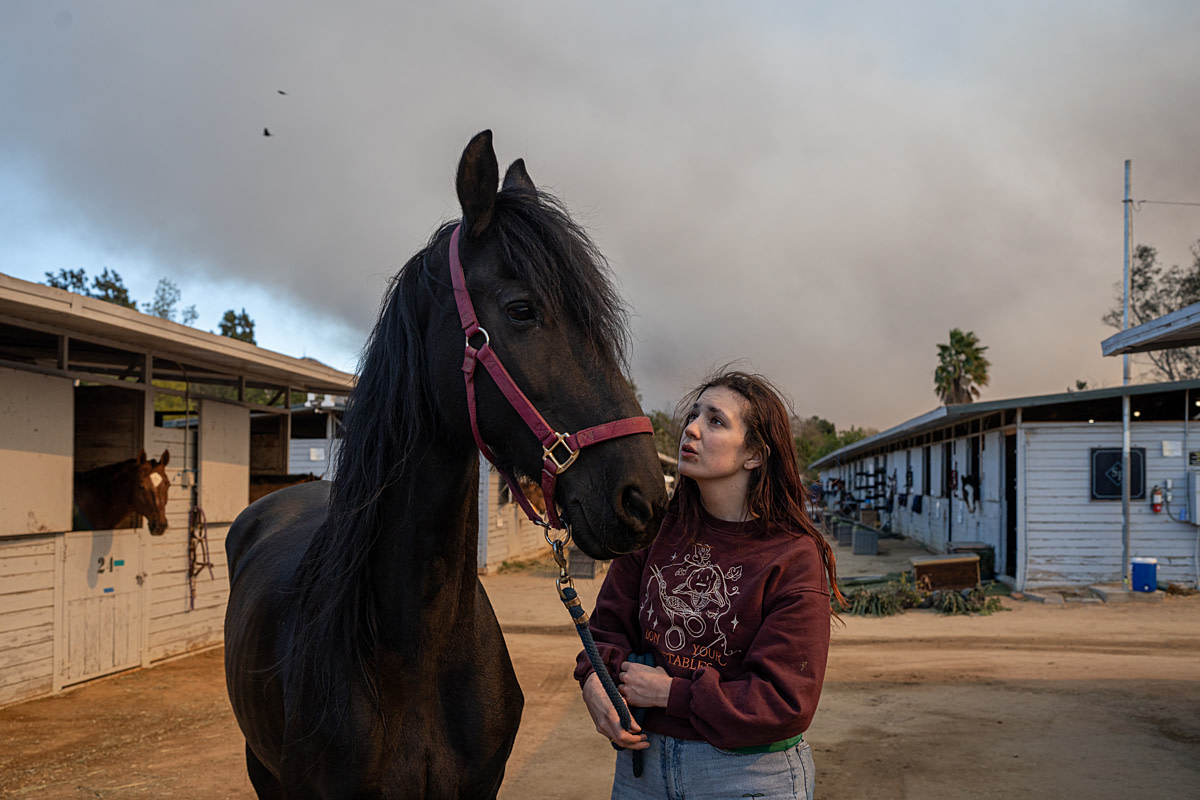
Samantha speaks sweetly to her horse, Bela, at the Los Angeles Equestrian Center. Bela was evacuated in the early hours of the morning from Eaton Dam Stables, which burned down a few hours later during the Eaton Fire near Pasadena. Los Angeles Equestrian Center, Burbank, California, USA, 2025.
Thomas Machowicz / Sanctuary Doc / We Animals
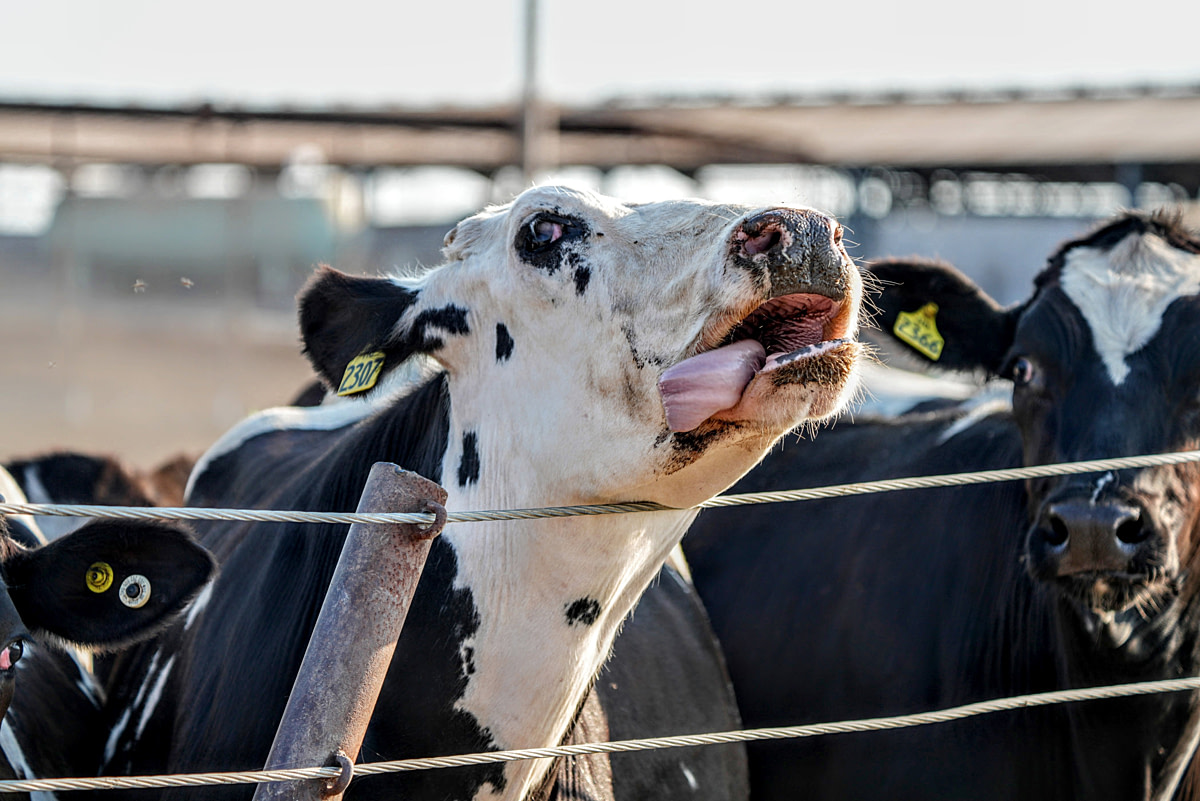
A Holstein cow with a corneal scar and marked epiphora (tearing) rolls her tongue at a dairy farm during a heatwave. A common cause of the eye condition is Infectious Bovine Keratoconjunctivitis (IBK), also known as pink eye, caused by Moraxella bovis and sometimes M. bovoculi bacteria. Tongue rolling is stereotypic behaviour: repetitive, purposeless action often associated with stress, frustration or inadequate environmental stimulation. Central Valley, California, USA, 2025.
Crystal Heath, DVM / Our Honor / We Animals
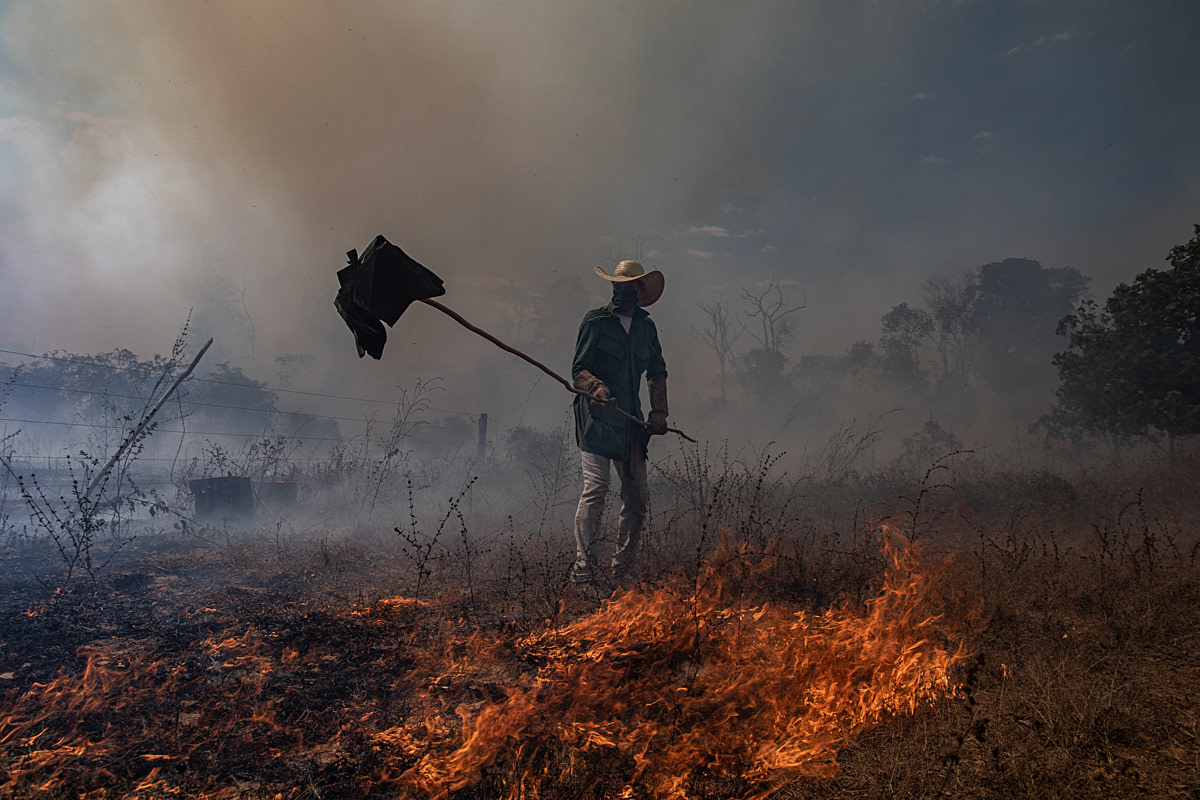
A local resident tries to put out an illegal fire burning in an environmental reserve in the Amazon rainforest. This image was captured as part of an expedition by the Rainforest Foundation to monitor the relationship between soy production in Brazil and its relationship with the deforestation of the Cerrado and Amazonia biomes. Undisclosed location, Mato Grosso, Brazil, 2020.
Victor Moriyama / We Animals
As global temperatures and wildfires intensified, the uneven way animals are protected (or not) from heat became impossible to ignore. While California wildfires raged, companion animals were rescued at great personal risk. Farmed animals, by contrast, were often left without legal protection or evacuation plans in place. Photographs revealed the gap between who we rush to save, and who our systems are built to sacrifice.
And it’s not just fires: regular daily temperatures in some areas are also becoming almost too much for farmed animals to bear. Photographs of heat stress in cattle showed intense suffering and a system in need of more scrutiny.
It got hot in 2025, and 2026 promises no relief. The connection between intensive animal agriculture and the climate crisis is clear; yet, global meat production continues to rise.
The Scale of Harm, Still Expanding
Business as Usual? Global Slaughter, Industrialized
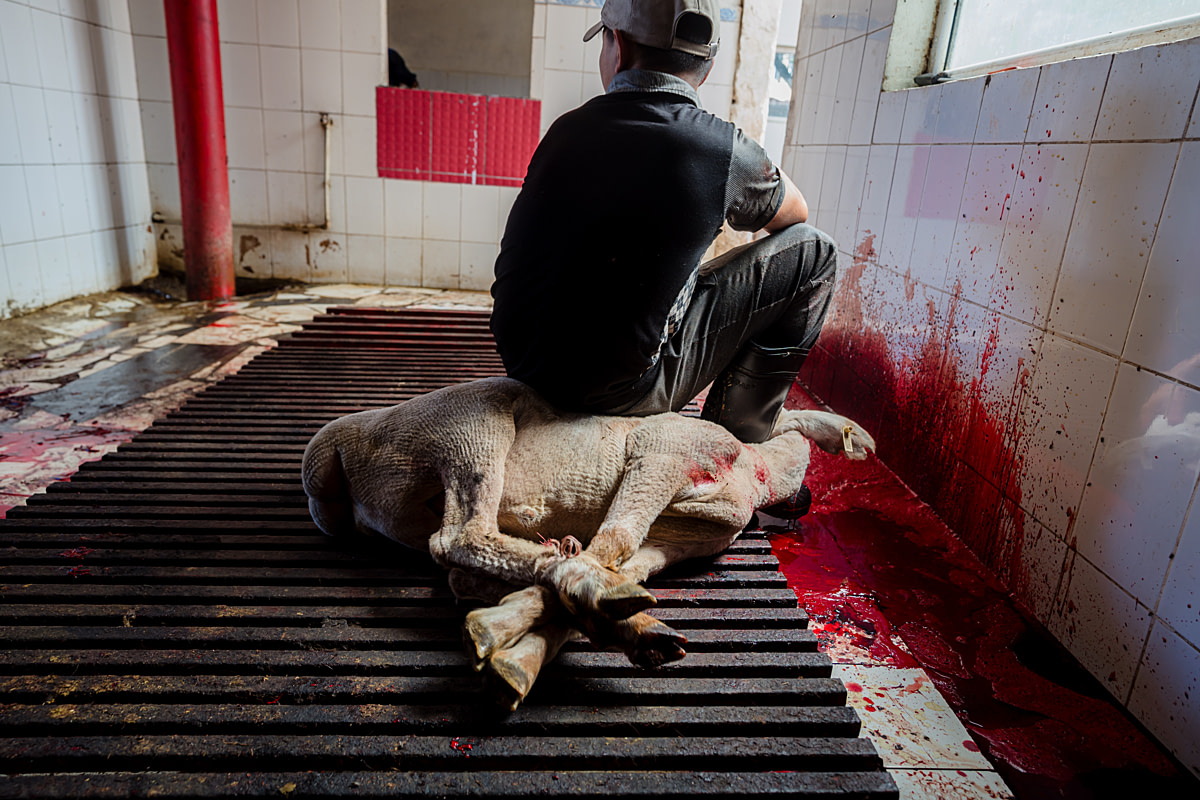
A worker sits on the body of a sheep whose throat he just slit, taking a moment to rest as the sheep bleeds out on the floor. Animals at this live animal market slaughterhouse are killed without stunning in accordance with halal requirements. Undisclosed, Bishkek, Chuy Region, Kyrgyzstan, 2024.
Bogna Wiltowska / We Animals
In 2025, animals were still used in staggering numbers around the globe. United Nations data tracking slaughter since 1960 shows total animal killings continuing to rise, even as global human population growth slows. This increase is driven largely by small-bodied animals such as chickens and ducks, which are now killed in numbers that exceed those of larger farmed animals combined.
Photographs from slaughterhouses, fishing operations, and seasonal harvests show how these systems function on the ground. Animals are handled in large volumes, processed quickly, and removed from view.
The Scale of Wildlife Trafficking
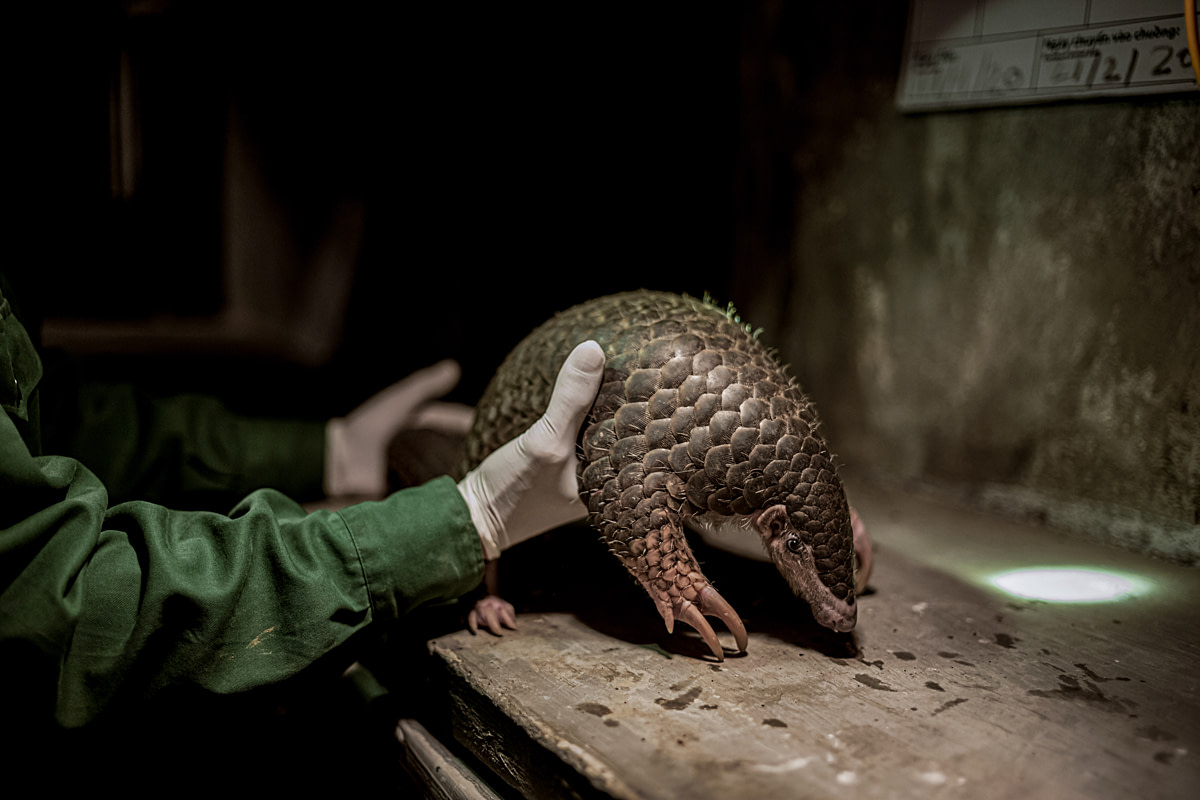
Pangolins are largely covered in scales made of keratin-the same material found in human fingernails. Save Vietnam’s Wildlife Rescue Center, Ninh Binh, Vietnam, 2020.
Kindred Guardians Project / We Animals
This year, a major international crackdown on wildlife trafficking exposed just how large the trade remains. Operation Thunder 2025, a coordinated Interpol effort involving 134 countries, led to the rescue of nearly 30,000 trafficked animals and the identification of more than 1,000 suspects. Photographs of seized animals, birds crammed into boxes, reptiles taped shut, and mammals transported like cargo, made visible a market that thrives on invisibility and distance.
Those Who Didn't look Away
Activism, Rescue, and Witness
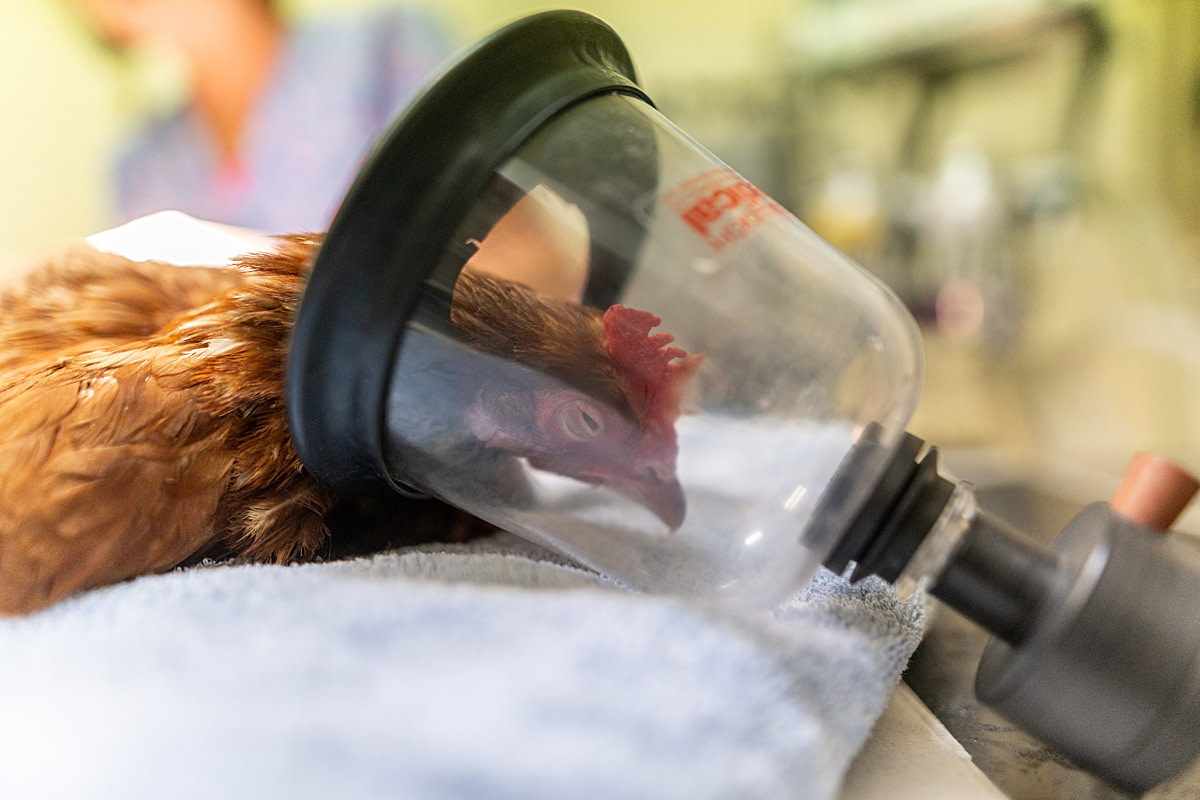
Emily, a hen resident at Farma Nadeje (Hope Farm) farmed animal sanctuary, lies anesthetized on a veterinary table with her head in an induction mask during treatment for bumblefoot. Veterinary Clinic Na Hradku, Prague, Central Bohemian Region, Czechia, 2024.
Lukas Vincour / We Animals
Jo-Anne McArthur / We Animals
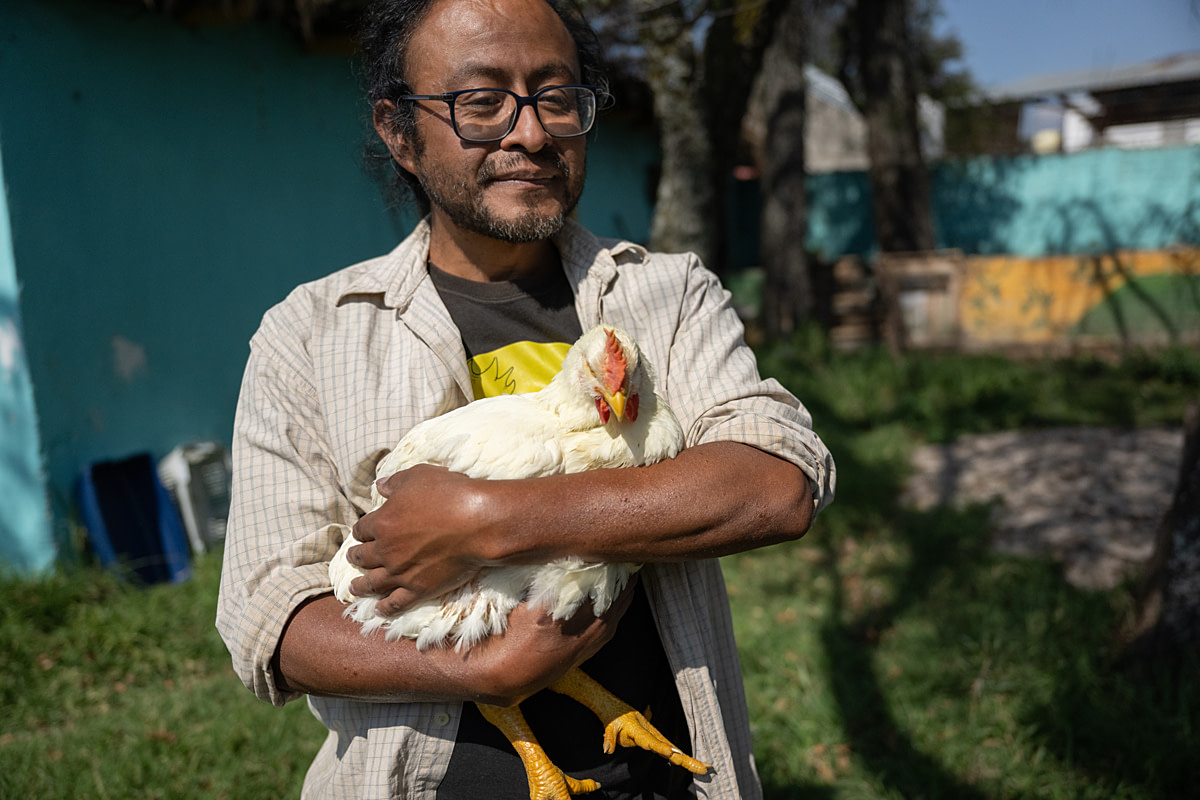
Huerto Vida Digna sanctuary founder Victor Bernal cradles Jo, a hen newly rescued from slaughter by CDMX Animal Save. Huerto Vita Digna Sanctuary, Mexico, 2025.
Jo-Anne McArthur / Te Protejo / We Animals
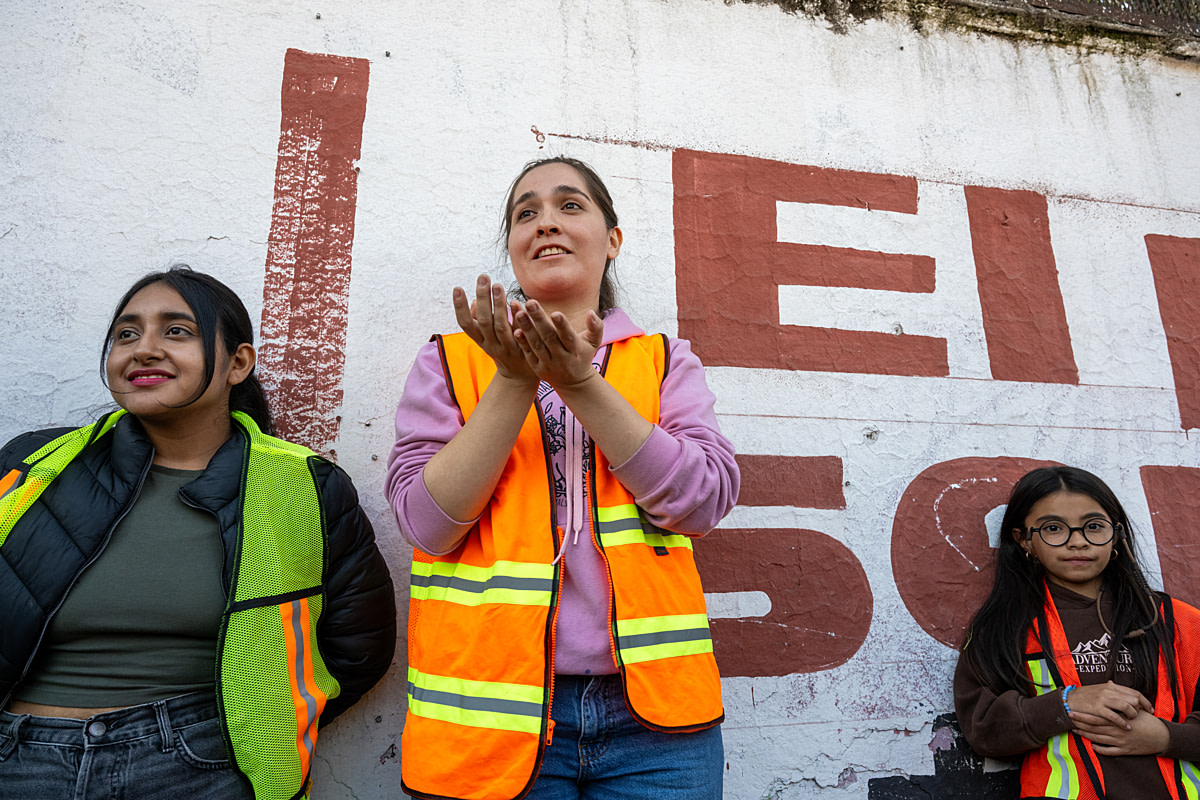
Alongside documentation of harm, in 2025, we also celebrated those who stepped in. Sanctuary workers, first responders, activists, veterinarians, and community members appeared again and again in our photographs. Often unnamed and exhausted, these defenders of animals did not fix everything. But they showed up. Explore more stories of compassion and change.
Plant-based Progress & Institutional Change
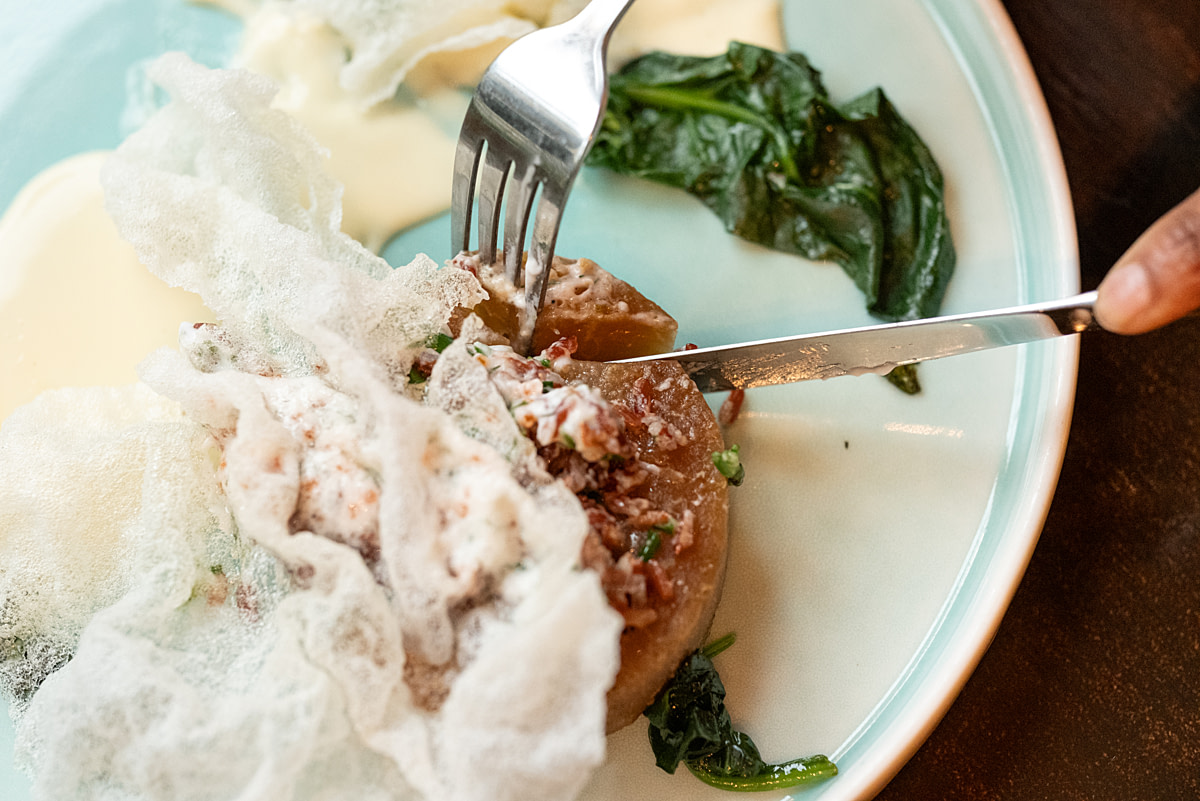
A fork and knife cut into a vegan seafood speciality item at Studio Gauthier. The dish consists of kohlrabi, rice and a samphire kaffir seasoned vegan butter topped off with a rice paper flower chip. Studio Gauthier, London, England, UK, 2024.
Nathalie Merle / We Animals
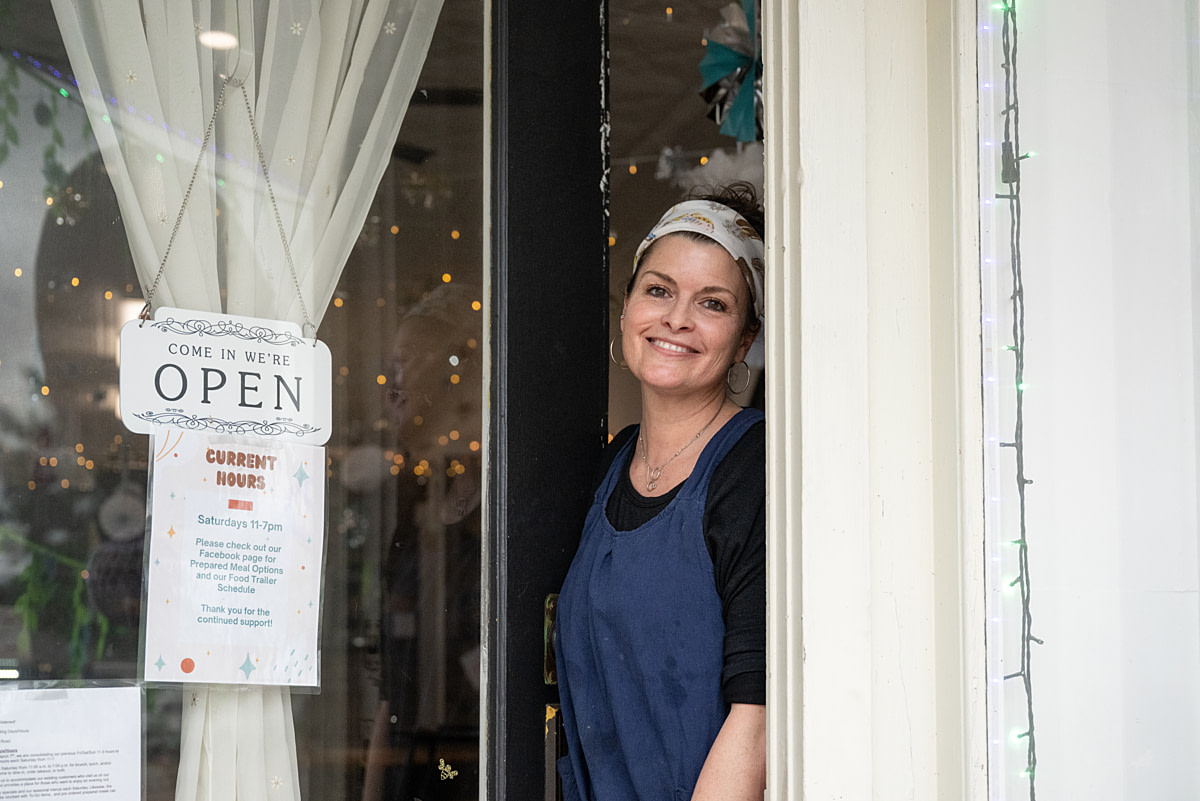
Jo-Anne McArthur / We Animals
In 2025, plant-based eating kept moving into the mainstream. Universities and food-service providers expanded plant-based menus through everyday decisions about what they buy, cook, and serve. At the same time, the Plant Based Treaty gained momentum as cities and municipalities endorsed plant-based food policies, demonstrating how shifts in diet are increasingly being driven by public institutions, not just individual choice.
Remembering Dr Jane Goodall
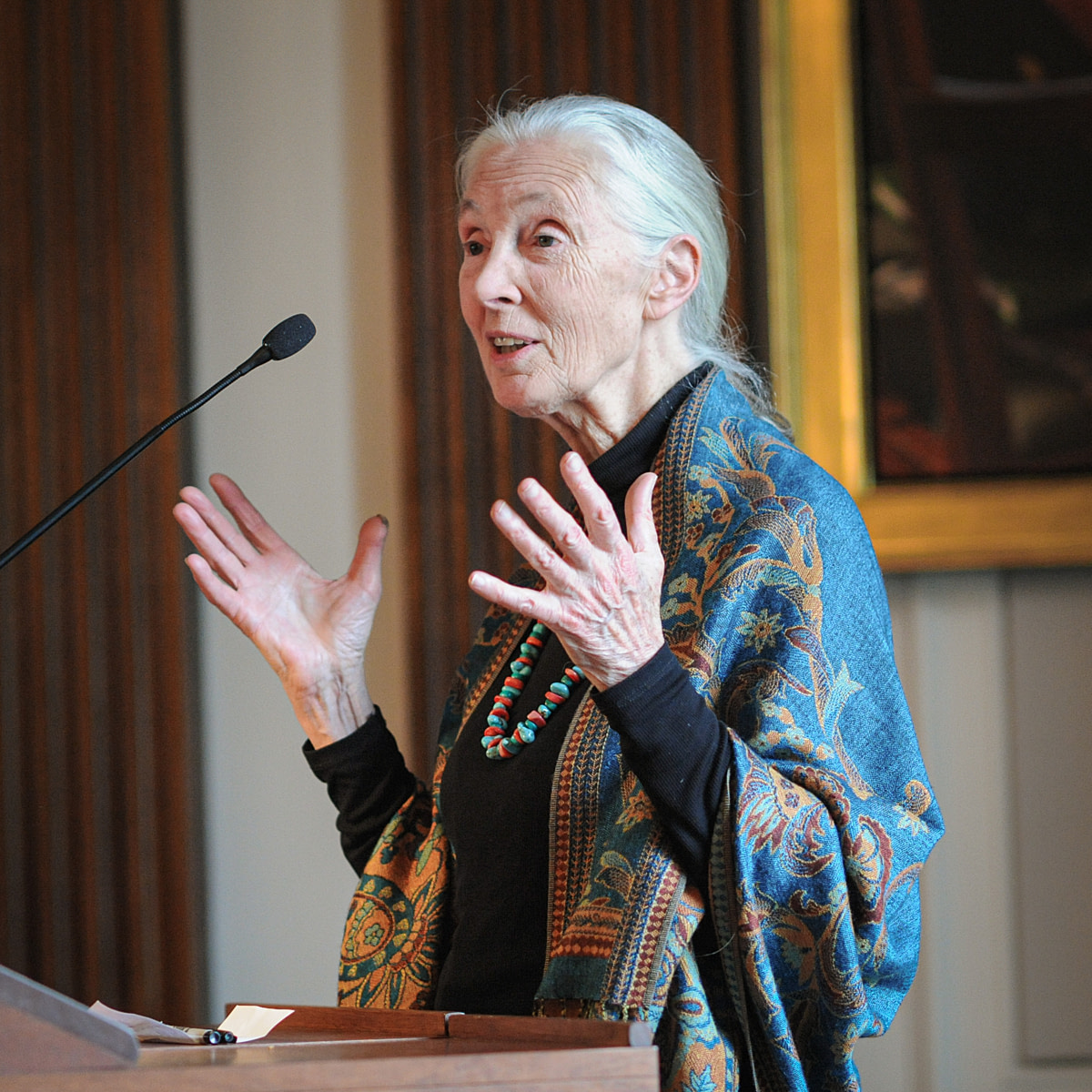
Jane Goodall speaking in Toronto. Toronto, Ontario, Canada, 2010.
Jo-Anne McArthur / We Animals
Her work reshaped how we understand animals as individuals with inner lives. We celebrate her legacy and hope to make her spirit proud in the year to come. In her memory, the We Animals team honours her call: to act with hope, and to do whatever you personally can to help create a kinder, more compassionate world.
Cruelty Hates The Spotlight
As we leave 2025 behind, we return to a familiar truth: Systems do not collapse because they are cruel. They collapse because they are seen. We have seen, and what happens next is up to us all. As we prepare to enter a new year – and leave the first quarter of the 21st century – we ask you to reflect on the world you envision for animals, people, and the planet.
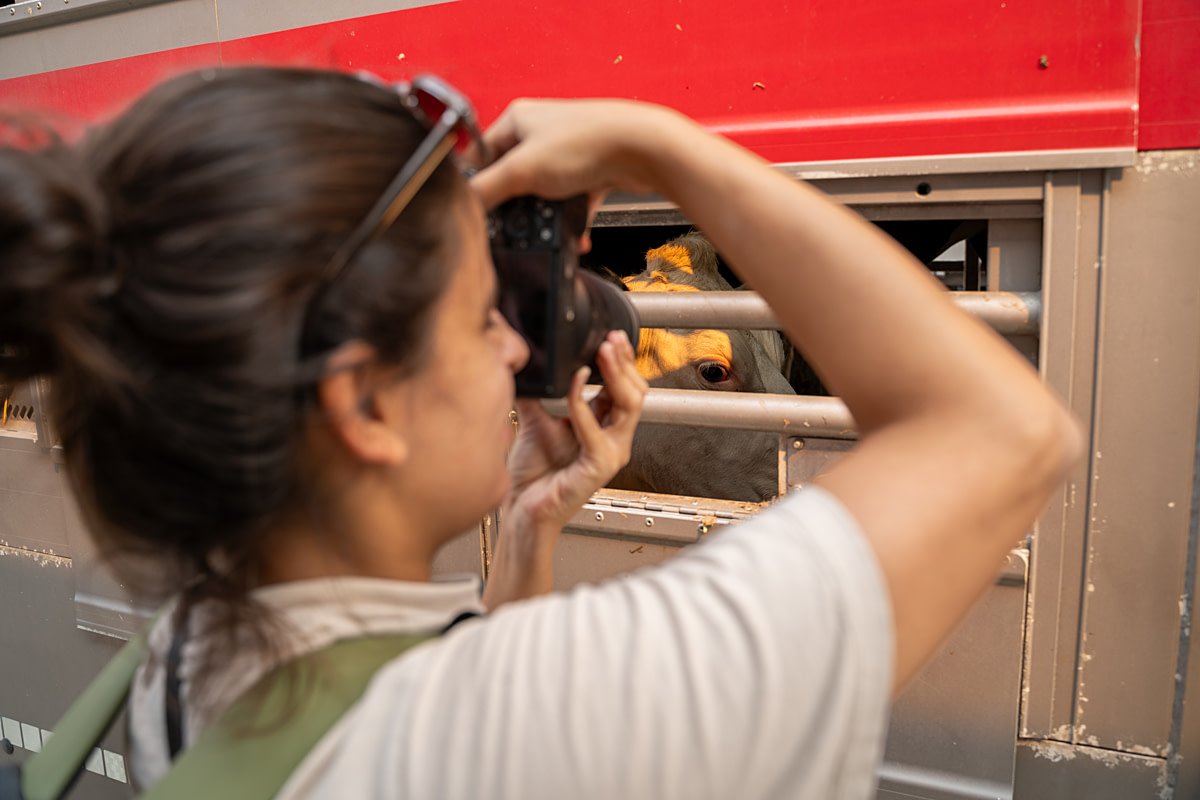
Animal photojournalist and We Animals 2023 Fellow Havva Zorlu photographs cattle in a transport truck at a border crossing. Kapikule, Edirne Province, Marmara Region, Turkiye, 2023.
Lukas Vincour / We Animals
Thank you for continuing to not look away in 2026.
Watch our 2025 Year-in-Review video to learn more about the work We Animals did this year and how you can help us help animals in 2026.
Visit the We Animals stock platform to explore and download images and videos from our collection of 40,000+ visuals.