
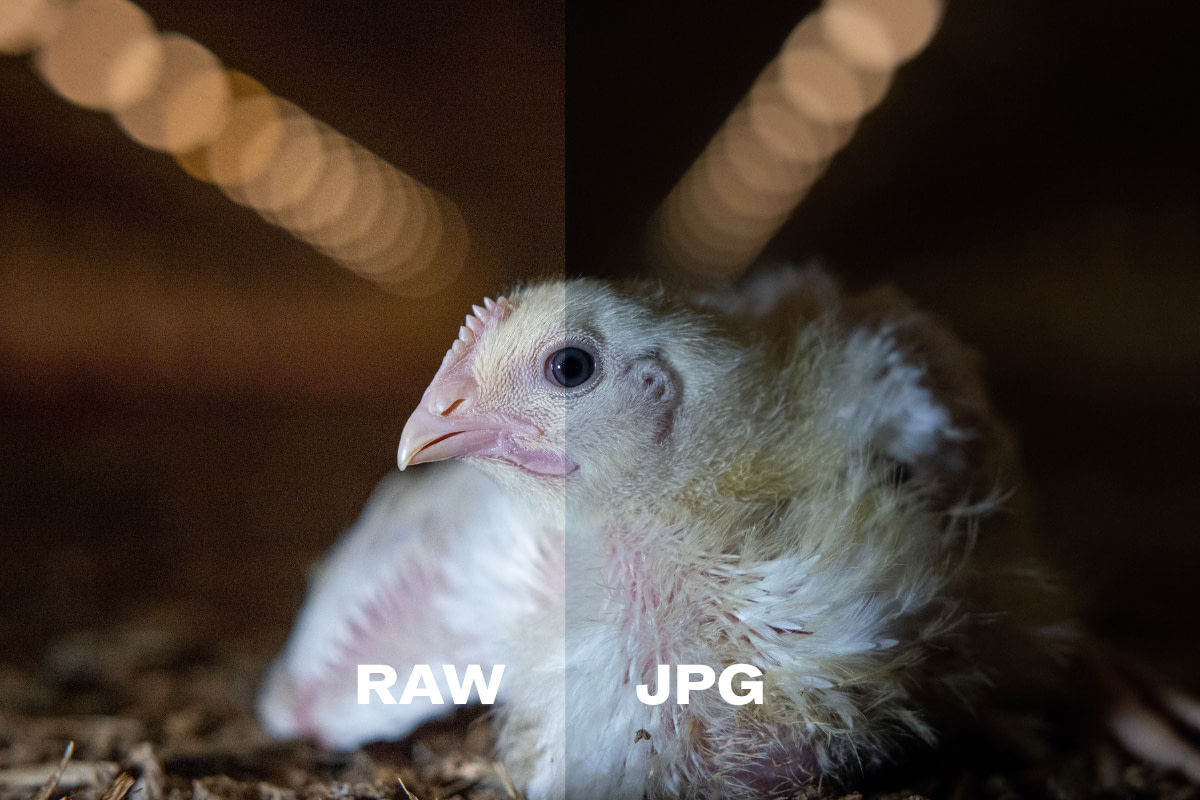
When you’re photographing animals in the real world, you rarely get perfect conditions. Light is bad, animals move, you’re rushed, you’re tired, and half the time you’re working in places where you’re not exactly welcome. Shooting in RAW is one of the simplest ways to protect all that effort.
A RAW file is your digital negative. It stores all of the sensor data at 12 or 14 bits per channel, so you can decide later how the image should look. A JPEG is an 8-bit, heavily compressed file. With a JPEG, the camera has already made lots of decisions for you about contrast, colour, sharpening, and noise reduction. That convenience comes at a cost: a lot of data is thrown away before you even start editing. For animal photojournalists, that difference can be the line between an image that’s usable and one that goes straight to the bin.
RAW vs JPEG in real terms
Think of JPEG as the camera’s “best guess” at a finished image. It looks great on the LCD on the back of your camera, but there isn’t much room to fix problems. If the exposure is slightly off, if the light is mixed, or if you need to “fix” anything in post-production, it will start to fall apart quickly. What’s worse: every time you re-save a JPEG, you lose a bit more quality.
RAW, on the other hand, looks flatter at first glance, but it contains far more tonal and colour information. You have more dynamic range to work with, more subtle gradations in shadows and highlights, and more flexibility when you need to correct mistakes or deal with bad lighting. Edits are non-destructive, so you can always go back to the original file and start again.
In practice, this means RAW gives you control. JPEG locks you into whatever your camera decides at the moment.
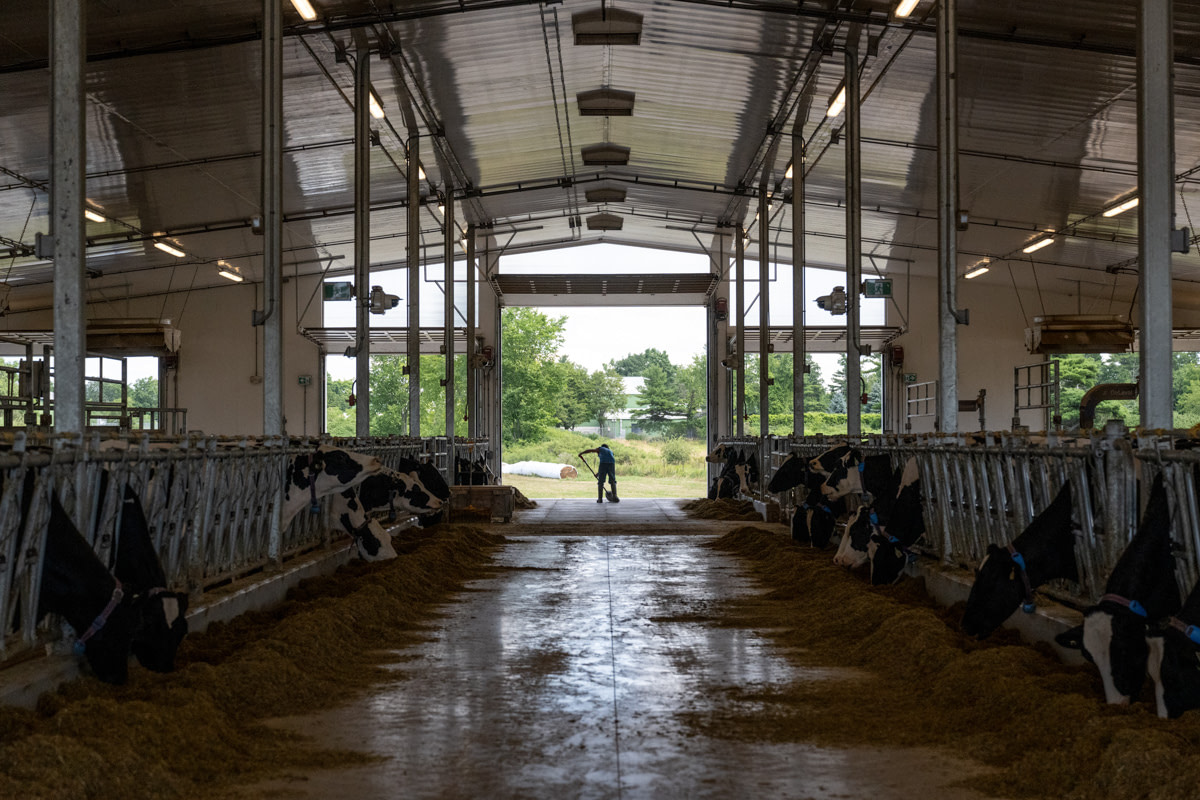
Below is an example of the original RAW file (left) and the final JPEG (right) where we have been able to recover detail in the shadows.
Original RAW
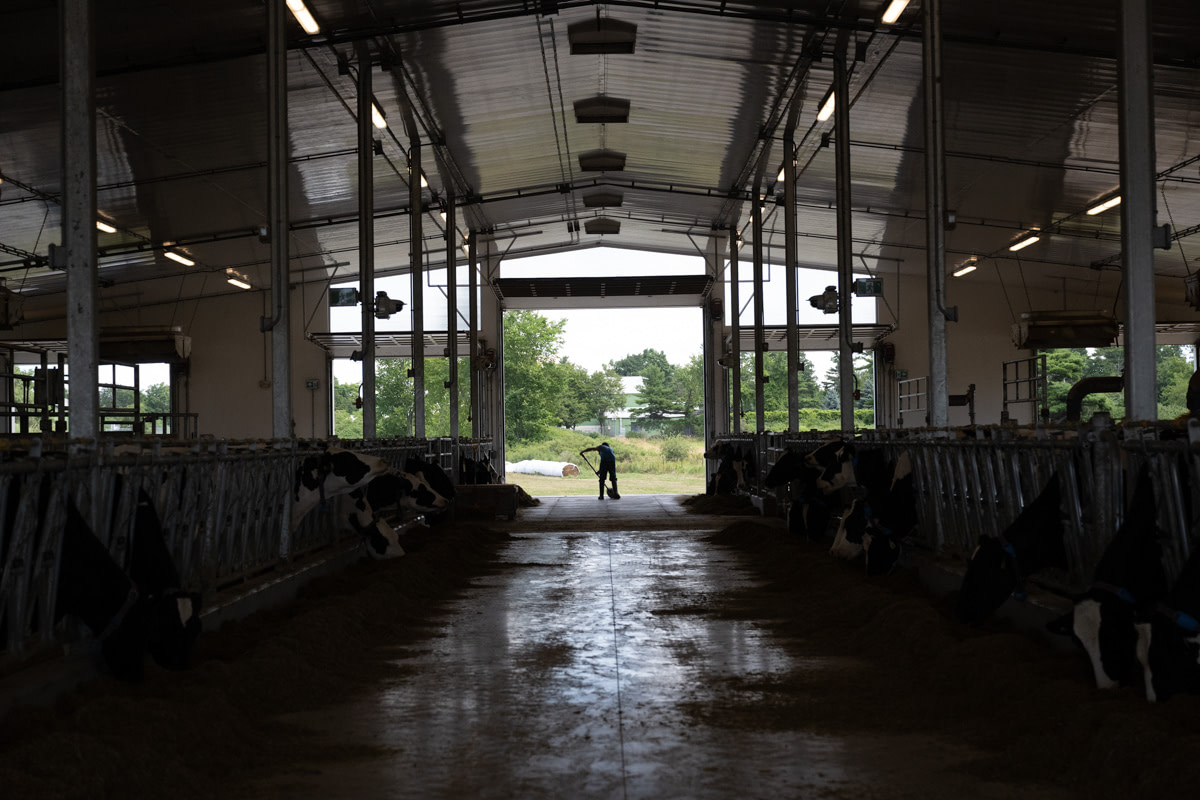
An incarcerated man shovels manure and keeps the new dairy barn clean. Joyceville Institution, Kingston, Ontario, Canada, 2025.
Jo-Anne McArthur / We Animals
Final Edited JPEG
Saving difficult shots
So much of our work happens in terrible light: inside dark barns, under harsh spotlights, in transport trucks, or even underwater. You don’t get to move the subject to “better light,” and you don’t always get a second chance.
RAW files give you more latitude to rescue borderline exposures. You can pull back blown highlights that would be gone forever in a JPEG, and you can lift shadows without everything turning into a noisy mess. Fine-tuning contrast and making local adjustments is also cleaner, with fewer artifacts and less banding.
That often means more of your “almost” images become usable: the split-second eye contact, the moment the crate door opens, the brief interaction between a worker and an animal. With JPEGs, those shots might be unsalvageable. With RAW, you at least have a fighting chance.
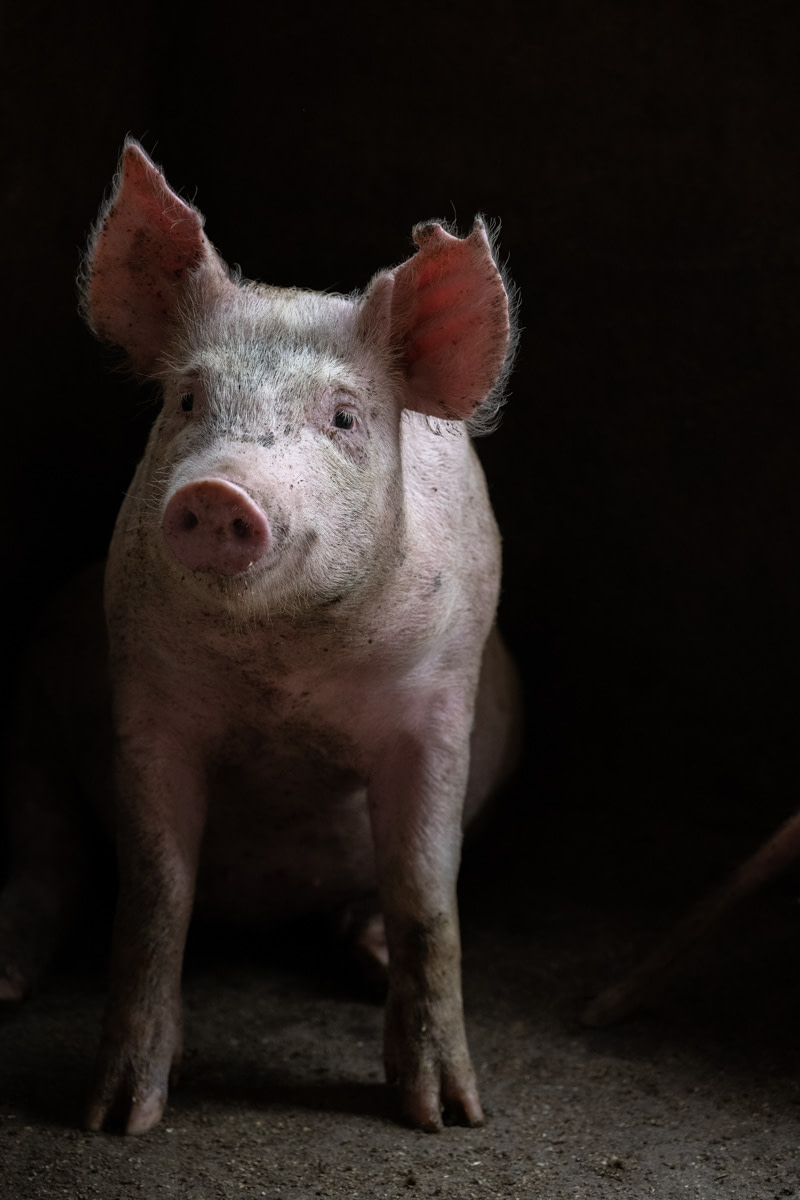
A young pig gazes into the camera from inside a dark, dirty open-air concrete pen on a large industrial farm. Sub-Saharan Africa, 2022.
Jo-Anne McArthur / Sibanye Trust / We Animals
Handling strange colour and mixed light
Industrial environments are full of mixed and unnatural light: fluorescent strips, LED panels, coloured gels, daylight spilling in from a door or window. Your camera’s auto white balance is guessing, and it often guesses wrong.
When you shoot JPEG, white balance is baked into the file, which is 8-bit, heavily compressed, and a lot of subtle tonal and colour data is discarded to keep the file small. Large corrections later tend to wreck the image: colours can only be pushed so far, banding appears, and fur or feathers start to look plastic.
With RAW, white balance is just metadata. You can adjust it after the fact without damaging the file, neutralize strange colour casts, or lean into the mood of the scene while still keeping skin, fur, and backgrounds realistic.
If you’re moving fast and don’t have time to set a custom white balance for every new location, RAW gives you a crucial second chance to fix it later.
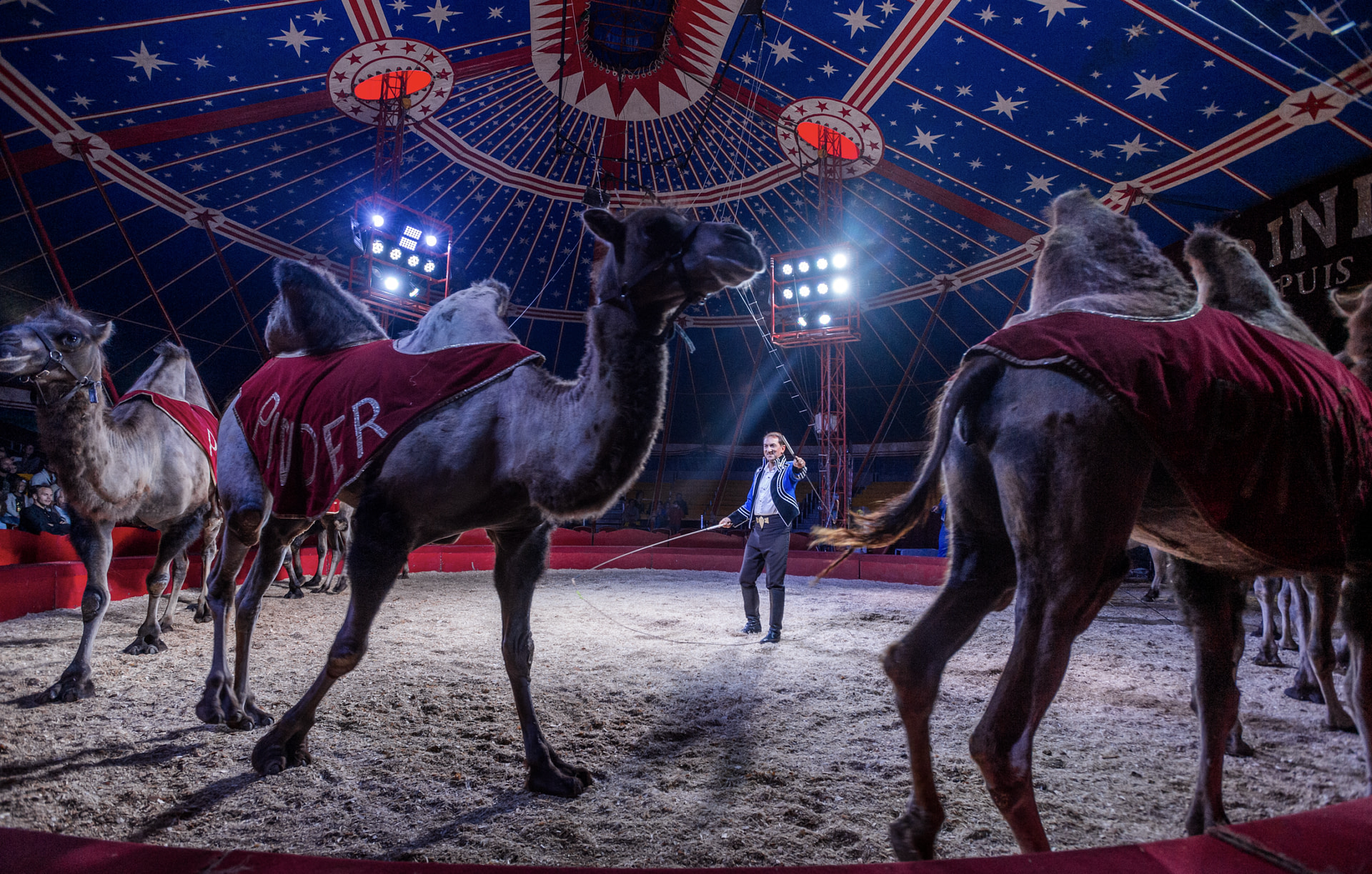
Camels performing at a circus. France, 2017.
Jo-Anne McArthur / One Voice / We Animals
Working in low light with high ISO
Many of the places where animals are exploited are dark by design. You’re often forced to work at high ISO, where noise is inevitable – especially if you have an older camera. How that noise behaves matters.
RAW files keep more detail and subtle texture in the shadows, which gives you better results when you brighten the image or apply noise reduction. You can choose how much grain you’re willing to live with, instead of relying on the camera’s JPEG engine to smooth things out too much. The result is images that can withstand cropping, enlarging, printing, and repeated use in posters, billboards and social media.
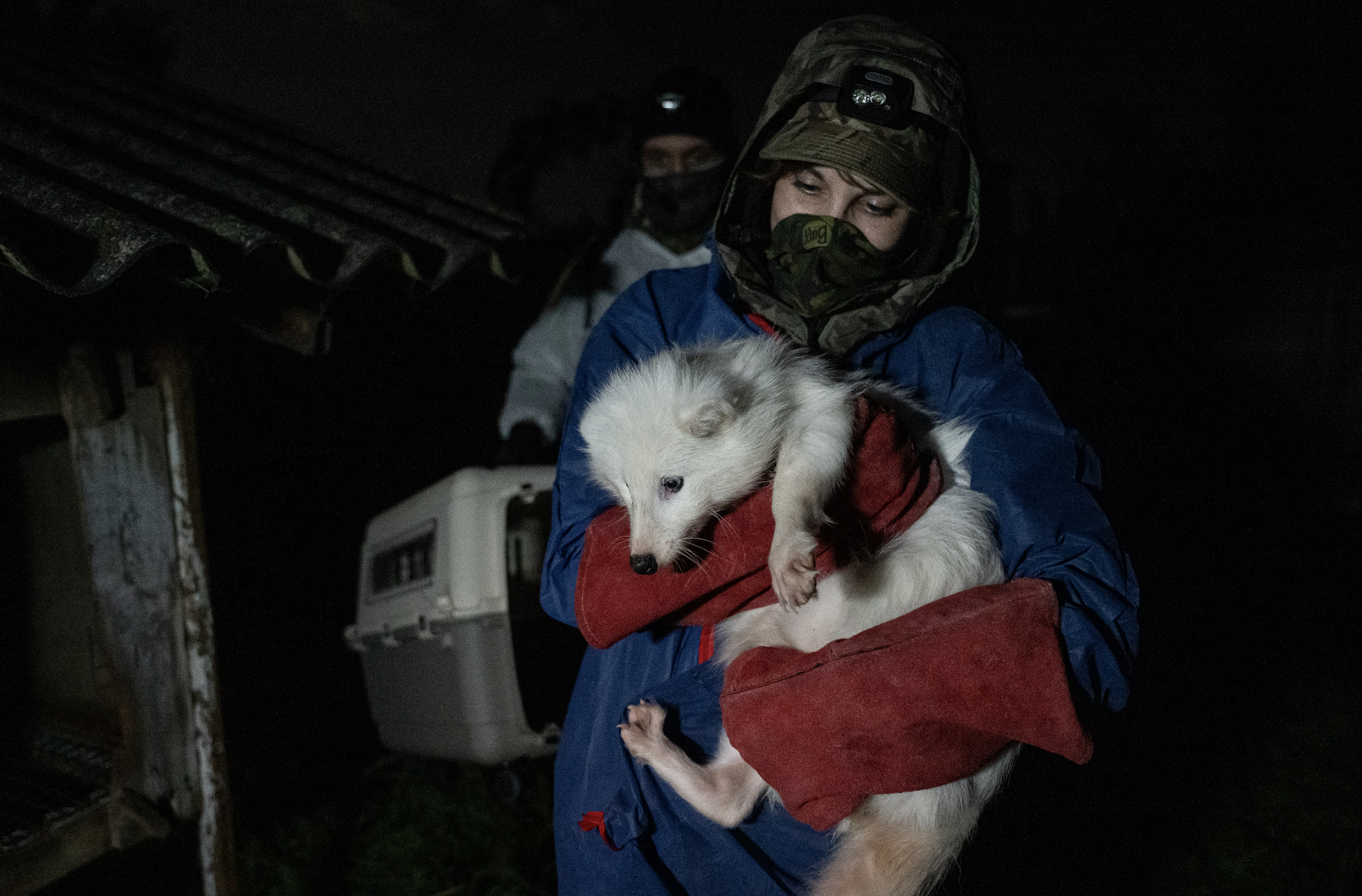
A female white raccoon dog sits in the arms of an investigator who carries her from a cage at a fur farm. The investigators are at the farm early in the morning to document the foxes and raccoon dogs living there, and are taking her with them to live at a sanctuary. Poland, 2024.
Jo-Anne McArthur / Anima International / We Animals
Flexibility and future-proofing
One strong photograph can live many lives: a news story, NGO campaign, book spread, exhibition print or social media series. Photojournalism guidelines allow modest adjustments to exposure, contrast, colour, and clarity, as long as the content isn’t changed. With a RAW file, you can create versions tailored to each use without affecting the original: a softer interpretation for a book, a harder, punchier version for a thumbnail, a different crop for a book cover or campaign graphic. With a single “finished” JPEG, you’re stuck with whatever choices you made the first time you exported it.
Shooting in RAW also means you’re actually building an archive of work, not a folder of disposable files. You keep the highest-quality masters and export whatever JPEGs you need in the right size, colour space, and style, without the slow quality loss that comes from opening and re-saving JPEGs over and over.
You don’t know which image will matter in five or ten years; a throwaway shot today might become the key image in a future investigation or documentary. For animal photojournalists, where access is rare and repeating a shoot is often impossible, treating each image as an asset worth protecting keeps your work flexible, usable, and alive for your future self and for the animals whose stories you’re trying to tell.
What this looks like in real assignments
Let’s look at a few examples from our own stock collection:
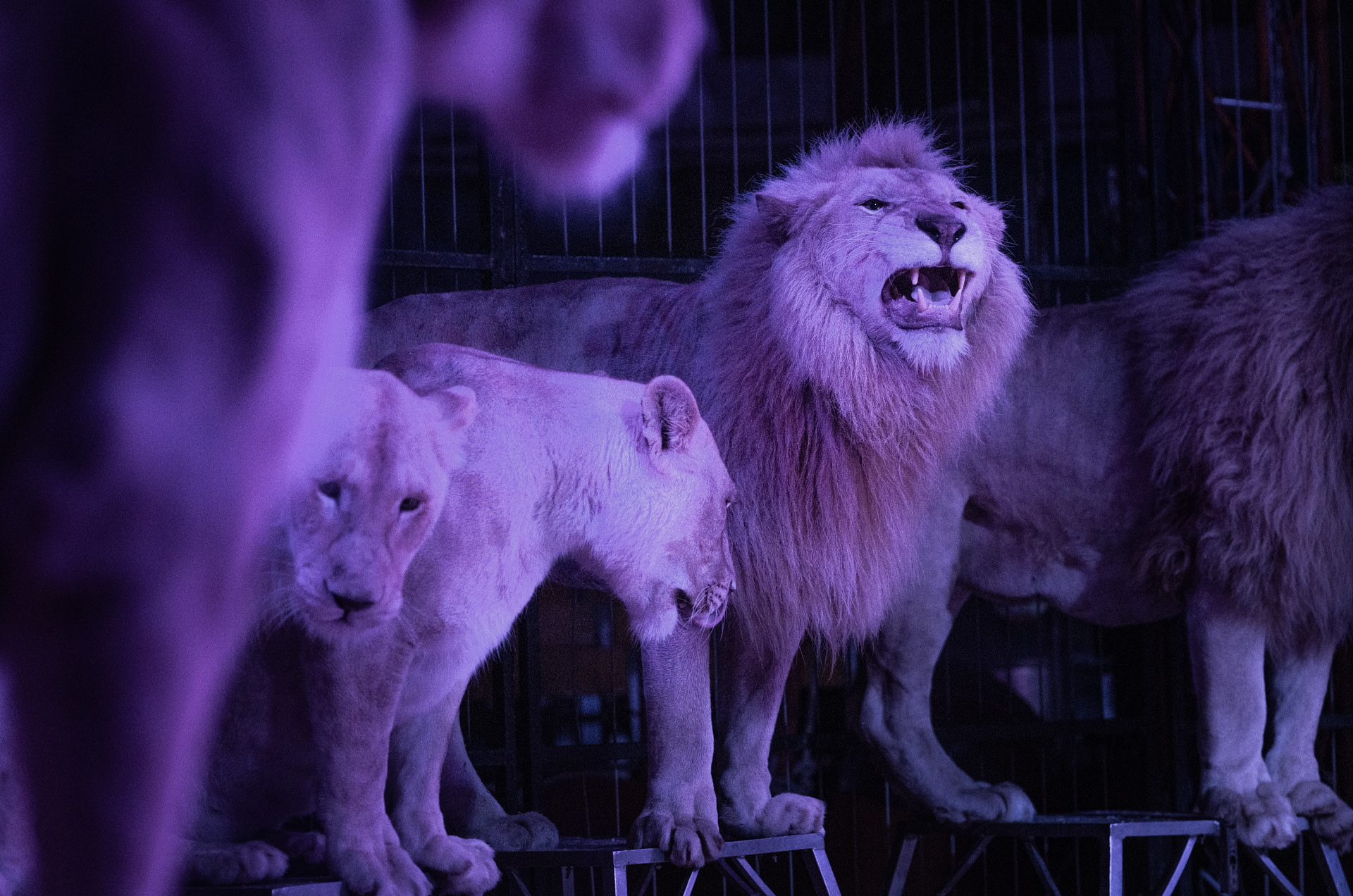
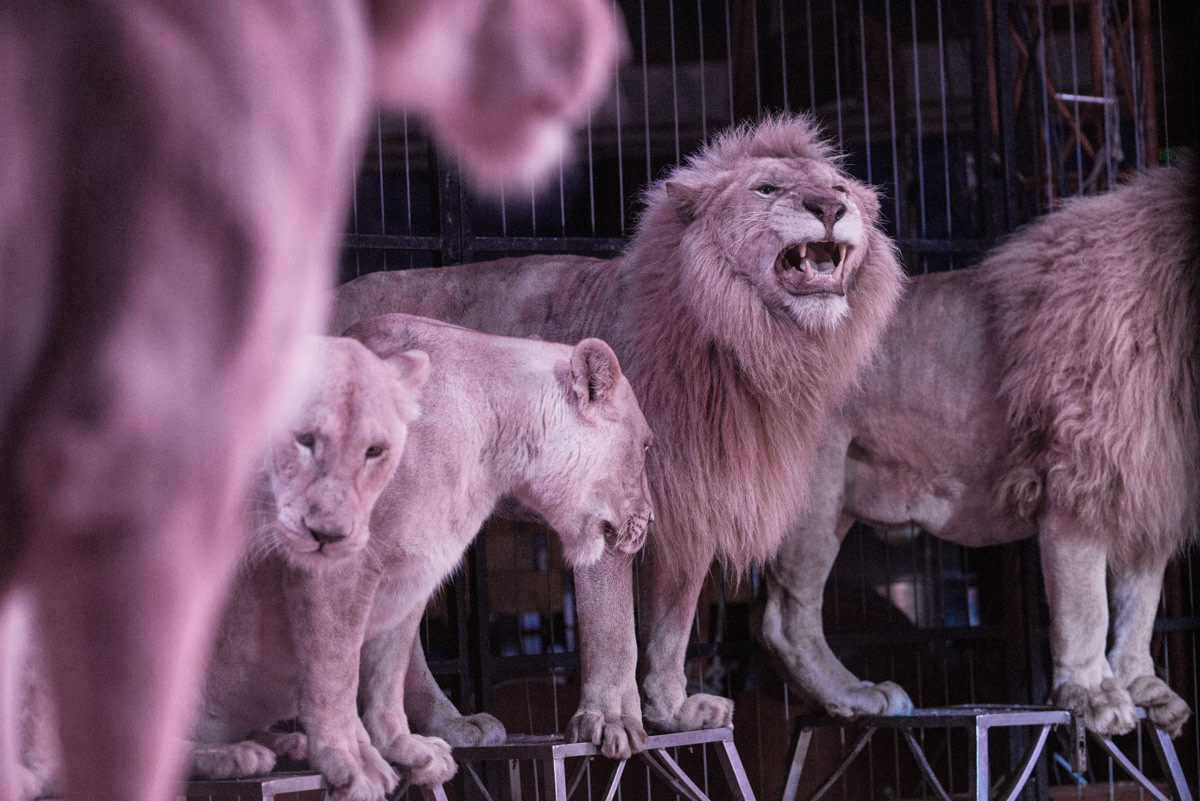
Circus lions under coloured light
In this image the scene is lit in deep, indigo light. The original RAW file looks dark and heavily tinted; the edited JPEG looks brighter but it is locked into one interpretation.
With the RAW file, an editor can:
- Recover detail in the lions’ fur and faces without the shadows becoming too noisy.
- Adjust the colour and tonal range to either lean into the surreal stage lighting or bring the scene closer to how it looked to the eye.
- Make local adjustments to guide the viewer’s eye without artifacts creeping in.
Original RAW
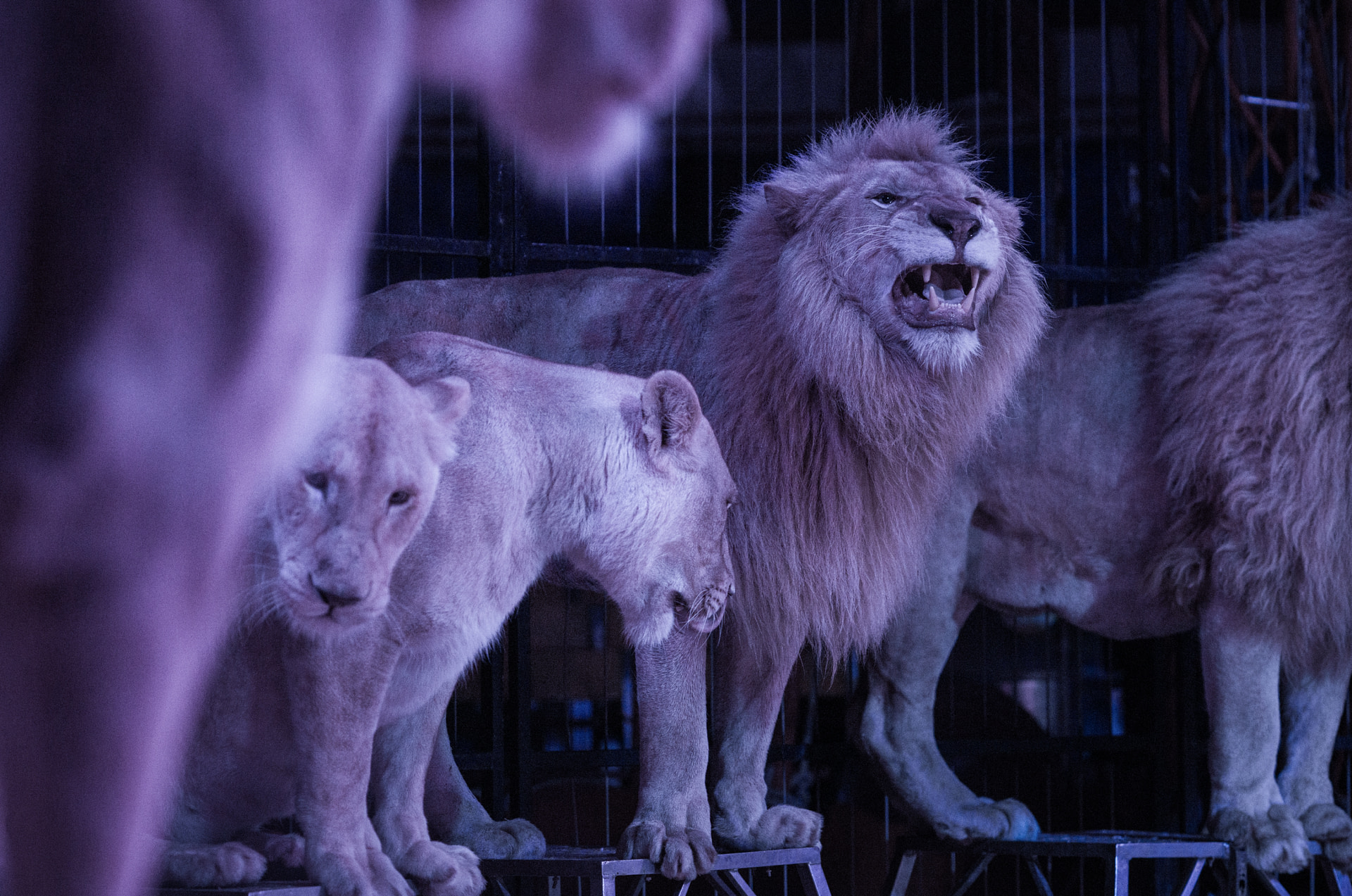
Lions performing at a circus. France, 2017.
Jo-Anne McArthur / One Voice / We Animals
Original Edited JPEG
Alternate Edited JPEG
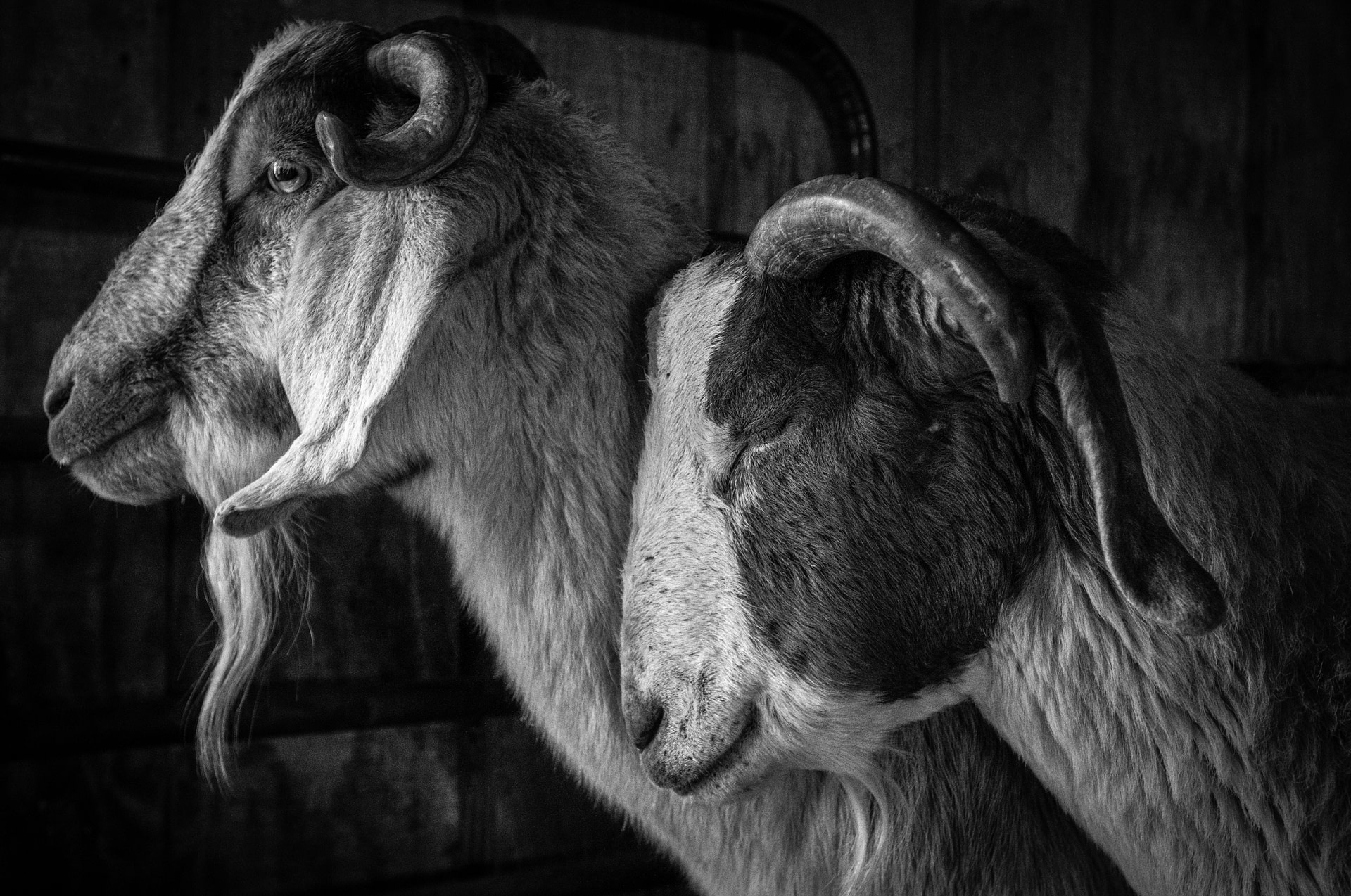
Black & white goats vs original colour
This is a heart-warming portrait of Jaime and Ian cuddling in the barn at Farm Sanctuary. The RAW file is in colour; the edit is black and white.
If later you (or someone you’re working with) need the image in colour for a specific campaign or layout, that’s easy if you still have the RAW file. If all you have is the black-and-white JPEG, there is no easy way to reconstruct the original colour information; it’s gone.
RAW keeps your options open for future uses you can’t predict today.
RAW Colour
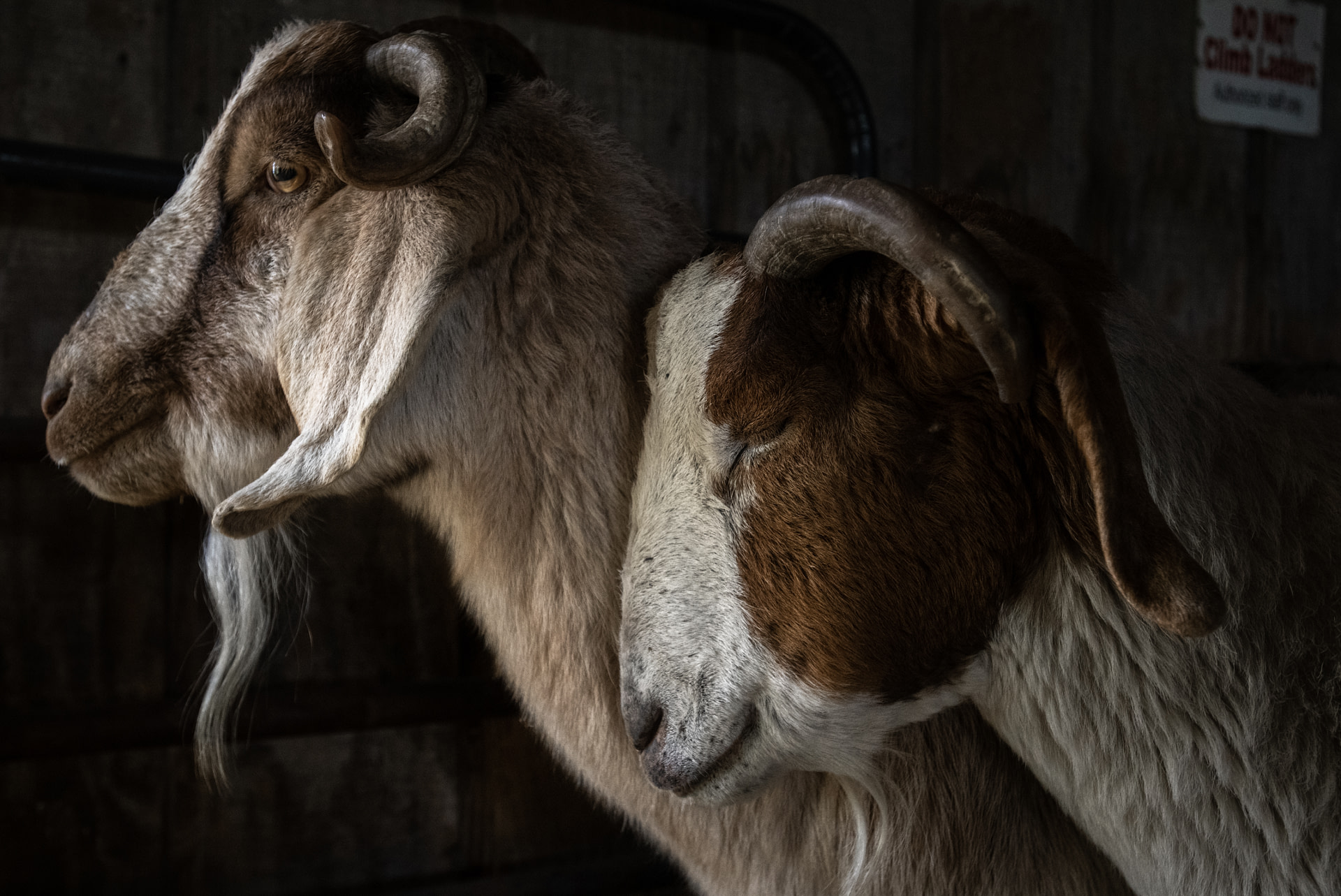
A portrait of Jaime and Ian goats, who are best friends and bonded just like brothers. They were rescued from severe neglect and brought to Farm Sanctuary, where they’ve been able to thrive. Farm Sanctuary, Watkins Glen, New York, USA, 2023.
Jo-Anne McArthur / Farm Sanctuary / We Animals.
JPEG Edit Black & White
What about file size and speed?
The solution isn’t to abandon RAW; it’s to use it intelligently. For fast-turnaround, newsworthy shoots, for example where you’re covering a natural disaster or a barn fire and need to deliver JPEGs straight from the camera, you can shoot RAW+JPEG so you meet the immediate need and still keep a master RAW file. For deeper investigations, long-term projects, and anything that might be licensed or exhibited later, shooting RAW as your default is the safer, more professional choice.
Even with memory card prices skyrocketing due to surging AI demand for flash memory, memory cards and hard drives are still relatively cheap compared to your investment in travel, access and time.
Why this matters for you and for the animals
Shooting in RAW is the easy part. It gives you more control over your work, saves more of the moments you fought to capture, and makes sure your images can keep working for animals and for your own career in the years ahead.